


April, 2026
4 mins read
Digital is not just a function, it’s a mindset shift
 29 Apr 2026
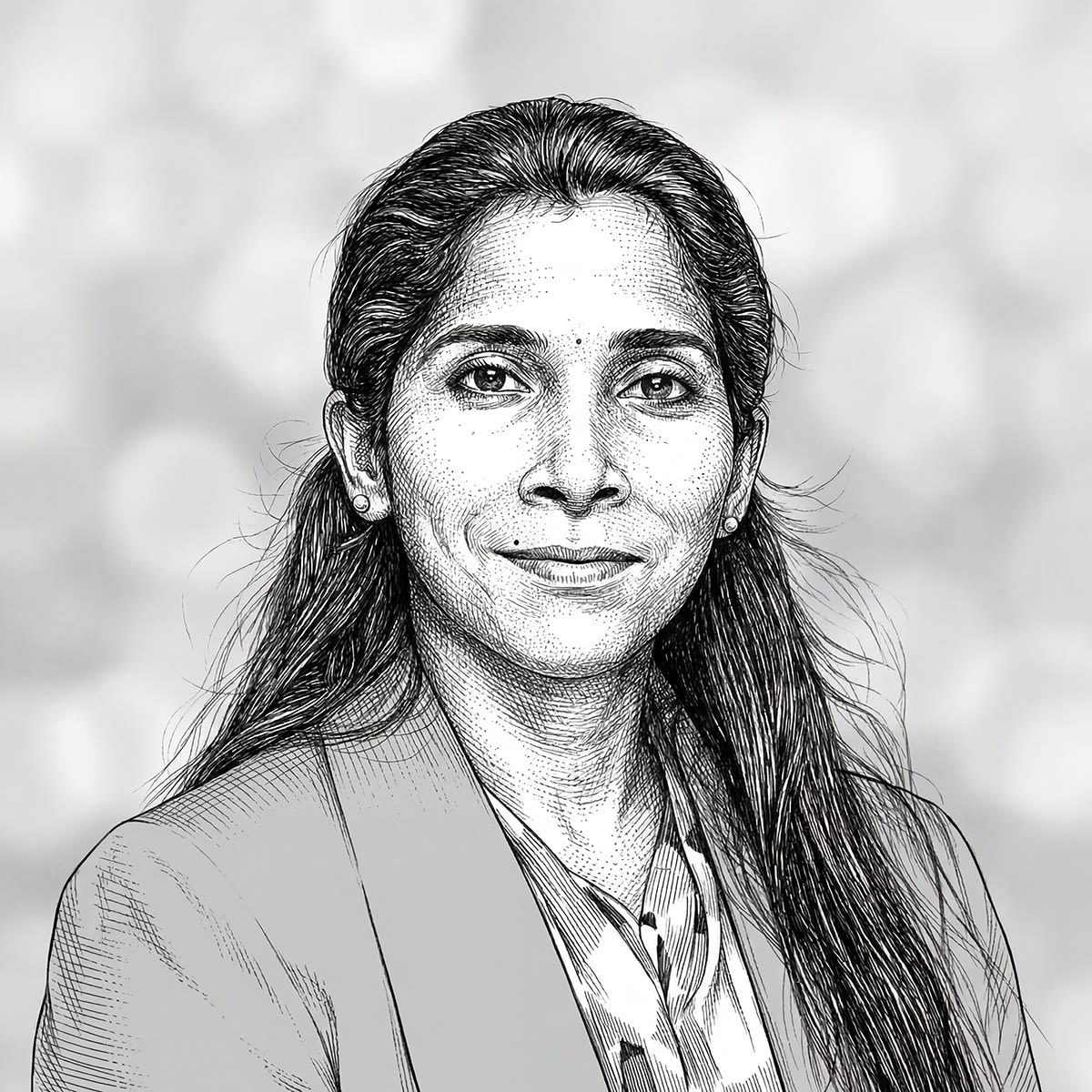
With over 25 years of experience across digital transformation, service delivery, and cross-industry leadership, Vidhya Visweswarababu, Managing Director at Deloitte Digital, has led at scale and through disruption. From building teams of thousands to navigating the leadership challenges of Covid, her approach blends execution with empathy. In this conversation with Nikhil Kadam, she reflects on leading through change, building a digital-first mindset, and why adaptability and a human approach matter more than ever.
You’ve had a remarkable journey of over two decades. What defining moments shaped your leadership philosophy?
Leadership is not built overnight; it is shaped through experiences, mentors, and moments of reflection. Over time, a couple of principles have stayed with me.
One is the idea of paying it forward. Gratitude, for me, has to translate into action. The support I have received should not stop with me; it must flow forward to others.
The other is a deeply human approach to leadership. Titles may define roles, but they do not define people. At the core of every team are individuals with strengths, emotions, and aspirations.
Titles are for roles, but at the end of the day, we are all humans. When you start there, barriers break.
Was there a turning point that significantly reshaped your leadership?
There have been several defining moments along the way, but the Covid-19 pandemic stands out as particularly transformative.
Leading during a time of uncertainty, emotional strain, and constant disruption required a shift from operational leadership to a more emotionally aware approach to leadership. It was emotionally draining, but it reinforced one thing for me: empathy is not optional. It drives the organisation.
That phase really cemented the importance of EQ alongside IQ, making empathy a core leadership capability rather than a soft skill.
You played a key role in scaling a practice to over 6,000 professionals. What was that journey like?
I would probably describe it as humbling.
But beyond the numbers, what stands out more is the cultural transformation. Digital, as I see it, is not just a function; it is a mindset shift.
Every individual, regardless of role, needs to align with the end experience being delivered. Strategy, technology, and operations are no longer silos; they are interconnected parts of a larger value chain.
We didn’t just do digital, we became digital. You wake up and sleep thinking about the experience.
Having worked across industries, how do you transfer learning between them?
Increasingly, industry boundaries are blurring. Technology has accelerated this convergence, making continuous learning essential. I’ve seen how models like subscriptions have evolved across industries, from telecom to software and beyond.
Earlier, something new came every day. Now, it feels like every minute. For me, that reinforces a simple takeaway: adaptability and curiosity matter more than static expertise.
In the age of AI, how do we balance efficiency with empathy?
I think it starts with ethics, trust, and compliance. These are no longer add-ons; they have to be foundational.
As technology becomes more accessible, the responsibility also increases. Organisations need to ensure that innovation does not outpace accountability.
At the same time, I’ve found that innovation thrives in environments that feel like startups within enterprises — spaces where ideas are constantly seeded, tested, and scaled.
We’re not just building for clients; we try and test it ourselves first. That’s how credibility is built.
What truly sets Deloitte’s culture apart?
The answer lies in lived values rather than stated ones.
From integrity and respect to collaboration and belonging, these values are embedded in everyday work and are even measured as leadership metrics.
Teaming and collaboration are not optional; they are how we succeed.
The culture is not just about performance, but also about how that performance is achieved.
What differences do you see across generations in the workplace?
I see generational diversity more as an opportunity than a challenge.
Older generations bring resilience and experience shaped by different kinds of constraints, while younger generations bring access to information and fresh perspectives.
They are born with information, so instead of only teaching, it becomes important to challenge them. The opportunity lies in combining experience with experimentation.
What advice would you give students aspiring to enter consulting?
If I had to simplify it, I would come back to mindset.
A growth mindset, supported by curiosity, humility, and optimism, becomes the foundation for everything else.
If the mindset is right, the rest tends to follow.
From cooking to classical music, how do your passions influence your leadership?
I’ve come to realise that stepping away from work is essential to gaining perspective. These pursuits act as both focus tools and mental resets.
Music, in particular, helps me enter a state of deep concentration, and that carries into how I approach leadership as well.
Everyone needs a space to clear their mind. That’s often where new thinking begins.