


March, 2024
8 mins read
A Fresh B-Schooler’s Key Contribution Can Be Questioning The Status Quo In Organisations
 30 Mar 2024
As demographic shifts continue to reshape the workforce, Kanika Dhawan speaks to Shamita Chatterjee, SVP - Head HR, Infosys Subsidiaries, HRD, where she manages a staggering portfolio of 12 global companies spanning from Singapore to Finland. With nearly three decades of experience, this XLRI Jamshedpur alumna shares insights on how she continues to nurture people-centric organisations, cultivate a cohesive culture, and reimagine HR dynamics.
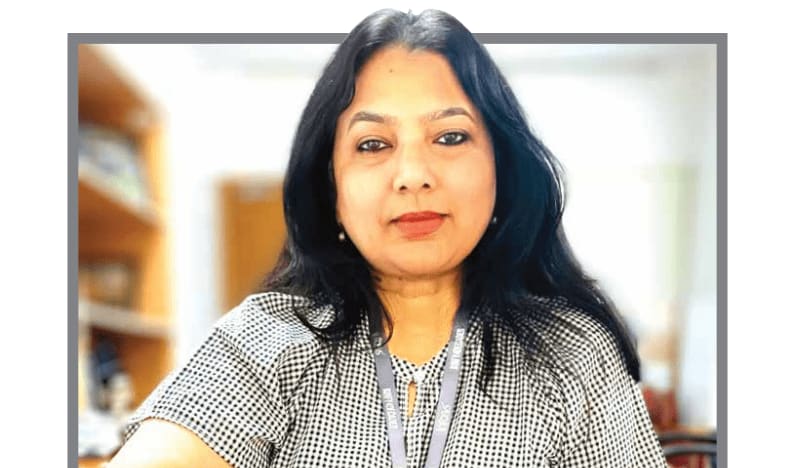
You have a long history with XLRI Jamshedpur. How was the experience growing up there?
My sister and I were born in Jamshedpur. At that time, XLRI operated from Loyola College and then Kaiser bungalows. My father hailed from its earliest batches and secured a fellowship from the International Labour Organisation (ILO) while teaching there. I was two or three years old when XLRI was being built; I have memories of playing with sand on the construction site. So, yes, my family has a legacy with the institution. Although I had qualified for IIM-Bengaluru, my father insisted that both his daughters join XLRI.
You said in an interview that your job is to make connections, network, and help solve problems. How do you do this?
Today, I do a job that is not a traditional CHRO role. It entails managing a portfolio of companies, 12 separate legal entities from Infosys that operate with their boards and CEOs. We have acquired a few companies and created some others, like EdgeVerve, which focuses on products and platforms separately from the ‘services’ business. We are very clear about giving them the flexibility to run their businesses, bring in innovation, and so on. Therefore, what’s the purpose of having a common CHRO like me? It is to nurture the Infosys way of life by bringing in the flavours of all these companies and creating a balance, which is lost in larger organisations for good reason. How do I do it? I create networks. For instance, for HR heads, we have a collaborative, community-building app called Synergy. Here, they post issues, share resources, and have fruitful discussions. I also facilitate a network of CEOs with the support of one of the CEOs who helps me create these synergies. When it comes to solving problems, there are common problems across these companies. For example, one of them sought to implement a new Human Resource Information System (HRIS). Fortunately, they discovered a perfect fit in another company that already had a successful experience in HRIS implementation. This alignment was possible because both the companies shared similar organisational styles and cultures. So, we leveraged the power of intra-networks to make this happen!
Every organisation has a different way of working. Is it possible to bridge the work cultures or operational philosophies of multiple organisations, or do you let them operate independently? How do you navigate these challenges?
I have a very tactical example that hits the mark. In November, we organised a culture workshop for all our companies. We brought them together to explore the dimensions of culture, including geographical influences and unique cultural elements within each company. Everyone came together to share their views. As a sign-off, we requested everyone to share certain behaviours they believed should be observed during virtual meetings. Surprisingly, there was unanimous agreement that keeping the video on during meetings was essential, even if attendees were in pyjamas. This seemingly small detail highlighted the tactical nature of the discussion. It also reflected the modest expectations people have of each other while working together. Another example is Fluido, our company in Finland. It is common there to serve wine during meetings inside the office during frigid temperatures. However, at Infosys, we don’t serve alcohol on our premises, and there is a cultural, valuesdriven reason for it. It has come down from generations and is a part of our core values. So, these smaller organisations had to accept and make adjustments.
Shamita, this is your 28th year in the HR industry. Please shed light on the generational differences you have experienced in the way people work.
I have a slightly different view on this from my peers. As individuals who are 50 plus, we must accept the fact that we do not understand the current generation. Perhaps, we should look at our children to understand this generation. I do look at mine to decipher how they see the world. One side of me still looks at productivity — our traditional working style, putting in long hours, and so on. On the other hand, I know this is a new and different world. So, we must create an environment where we unlearn everything and enable this generation to bring out their best. Even on the workfrom-home versus work-from-office debate, I don’t have answers. However, I know we have to find ways to nurture a holistic culture without compromising on output and client excellence. All my companies are in the West, and they are fully embracing remote work with employees spread across different locations. To ensure team cohesion, we organise occasional events like pop-up shops and fitness challenges, bringing employees together in the same or nearby locations. These events serve as opportunities for office meetings, discussion forums, and team-bonding sessions. This shift towards event-based engagement has proven to be innovative and effective in keeping our teams engaged.
While dealing with different companies, how do you tackle thought barriers?
As a person, I am very adaptable. I also know that I must evolve my point of view — something I have learned from Nandan (Nilekani). The man is almost 70. If he can do it, I know we can do it too! He is our inspiration for pushing the barrier and believing that nothing is impossible. In my current job, I continually re-learn my learnings, and this is something that truly excites me!
When it comes to incentives, how do you understand what people want?
In the realm of rewards, clarity and fairness are key. By clarity, I mean it’s critical to communicate why the company compensates employees in a certain way, and what they can do to earn more. Transparency in this regard is crucial. Moreover, regulations increasingly demand transparency in these matters, which I fully support. For me, fairness means consistently applying the same principles to every individual. While it may seem unfair that someone from the same graduating class earns more, adherence to predefined principles ensures fairness. If there’s a discrepancy, it’s crucial to communicate clearly why certain decisions were made and ensure that principles guide our actions. At Infosys, our value system is embodied in C-LIFE (Client Value, Leadership by example, Integrity and Transparency, Fairness and Excellence). So, I believe in consistently applying the same principles for every individual and that drives our reward decisions.
What are your thoughts on upskilling and reskilling in this AI age?
Whether it is upskilling or reskilling — it is about knowing something better than what you already know. From an organisational perspective, we are investing in people who can quickly turn around skills and have the flexibility to deliver. Toward this end, we have reskilled nearly 70 per cent of our workforce on basic AI. Right now, we are at a cusp in the skilling game. A couple of years ago, we were looking at digital, full stack, and had all kinds of processes around it. But that has given way to the AI wave. We are telling our people that their jobs aren’t going away, but they must continuously learn.
According to the World Economic Forum’s Future of Jobs Report 2023, 69 million new jobs were created while 83 million will be eliminated. Additionally, over the next five years, 23 per cent of global jobs are expected to transform due to advancements in industries such as AI, as well as text, image, and voice processing technologies. Your insights?
While I may not be one to make predictions, my recent completion of a Harvard Business School course on disruptive strategy has highlighted the importance of focusing on ‘jobs to be done.’ It emphasised designing services or products around addressing specific needs rather than being overly fixated on the features of the product or suite of services. At Infosys, we excel at understanding and fulfilling these ‘jobs to be done’ for our clients. Our approach involves creating applications and solutions tailored to meet these needs, integrating systems seamlessly. So, as long as there are ‘jobs to be done’ in the world, our jobs are not going to go away anytime soon. History has shown us that they are here to stay.
Do you think that Covid has helped companies grow by leaps and bounds when it comes to progressive ways of thinking?
Yes! It has busted many culture, productivity, and work myths. So, we must continue to respond fast to this new paradigm. As you said at the beginning of the interview, the romance around jobs and careers is waning. Because there are different ways to earn your living, corporate careers aren’t how we envisage them.
What do you think B-schools should add or modify to raise better industry professionals?
I have seen a big difference between business school graduates from the West and India. Here, we are still in a slightly paternalistic educational system where conformity is rewarded. The most important contribution that a fresh B-schooler can bring to the table is questioning the status quo in organisations. So, B-schools will have a huge role to play in bringing this level of confidence and entrepreneurial competencies across the board.