


November, 2025
9 mins read
AI is a Powerful Ally — It Frees HR to Focus on Higher-Order Human Work
 28 Nov 2025
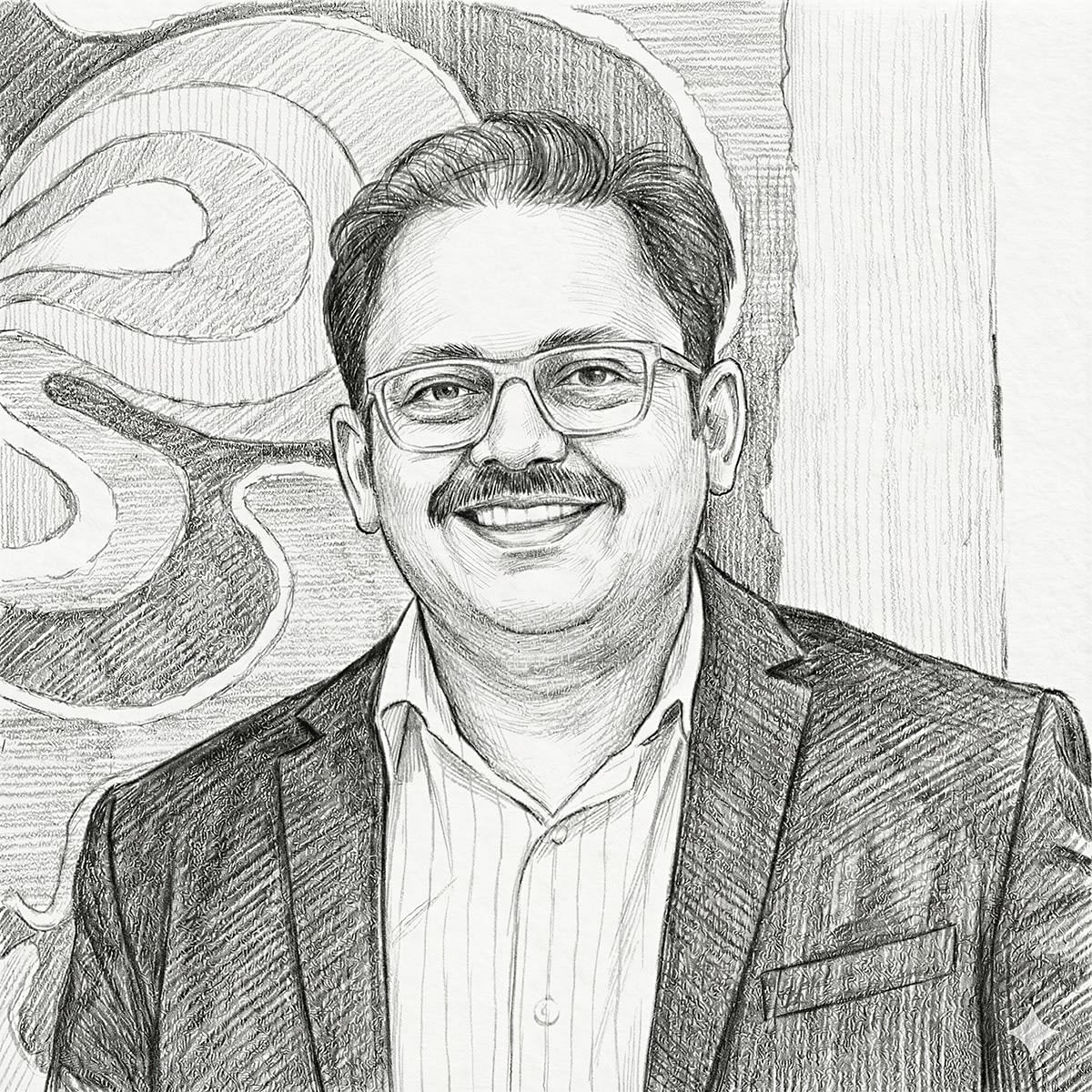
With over 17 years of experience across automotive, manufacturing, corporate HR and now FMCG, Dheeraj Tandon, CHRO & EVP at Vadilal Industries, brings a sharp perspective to the intersection of people, performance and strategy. A mentor, sports enthusiast and believer in human potential, he reflects on how technology, adaptability and empathy are reshaping leadership. In this conversation with Megha S Babu, he discusses the evolution of HR in the age of AI, the future of work, and why collaboration, mindset and continuous learning will shape tomorrow’s leaders.
You described AI as a friend of HR. Could you expand on that — why do you see AI as an ally rather than a threat, especially for a people-focused function like HR?
Traditionally, HR used to perform many repetitive and transactional activities from attendance and payroll management to data compilation and reporting without the help of advanced tools. After the arrival of AI, HR has entered an entirely new era. Today, analytics powered by AI allows us to access real-time insights, understand patterns in workforce behaviour, and predict outcomes with a level of accuracy we could not imagine earlier.
AI enables HR professionals to focus on high-value and human-centric work such as leadership development, emotional engagement, and strategic workforce planning rather than routine paperwork. I often say that AI is a “friend” because it removes the mechanical load and frees us to concentrate on empathy, culture and capability building. Of course, technology cannot replace the human element. Around 20 per cent of our time must still be spent on emotions like one-on-one interactions, counselling sessions, and human connection. That emotional quotient is what keeps organisations alive. But for the other 80 per cent, AI helps us become sharper, faster and more data-driven in decision-making.
You’ve worked across industries from automotive and manufacturing to corporate group HR and now nearly a decade in FMCG. What motivated you to stay in FMCG, and how have these cross-industry experiences shaped your leadership perspective?
I have always been intentional about diversifying my experience. I began in electrical and manufacturing companies such as Crompton Greaves, where I learned operational discipline and the importance of systems thinking. Later, I moved into corporate HR at JK Group, which exposed me to strategic HR and policy design at the group level. Then came the automotive sector, where I experienced the precision and efficiency of a highly process-driven industry. Over the last 13 years in FMCG, I’ve found it to be one of the most dynamic spaces, extremely people-intensive, fast-paced and innovation-driven. The learning curve is steep, but it’s deeply rewarding. Working across multiple sectors has given me a holistic understanding of how people dynamics vary by industry — the motivations, expectations and behaviours of employees are very different in a manufacturing plant versus a consumer brand office. In FMCG, I’ve also learned how HR integrates with business strategy. The sector demands real-time responses to consumer behaviour, and that has taught me how people agility and business agility are intertwined. It has been both a personal and professional growth journey.
What qualities will distinguish the workforce of the future? Which skills and mindsets will be essential in the years ahead?
The future workforce will be defined by four things. Digital literacy. Every individual, irrespective of role or function, must be digitally fluent. Understanding data and technology is no longer optional, it’s the language of the modern workplace. Collaboration. The interdependence among business functions is higher than ever. Sales drives demand, operations fulfils it, quality ensures standards, marketing creates reach, and HR ties it all together. Without collaboration, none of these pieces function effectively. Adaptability. This is about how quickly you can adjust to a new environment, new leadership, or new business realities. The ability to unlearn and relearn is a critical differentiator. Agility and progressiveness. In a world changing so rapidly, one must be proactive, curious and willing to challenge conventional thinking. Being static is not an option anymore. These four attributes will define employability and leadership potential in the years ahead.
You’ve highlighted collaboration as a core skill. For MBA students like us, who often work in teams with different personalities, what can we do on a personal level to make collaboration come more naturally?
Collaboration rests on two fundamentals: empathy and a shared business purpose. Empathy means understanding the situation from another person’s perspective, their challenges, their constraints, their “why.” Unless you can empathise, collaboration remains superficial.
Second, keep the business objective supreme. Many conflicts in teams happen because individuals prioritise personal agendas or egos. But in an organisation, our common purpose must be the business outcome. When everyone aligns behind that, collaboration follows naturally. Sometimes, empathy also requires compromise. Two functions may have conflicting goals, say, marketing wants speed while quality wants perfection. In such cases, mutual understanding and negotiation lead to collaboration.
Given the rising emphasis on skills rather than formal degrees, what should HR leaders do to assess and unlock talent effectively in an AI-driven environment?
This is a crucial shift. Traditionally, companies over-valued degrees or designations. In many legacy organisations, that mindset
still exists, there’s a bias towards formal education. But over the next five to six years, I believe the game will change entirely. Hiring and evaluation will no longer be determined by the name of your college or the number of years on your résumé. It will be about skills, capability, creativity and outcomes. Companies are already adopting gig-based or short-term project models — 30, 60, 90-day assignments where individuals can demonstrate tangible value.
The future of HR will be skill-first and experience-driven. Institutions offering one-year or accelerated programmes, for example, should not be judged by duration but by content quality and industry exposure. What matters is the intensity of learning, not the length of it.
Bridging academia and industry remains a challenge. What do you think are the most effective ways to ensure graduates are truly ready for tomorrow’s workplace?
The bridge must be built from both sides. From the corporate end, we’ve seen great results with immersive talent programmes where students take on live projects over long-term internships and receive pre-placement offers based on performance. Equally important is the institution-industry collaboration, faculty can spend time within companies, observe real operations, and translate that into classroom case studies. This makes learning contextual. I’ve also seen structured corporate programmes work beautifully — ITC’s KITES initiative, for example, puts freshers through six months of hands-on rotations and multiple performance evaluations before final placement. Such models give companies fresh perspectives and allow young professionals to experience real-world complexity before joining full-time.
Starting a new job often comes with ambiguity and uncertainty. How can organisations design onboarding experiences that help new hires settle, learn and contribute effectively?
The first 90 days are critical. If an employee feels comfortable and connected within that period, retention rates soar. A robust onboarding framework should include buddy and mentor programmes, opportunities for newcomers to share ideas freely, and short-term projects that allow them to apply their learning quickly.
At Vadilal, for example, we encourage new employees to directly interact with senior leadership, even the CEO, without formal appointments. This openness accelerates confidence and helps leaders hear fresh ideas straight from new minds. We also assign 30- to 40-day “gig projects” before confirmation, so employees can complete end-to-end assignments and see their impact. These experiences create satisfaction and ownership early on.
In one of your earlier talks, you spoke about replacing traditional corporate ‘ladders’ with a more open ‘lattice’ system. Could you explain why this shift is important, and whether large, legacy organisations can realistically adopt it?
Bureaucratic hierarchies restrict creativity. Many leaders claim, ‘my doors are always open,’ but in practice, invisible walls exist. Real transformation requires flattening structures so that ideas can flow freely, regardless of title. In a lattice structure, employees at any level can reach out to functional heads or even the CEO with innovative ideas. This system empowers people, encourages ownership, and speeds up decision-making. Yes, it’s challenging in legacy companies because of deeply rooted mindsets. But it’s not impossible. Change begins when a few senior leaders demonstrate openness and lead by example. Once people see that ideas are welcomed from all levels, cultural momentum builds naturally.
Virtual reality (VR) is being used by companies like Walmart, Accenture and PepsiCo to onboard employees. From your perspective, what are the advantages and disadvantages of using VR, and how does it tie into the broader hybrid-work conversation?
VR is an excellent enabler. It makes onboarding faster and more immersive. New hires can explore factory floors, markets or corporate offices virtually even before setting foot there. It saves travel time, reduces costs and compresses induction from 90 days to even 15.
However, VR should not replace the human touch entirely. Employees need to physically experience their workplace, meet colleagues, express emotions and understand consumer insights first-hand.
The best approach is a hybrid one, combining VR for efficiency with physical presence for empathy and connection. When it comes to hybrid work, flexibility depends on role and context. For certain leadership roles, hybrid setups work perfectly. But for HR, I always insist that new team members spend at least three months in plants and markets to understand business realities. HR cannot be effective sitting only in corporate offices; it must be embedded in the field.
When employees are on the ‘bench’ between projects, some thrive and some feel disengaged. How can HR help them stay motivated and view this time productively?
Bench time is often misunderstood. It’s not a punishment; it’s an opportunity to learn. HR should connect it with the organisation’s succession and development planning (SDP) process, where every employee knows their next potential role and the skills they must build to reach it.
Those waiting for their next role can be given short innovation projects or skill-building assignments. This keeps them
engaged and future-ready. At the same time, leadership must take firm calls, avoid unnecessary extensions of retiring or stagnant incumbents, which block growth for others. By maintaining transparency and progression, HR can convert bench periods into growth periods.
Finally, what advice would you give MBA graduates preparing to enter today’s evolving world of work?
My biggest advice is to stay positive: in mindset, approach and behaviour. Whatever work you do, treat it as an opportunity to learn something new. Every situation, even a tough one, has something to teach you if you view it positively. Positivity attracts positivity. If you approach people and processes with the right energy, you will notice that the environment reciprocates. In my own experience, being optimistic and open has allowed me to grow faster, learn more deeply, and build stronger relationships.