


October, 2024
6 mins read
Balancing Passion with Acceptance is Key to Success
 30 Oct 2024
Rohit Bahadur, Partner at Grant Thornton, has been a driving force in setting up the firm’s CSR and not-for-profit vertical, bringing over 25 years of experience in risk advisory and governance. In an insightful conversation with Sahil Agarwal, Rohit shares how international exposure shaped his career, the firm’s growth as a challenger brand, and why fostering convergence between corporates, NGOs, and the government is crucial for the future of CSR in India. His advice to young leaders? Embrace flexibility and maintain a balanced perspective.
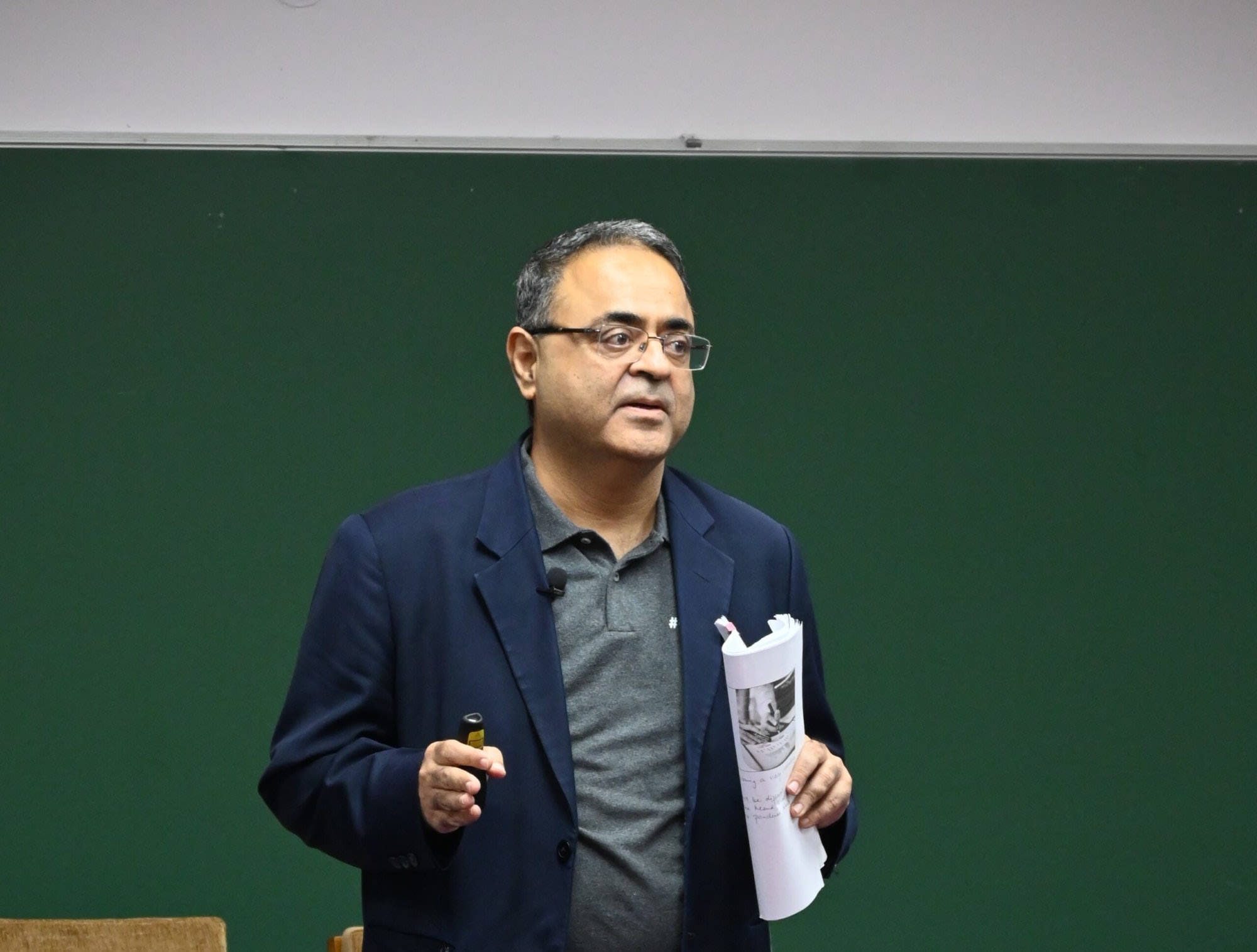
Rohit, with over 25 years of experience in due diligence, assurance, corporate governance, and risk advisory, what motivated your transition from the Big Four to leading the CSR and not-for-profit vertical at Grant Thornton? What challenges did you encounter in establishing this division, and how did you navigate them?
Actually, it wasn’t a transition. I was already at Grant Thornton, working in the risk advisory practice. Two driving factors led to this shift. One, Grant Thornton was looking to establish this practice in India, and they needed someone suitable to lead it. Two, we were receiving a lot of work on the audit side that was being handled in an incorrect division. So, the idea was to merge some skill sets and place them in a new division. This opportunity came at a point in my career when I felt the need to do something slightly different. While I wasn’t directly working in the development sector, I realised that by offering services within the sector, I would still interact with people doing meaningful work on the ground. Rather than only engaging with corporates, I’d be able to connect with individuals actively involved in development efforts. This prospect was quite motivating for me — it offered something different and allowed me to engage with a new set of people.
In the corporate world, it’s easy to lose sight of social contributions, as financial considerations often take precedence. While pursuing a different sector might lead to higher earnings, it’s crucial for young individuals to weigh these decisions carefully at every stage of their careers. Balancing personal and societal impact is a significant choice we all face.
True, but I had the comfort of still being at Grant Thornton and being paid accordingly. Of course, compared to some of the other higher-performing or revenue generating divisions, it’s less, but it was a conscious choice, and I’ve never regretted it. It’s been quite interesting.
With your extensive background in risk management and corporate governance, how do you think the approach to governance has evolved in India, particularly in the development and corporate sectors?
I believe the level of governance in the development sector still has a long way to go. The sector itself is often tainted, and with the recent FCRA (Foreign Contribution (Regulation) Act) rejections, there’s a significant question mark around how well some NGOs are actually governed.
That’s one aspect. The other part is that much of the governance issues stem from ignorance rather than intentional wrongdoing. So, in the corporate development sector, everything you do needs to be approached with a capacity-building lens.
What lessons from your work in the private sector have you found particularly useful in advising not for-profits and NGOs?
I’ve managed to apply what I learned in the private sector by combining patience with the process-oriented mindset I developed in risk advisory. In that role, I was exposed to various functions and learned to think in a systematic way. This has allowed me to bring those insights into the development sector, without forcing them onto others.
How do you see the evolving role of internal and grant audits in ensuring transparency and accountability in the development sector, where social impact is harder to measure than financial returns?
While you need to adopt a capacity building approach, it’s also important to visit the NGO and understand their programmatic work. Financial diligence can only be done effectively once you understand their history and what they’ve achieved. It goes beyond a checklist approach. It has to come from experience. Only then can you achieve meaningful due diligence. If you rely solely on a checklist, you won’t fully meet the objective of conducting thorough diligence.
You also initiated the CSR division at Grant Thornton…
Yes, I did. This was before CSR became a trend in India. Back then, it wasn’t seen as “fashionable” like it is now, especially with the law and ESG initiatives. In fact, many didn’t understand why we were doing it at all.
You’ve also worked in the US with a food distribution company and taken a specialised risk management course in Manila. How did these international experiences broaden your perspective, and how do you apply global best practices to your work in India?
Honestly, more than just work practices, being abroad gave me a completely different perspective on how things operate. It made me more well rounded in my thinking. When I was in the US, I was at a very junior level, so I haven’t necessarily replicated specific practices here. However, the exposure to different people and ways of working gave me a more flexible approach to understanding things.
How have culture, leadership, and service offerings at Grant Thornton evolved during your more than two decades with the firm? How does Grant Thornton ensure it stays relevant and competitive in a rapidly evolving consulting landscape?
I think we’ve done very well to establish ourselves as a challenger brand. We don’t consider ourselves the fifth-largest firm or compare ourselves in that way — we’ve built our own unique identity. In fact, I’d say other firms are often wary of us because of that distinct identity. Over the years, Grant Thornton has consistently punched above its weight, always aiming higher than our size would suggest, and this mindset has fueled our growth. Even now, the firm’s growth has been tremendous, and our focus on CSR has further added to our brand value.
What approaches do you take to mentor and guide the next generation of leaders within the firm, particularly in specialised areas like risk advisory and governance?
At Grant Thornton, coaching and mentoring are embedded in the culture, with a structured system of coaches and super coaches. This structure facilitates guidance. Until recently, we weren’t a very large firm, so staying connected with colleagues was easier. It felt more like a family where we could work closely and engage informally. Personally, I go beyond my role to share my experiences and ensure I’m accessible to anyone who has questions. I maintain an open culture in my team, where anyone can reach out to me directly.
What’s one piece of advice you’d offer to young students or aspiring managers?
I’d say, don’t be overly aggressive and try to fine-tune yourself to the environment. For the current generation, a certain level of acceptance is key to success. You can’t just be doing things you like or you’re passionate about — you also need to embrace what comes your way. A relationship with a corporate is a two-way street. It’s about how you adapt to the culture, like any relationship. So, accepting things without questioning everything too soon will serve the current generation well.