


September 2026
16 mins read
Be Ethical. Don’t Cut Corners. Everything Else Follows
 17 Oct 2026
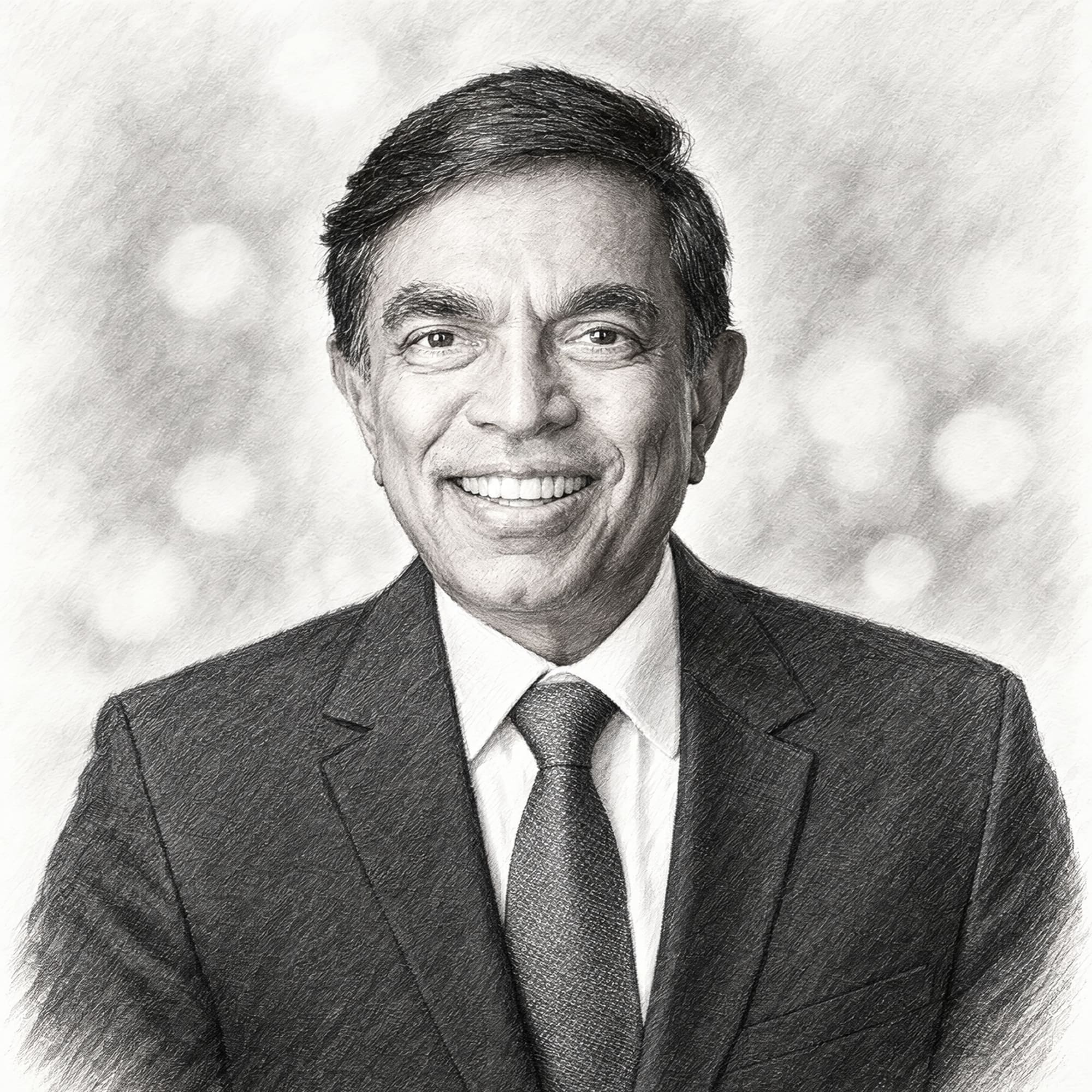
For Prof Arup Varma, the result is only part of the story. Whether in research, performance appraisal or the growing use of AI in hiring and education, the process matters: cut corners today, he argues, and the consequences do not disappear when you enter the workplace. That belief — in discipline, ethics, listening and the importance of context — runs through a career spanning 30 years at Loyola University Chicago’s Quinlan School of Business, where he holds the Frank W Considine Chair in Applied Ethics and is Distinguished University Research Professor. A Fulbright Scholar and alumnus of St Xavier’s College, Calcutta, XLRI Jamshedpur and Rutgers University, Varma is also the co-editor of Performance Management Systems: A Global Perspective and Doing Business in India. In conversation with Rajat Venogoppal and Ananya Joshi, he reflects on the mentors who shaped him, the limits of standardising performance across cultures, the ethical risks of AI, and the changes he has witnessed in India over three decades.
In the last 30 years at Loyola Chicago, you’ve gone from a newly admitted PhD to holding an endowed chair as the university’s Distinguished University Research Professor. Looking back, what do you think set you on that path of sustained excellence?
I think I have to go back to my school days in Calcutta, St Xavier’s, and then XLRI, where I learned that discipline is key. That you must stay on the path: whatever you start, don’t jump back and forth, do the right thing, work hard.
I carried that into my PhD and then into Loyola, where I’m now in my 31st year. I think what I’ve done is work hard and stay focused, not try to do too many things, and also choose which ones to emphasise. As faculty, we have three broad areas: teaching, research and service. I say it in that order because teaching is my first love, though I love research too. Service is something we have to do: some people enjoy it, some of us do it as a duty. I focused on teaching, then research, then service, and I was very open about that. I think that has helped.
Your academic journey runs from St Xavier’s, Calcutta, to XLRI, to a PhD at Rutgers, to three decades of impact in Chicago, a trajectory few in the field can match. Which mentor or moment do you feel was most responsible for shaping the scholar you became?
I have more than a few. In school, a few teachers really impressed me: tough, but also very kind. One of my teachers who taught us accounting is someone I still think of: very serious, very disciplined, but also very caring.
In college, there was Professor Suman Mukherjee, who taught economics at St Xavier’s College. He was, of course, very knowledgeable, but he also cared: he was willing to help us outside class, and you could hang out with him, spend time with him.
Then at XLRI, a few names stand out. One is Father EH McGrath, who was the director at that point. He was very tough with us, but also very fair, and he taught us a great deal just by being who he was. One anecdote I like to share: the director’s office at that time — the same office that exists today — didn’t say “Director, Father EH McGrath”. It said “Knock and Enter”. That plate meant that anybody with a genuine issue could knock and enter. It impressed us: this is a big, big man, the director of XLRI, and he’s saying, if you have something important, come talk to me.
And finally, at Rutgers, my PhD adviser, Dr Angelo S DeNisi, a renowned scholar — huge in the field — was so down to earth, so humble, always willing to talk, always willing to help. So, a combination of all of these. And above all, my mother, who always said, “I trust you won’t do anything to embarrass me. I trust you will do the right thing, and I know you will.”
You recently paid tribute to the teachers who shaped you, including your late mother. As someone who has now mentored generations of students yourself, what is the single greatest gift a teacher gave you that you try to pass on?
You’re right, I did put a piece up on LinkedIn about this. I tend to do that every year on Teacher’s Day, or on Guru Purnima. The names I just mentioned are all people who impressed me, and the biggest thing common to every one of them is that they were willing to listen.
They weren’t just telling me, “Do this, you’re wrong” — they did say that too, when we did things that were wrong — but they were all willing to listen first. Every single one of them, starting with my mother: “OK, what is your opinion? What is your perspective?” And then they’d either agree, or explain why I needed to do it differently.
So what I try to do with all my students is listen to them. That’s another way of showing that I care about your success. I’m not here to show off my knowledge, because there are millions who know more than I do. I’m here to help, I’m here to care. Work with me, I listen to you, you listen to me, and we both learn in the process.
With over 125 papers in journals like the Academy of Management Journal, Personnel Psychology and the Journal of Applied Psychology, your work on performance appraisal is among the most cited in the field. What insight from that body of work do you think has had the most real-world impact on how organisations treat their people?
Thank you for the compliment, though there are lots of people who have published more than I have. But I’m comfortable at this stage that I’ve done good work, and I continue to do good work because I like publishing.
The thing about performance appraisal that really struck me, when I was working in New Delhi after XLRI, was that managers don’t treat all their subordinates fairly, even though they claim to. “We treat everybody equally,” but I started to feel that wasn’t true. I observed that managers were creating in-groups and out-groups. I’ve been on both sides of that myself. Some managers put you in the in-group, some in the out-group, and you could land in the out-group for no fault of your own, because of how you look, the glasses you wear, the suit you wear.
When I went to do my PhD, I asked my adviser, Angelo DeNisi, about this, and he said, “There’s a theory for this: leader-member exchange. Go look it up.” So I did, and I’ve used that theory in many of my studies since, including my dissertation. It’s a worldwide phenomenon, not unique to any one group; it has to do with power. If you have power, you create in-groups and out-groups.
That work has a good number of citations, and I think it’s something we need to constantly train practitioners on. It’s not just an academic issue. You may not deliberately be creating in-groups and out-groups; it can happen by default. But as a manager, you should be conscious enough to prevent it. I hope companies will train their managers to at least be aware of this.
Your latest research on academic integrity among India’s future corporate leaders is already drawing attention. What drew you, at this stage of an illustrious career, to keep pushing into new and urgent territory like this?
I’ve been very lucky, because I travel a lot: different conferences, different campuses in India and abroad, and I meet a lot of people who want to collaborate, or I want to collaborate with them. We want to break new ground. At this stage I’m not worried about tenure or promotion; I’ve achieved all of that. I think it’s time to look at new areas.
With the advent of AI, one thing we’ve noticed here in the US, and I hear the same from colleagues, is that students are often tempted to take a shortcut, to cut corners, to try to achieve the desired result unethically. My colleagues who collaborated with me on this paper and I were talking about how it can’t just be about the outcome. If I get an A in a course, am I “done”? What did I actually learn? You could get a B, miss an assignment, submit late, but what does that matter if you learned the material?
That question triggered the study. After all, these students in business and engineering schools are the future corporate leaders. If I’m cutting corners now, I’m certainly not going to become ethical in the workplace overnight. And given that I’ve spent almost my entire life in Jesuit institutions, except for my PhD, this is something I always emphasise: you have to do the right thing.
You’ve been an early and clear voice on the ethical risks of AI-driven hiring. Given how much credibility your perspective carries in this space, where should HR leaders be looking to you and other ethics scholars for guidance right now?
Thank you again, though I should say I’m not an ethicist per se; I’m an HR scholar who studies ethics as it relates to HR. What I’ve seen, and others too, is that the temptation to cut corners, to get the result you want by whatever means possible, believing you’ll get away with it, is very high. We have to keep reminding people, especially younger professionals who are the leaders of tomorrow, that you can’t do this now.
There’s emerging research being published in top journals. I have a few papers, but colleagues have published a good deal more, and I’d call on practitioners to stop just reading the magazines that summarise published research, and actually go to the journals themselves. We write in reasonably accessible language these days, precisely so practitioners can follow it.
Take performance appraisal, an area I know well. Most organisations around the world carry some kind of bias: that women shouldn’t be in certain roles, or that people with disabilities can’t do certain jobs. These assumptions aren’t always true. What AI now allows is for people to use it to justify those same decisions with more confidence: “I didn’t know, that’s what the programme said.” But what went into the programme? What did you feed the algorithm? Practitioners need to engage with the actual research, because AI is already in our lives and it’s only going to become more pervasive. We need to set the guardrails now: use the tool for its speed, but also make sure we’re doing the right thing.
Students at XLRI, IIM Indore and other prestigious schools clearly value hearing from you directly. You were recently the chief guest at the induction of a new doctoral cohort. What do you want every young researcher to walk away believing about the value of their own work?
My message to doctoral students, whether at IIM Indore, XLRI or elsewhere, is very clear. First: be ethical. Don’t go and cut corners to “achieve results”. The idea that if you achieve significant results in your PhD you’re fine, regardless of how you got there, isn’t really true. The result itself is not that important; if you do it the right way, you may not get significant findings, and you’ll still get your PhD.
So, first, be ethical, and follow the path. Ask yourself, introspect: why am I here? It could be any number of reasons: you want the PhD to raise your stature in the community, that’s fine; you want to be called “doctor”; you actually want to teach and make a difference in people’s lives, which was my purpose in doing a PhD; I hope that every time I lecture, I’m changing somebody’s life for the better; or you want to make more money. All of these reasons are legitimate. But be clear about yours, because it will determine how you go about the work. Whatever the reason, you have to be ethical, and then everything else falls into place.
There are resources available. In my classes I always invite practitioners and scholars as guest lecturers, and I tell students: use those resources now. Because once you complete your degree, as a doctoral, master’s or scholar, those resources won’t be as easily available to you.
In Performance Management Systems: A Global Perspective, where you and your co-editors build a single appraisal model and then test it across a dozen countries, from the US and Japan to India and Turkey, with you personally authoring the India chapter, what has that side-by-side view taught you: can performance management genuinely be standardised worldwide, or does culture always win?
That’s a great question: the kind where you could say, which came first, the chicken or the egg, and keep talking about it forever, without needing a definitive answer. Here’s the point, though. There are certain things that are consistent worldwide: I perform, you evaluate me against certain standards, certain expectations. Fair enough.
But beyond that point, we cannot create full consistency, because culture gets in the way, not in a bad sense, but culture has to be accounted for. Human beings are different from machines. Machines can be spread around the world with minor variations and they’ll work everywhere: a Boeing or an Airbus flies the same whether it’s in China, the US or India; no adjustments needed. Human beings, moving from one room to another, can change their mood.
So you have to account for culture, you have to account for context. Performance evaluation cannot happen in a vacuum; it’s shaped by context. Who gave me this job, and why? How soon is it expected? What standards are being set, and who am I being measured against? You have to look at the context. Context and culture matter a great deal, arguably more than the raw performance number itself. Be clear about the performance expectations, but always account for context and culture.
In Doing Business in India, the chapters you personally wrote, on the country’s socio-cultural context and on the realities of living and working there, don’t shy away from corruption, infrastructure gaps and cultural friction alongside the opportunity. More than a decade later, which of those obstacles has genuinely improved, and which one still catches every foreign company off guard?
Great question, because we’re actually talking about publishing a next edition of that book. It’s time to revise it; things have changed a lot. I’ve lived in the US for 36 years now, but I come to India regularly, four, five, six times a year, and I’ve seen the changes happen. They don’t happen overnight, but there’s constant, incremental change, and I’m amazed by it.
Fifteen years ago you couldn’t imagine paying with your phone. You needed cash, and shops never had change, so they’d hand you toffee instead. I don’t want toffee! Today you can buy something for five or 10 rupees and pay with your phone. People visiting from the US and elsewhere are amazed by that kind of technological progress.
Then there’s infrastructure. I remember my father’s old Standard Herald car, driving from Calcutta to Allahabad to visit family: a single road, average speed maybe 40 kilometres an hour. Today you can drive from Delhi to Mumbai on the expressway at 130, 150 kilometres an hour safely. That has real consequences for doing business here: shipping perishable goods from factory to port used to take eight days; now, with dedicated freight corridors and double-stack trains, it can take half a day.
The last thing I’ll mention: it used to take going through so many different departments just to get clearance to do business — exhausting — and let’s not kid ourselves, at almost every stage you’d have to pay a bribe. It was a fact of life. Over the last two, three decades, since liberalisation, that’s changed steadily: often a single-window clearance now, and corruption levels have come down. Not gone, because human nature is what it is, but I’m sure that, someday, even that will change further.
Thirty years in, still publishing, still mentoring doctoral cohorts around the world, still setting the agenda for ethics in HR, what does the next chapter look like for someone with your record, and what’s left that you still want to accomplish?
When I was lecturing here at XLRI, I told the students: in the US, we don’t have a mandatory retirement age. That’s one good thing: I don’t have to think, “OK, it’s time,” the way I might have to in India by this point. That’s a logical and legal norm around the world, so it’s fine, but in the US you don’t have to retire as long as you’re still active, still productive, still mentally agile.
So I plan to keep doing what I’m doing: teaching, lecturing around the world, going to conferences, doing research, and moving forward. AI is a good example: 10 years ago nobody was doing research on it. I am now, heavily. I’m sure there’s something coming down the road that I’m not even aware of yet, that I’ll end up working on.
I want to stay active, stay connected, keep lecturing as long as I physically can, by God’s grace. I’m not looking at an endpoint, just continuing to do what I’m doing for as long as I’m enjoying it. And the truth is, as I said, teaching is my first love. Research is my second, even though I publish a great deal. Service I’ll do as much as necessary. I have been offered director and dean roles, and that’s a good path for those who want it, but I want to keep teaching and doing research for as long as I can.
Whatever the reason, you have to be ethical, and then everything else falls into place
Context and culture matter a great deal, arguably more than the raw performance number itself
What AI now allows is for people to use it to justify those same decisions with more confidence: ‘I didn’t know, that’s what the programme said’
You may not deliberately be creating in-groups and out-groups; it can happen by default. But as a manager, you should be conscious enough to prevent it