


May, 2025
8 mins read
Change the Sign, Change the Meaning
 27 May 2025
Hamsini Shivakumar, brand consultant, semiotician, and founder of Leapfrog Strategy, believes powerful branding begins with decoding the cultural codes that shape meaning. In this interview with Smit Trivedi, she explains how semiotics helps brands understand consumer behaviour, craft compelling narratives, and reposition themselves —from purposeful packaging redesigns to strategies guided by emotion and intuition. Drawing on three decades of experience, she offers sharp insights into AI, cultural context, and the enduring power of symbols.
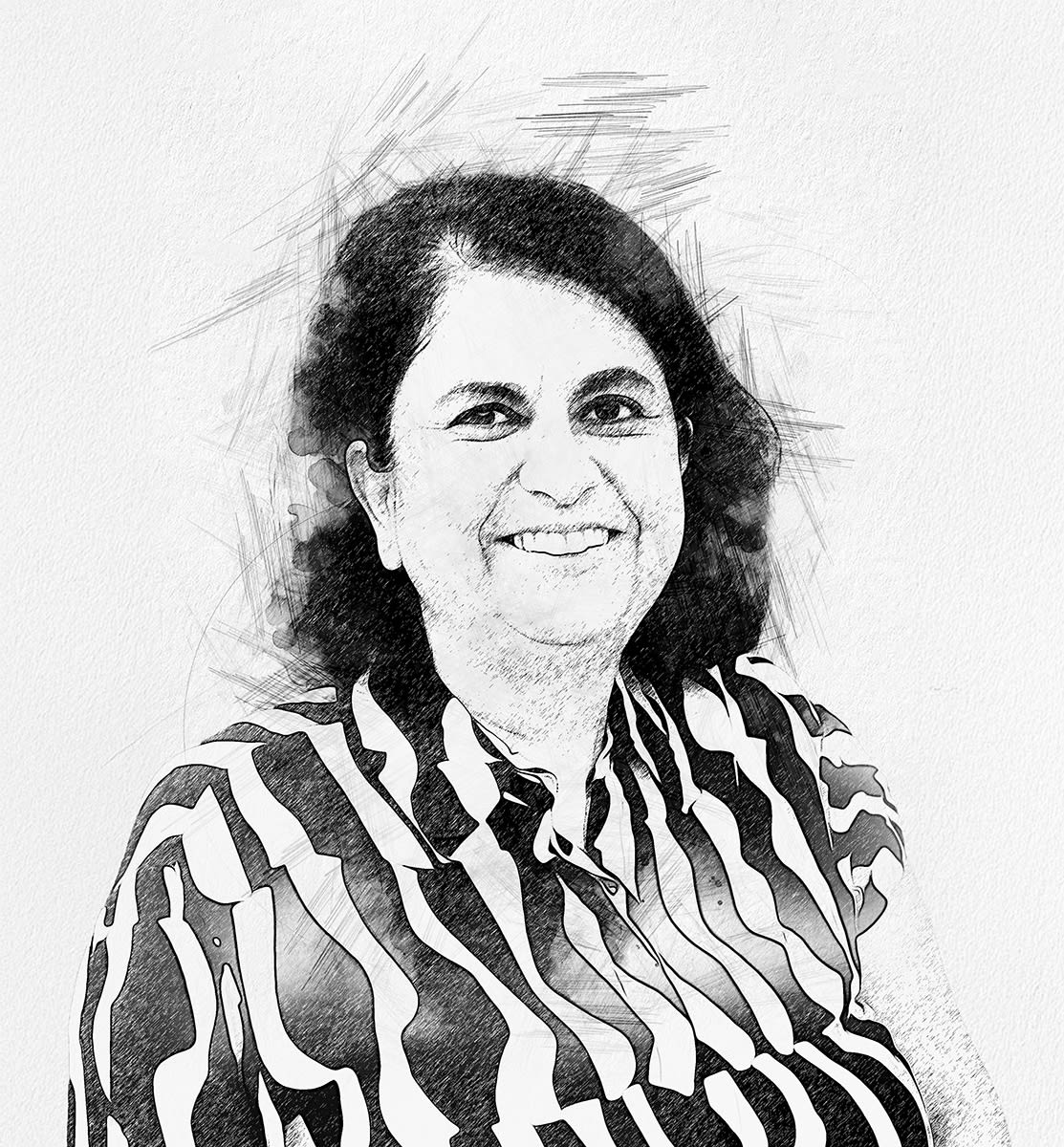
With 30 years in brand strategy, consumer insights and semiotics, you have seen it all. Looking back, what pivotal moment or early experience set the stage for your journey in decoding brands and consumer insights?
I graduated from IIM Bangalore in ’87 with a finance specialisation. P&G selected me as a finance management trainee. At that time, P&G had a 12-month trainee programme rotating you through different functions. So, I started with a stint at the factory and was assigned to work with the head of market research, Mr Joy Gupta. One of my early tasks in this department was to run through all the manuals because P&G was very committed to market research. I was deeply fascinated by the manuals and the depth of market research — and this was when I realised the foundational pillars of my marketing journey and branding were starting to take hold. I slowly climbed the corporate ladder to become a brand manager and developed Whisper as a brand. All these were pivotal moments that firmly placed me in the world of marketing and branding.
At Leapfrog Strategy, you have been working with stellar companies such as Unilever and Hero Motocorp, to name a few. Can you share a situation where a fresh approach made all the difference?
Clients come to us at Leapfrog when they are done with familiar approaches because they need to learn something new beyond those methods. This is when they are prepared to try something radical and different, hoping it will reveal better insights than what their traditional research methodologies uncovered. This is precisely where we step in — we employ semiotics, which allows us to go beyond and deeper into the consumer realm.
For example, let’s say we study a brand or the consumer and then examine it as consumer culture. This consumer culture study is looked at through a wide lens. We recently did a project for Softouch, which was all about understanding the intricacies of fragrances in a fabric conditioner. The difference comes when you have more than just information — you have real insight into what lies behind what consumers are saying.
To summarise, moving the needle to travel that extra mile makes your approach stand out. Taking a cue from your words about the radical approach, semiotics is a fascinating field. So, for those of us who are unaware, how would you describe the unique power of semiotics as a field? Was there a moment when a semiotic insight surprised your client?
Semiotics is a discipline like anthropology, sociology or psychology. It’s the formal study of symbols and narratives. The whole focus of semiotics is to understand how we derive meaning. That means we connect something with something else. Through this process, we make sense of our experiences. And that meaning can be very rudimentary, like basic sense-making. We scan the environment, which is full of signs. From there, we infer: should I turn left or right to go here? This is how we all construct meaning in our lives. It’s inherent to humans.
So, how do you read signs? How do you interpret them?
The task of a semiotician is to uncover the underlying structures that lead to cognitions and interpretations. This is the unique power of semiotics.
We did a study for one of our biggest clients in the wellness products category, and this project is one of our big success stories in packaging redesign. Their product used stevia as a key ingredient. We started by researching different sweeteners and realised that one of the key codes of sweeteners is their source or origin. Every consumer associated white sugar with sugarcane and honey with bees or honeycombs. The problem we identified with stevia was that no one knew its origin. This was the ‘aha’ moment for both the client and our team. We returned to the drawing board and crafted accurate renditions of the stevia leaf on the packaging. The project concluded with tremendous growth for the product line. So, you change the sign, you change the meaning. In marketing terms, this is called repositioning.
That is enthralling. Against the backdrop of AI, I think companies that now want their brands to be ‘true to their roots’ feel more human and deeply culturally integrated. Where do you think this journey is headed, especially when consumers are quickly adopting new technologies?
I view AI and semiotics differently. The main contention is the connection between AI and semiotics — truth, lies, disinformation and misinformation. Images produced by AI are difficult for the ordinary public to decipher. Many fake AI meme videos went viral during election campaigns in India and the US.
As we advance, we may need systems — especially for brand communication — to indicate that an image, video or graphic was generated using AI. This will shift consumers’ credibility levels in what brands promote. Initially, we are all experimenting with AI. Later, a big question will be raised about its actual value. Human-interest stories will always move and evoke emotions. I do not think that will ever change.
You come across as a leader who strikes the perfect chord between data-driven insights and creativity. How do data and intuition work for you or your team to craft powerful messages in a typical day?
We typically ask our clients for quantifiable data, which we analyse to understand market share, awareness, key tasks and competitive breadth. The key here is always to request market share data and brand awareness metrics.
From a semiotic point of view, we study texts as data. A text can be a movie, a web series, category communication or packaging. For us, texts are the source of data. Then, we draw inferences from them. Intuition also plays a significant role because when you’re drawing inferences from numbers and texts, you’re engaging in deductive reasoning. But to apply a rule and reach an inference, you need another reference point. This is not purely logical thinking — it’s abductive reasoning and intuition.
Moving forward to your projects and clients, you count Colgate VedShakti and Zydus EverYouth as some of your biggest successes. Can you share what made these projects unique and memorable?
Well, each project is unique. VedShakti was fascinating because Colgate was struggling with a loss of market share due to the explosion of the Ayurveda segment as a core FMCG product. We worked with a design team, provided directions and tested concepts with consumers in focus groups. I never thought people could get excited about toothpaste packaging — but they loved it.
The project is also memorable because it proved the power of semiotic analysis. If done correctly — going into depth, thinking critically about necessary changes — it has a tangible effect. The method is this: you conduct the semiotics, develop the stimulus, test it with consumers, and their response validates the quality of your analysis.
They say organisational culture is the foundation on which pillars of success are built. How influential is culture when it comes to transforming branding strategies?
Semiotics is always interested in the symbolic dimension of things, and it treats culture as a metaphorical dimension. Social imagination is the shared understanding that all people have because brands embody values, concepts and notions residing in our collective imagination.
For example, respect is universal, but its manifestations differ. American culture emphasises individualism and egalitarianism — hence, the gap between a business owner and a driver is low. This is why American leaders are often addressed by first name. In more traditional cultures, like Japan, respect is formal, and informality may be seen as disrespect. Every organisation has its values, rituals and interaction styles. Studying these helps in branding.
Emotion is a core part of branding. How do you help companies and their brands tap into evoking emotions that feel natural?
Symbols are the language of emotion. Emotion is felt and expressed through body language. Reading emotions means interpreting these signs. When expressed more sophisticatedly, emotions translate into poetry, art and metaphor.
Depending on the brief, creative teams craft stories, taglines or visuals. We guide them by suggesting directions—where to look for symbols or analogies that resonate with the target audience. Conversely, we might advise against certain paths. Creative people can explore freely, but not all directions will connect. That’s how we help clients navigate emotion.
Humour has become essential to how brands deliver messages. Do you think humour will play a symbolic role in semiotics in the coming days, or is it just a short-term trend?
Entertaining and attracting people through humour is age-old. Mass-market brands like Fevicol have used humour on television, often as a surprising twist. But generally, clients prefer playing safe with neutral emotions.
Humour works best when topical. Amul’s campaigns have succeeded because they play on current events with puns. New-age brands, with in-house teams, use more momentary humour — some hits, some misses — which digital platforms allow.