


August, 2025
17 mins read
Coal Isn’t the Villain, It’s the Bridge
 30 Aug 2025
As India powers toward a $7 trillion economy, energy demand is rising at an unprecedented pace. Puneet Bhatla, Managing Director, GE Power India Ltd and GEV Steam Power India Leader – Growth Areas, shares why coal remains an essential part of India’s clean energy transition. In a conversation with Imtiyaz Shaikh, Bhatla discusses how GE Vernova is decarbonising coal, harnessing AI, and reshaping power systems to ensure that India’s energy future is sustainable, reliable — and centred on people.
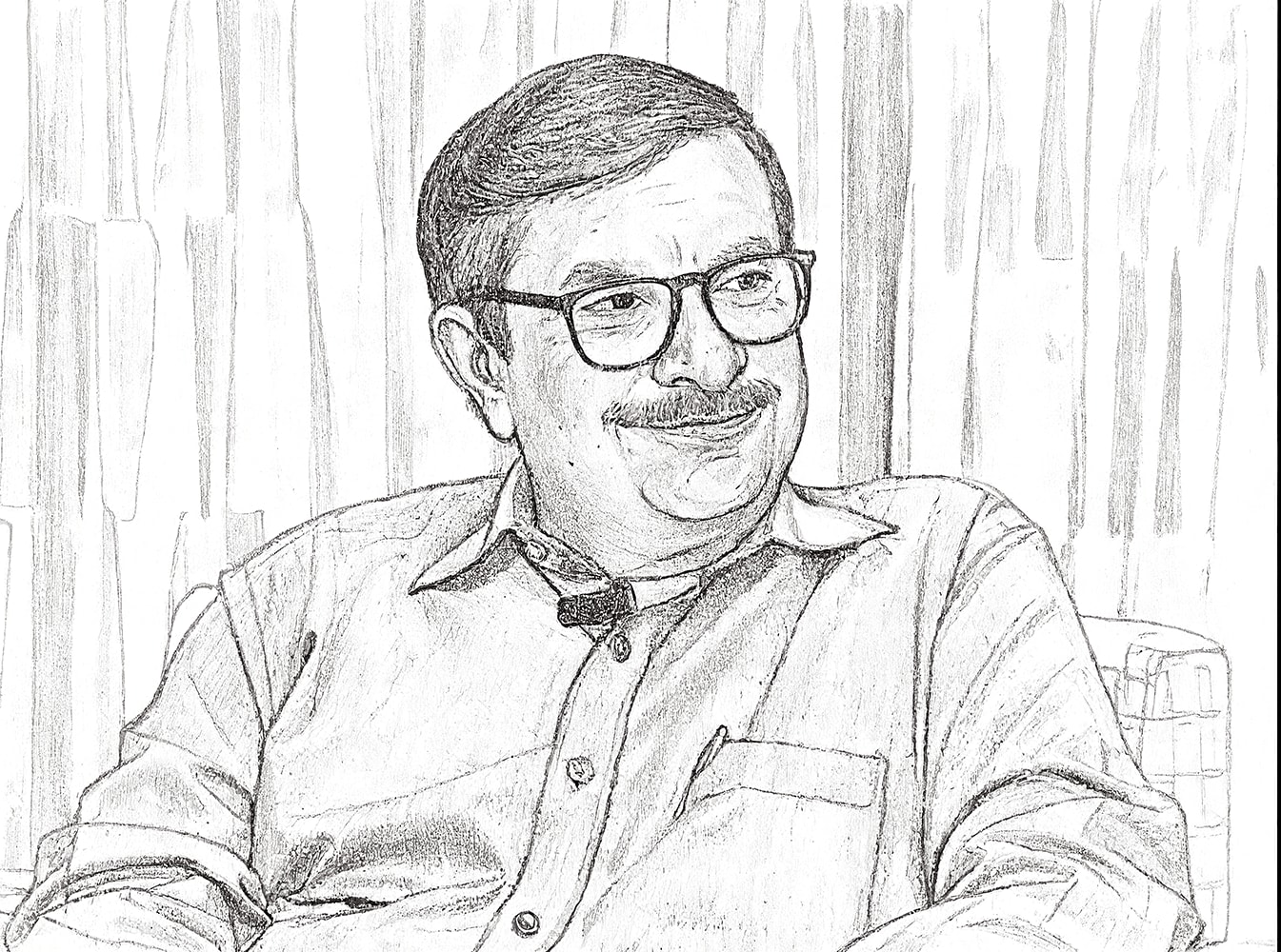
When I was reading about you and your company, I found myself wondering — what’s it like to be in your shoes? So let me ask you this: as MD of a leading energy company in 2025, what’s the first thought that crosses your mind when you wake up?
That’s quite a thought-provoking question — puts me in a reflective mood. Let me begin with a bit of context on the broader economic landscape, both in India and globally. For any MD, it’s crucial to be aware of macroeconomic shifts and how they impact the business environment.
As you’re aware, the Prime Minister has set a bold vision: making India the third-largest economy in the world, targeting a $7 trillion economy. That level of growth is intrinsically linked to energy consumption — and given my background in the power sector, I naturally view this through the lens of electricity demand.
Currently, India’s total installed power capacity stands at around 472 GW. Of this, 272 GW still comes from coal. The rest is from cleaner sources — renewables, nuclear, and other alternatives. We’re making progress, but there’s still a long way to go.
Now, if you look at global economic projections, India’s GDP is expected to grow at about 6.2 to 6.5 per cent, while global growth hovers around 2.8 to 3.3 per cent. That’s almost double. But such rapid growth requires a matching increase in energy availability.
Another key indicator is inflation, which also plays into how economies scale. But from an energy perspective, one framework I often refer to is what the World Energy Council calls the energy trilemma — balancing energy security, equity, and sustainability.
India has done reasonably well on energy security. During the Russia-Ukraine conflict, when many countries faced major disruptions, India remained relatively stable. We were largely self-reliant.
On energy equity — meaning access — we’ve also made great strides. Data shows 99 per cent of our population now has electricity access. But in a country of over a billion people, even the remaining 1 per cent translates into a significant number.
The third element, sustainability, is where we have the most work to do. Much of our current electricity generation is not environmentally sustainable. According to the World Economic Forum’s Sustainability Index, India ranks in Category D — the lowest — on sustainability. We fare slightly better on security (Category B). But again, D on equity — the scale of our population keeps our score lower there too.
These three — security, equity, and sustainability — are not easy to balance. If you think in engineering terms, balancing on three legs is always trickier than on four. Yet, that’s the challenge.
So, when I wake up in the morning and put on my MD hat, I think: how can we deliver power that is reliable, sustainable, and affordable? And when I shift into my role as a people leader, the thought deepens: how do we ensure this energy transformation ultimately serves the people? Because in the end, energy security, access, and sustainability — all of it — is about people.
What stood out to me is how people are truly at the centre of India’s energy transition. You mentioned coal still being dominant, even though there’s a big push for clean energy. From a common man’s perspective, it can be confusing — is coal the villain in this story, or is there more nuance that we don’t often see?
Today, only about 8.5 per cent of the resources we use globally fall under a circular economy model — that is, they’re reused or replenished. The rest are linear. This imbalance contributes to three major risks facing the planet: environmental degradation, climate change, and biodiversity loss. From the sustainability lens, India has done relatively well. In fact, since COP21, India is the only G20 country that has actually overachieved its climate commitments — but the journey ahead remains long.
We’ve committed to net zero by 2070 and aim to have 500 GW of renewable energy by 2030. These are ambitious targets.
But here’s the catch — you can’t flip a switch and go fully renewable overnight. Even building renewable infrastructure requires energy. Based on a rough calculation: to add 100 GW of renewable capacity over the next 9-10 years, you’d need around 3 GW of embedded energy. That includes energy for manufacturing solar panels, producing and transporting equipment, and installing and operating it all.
Now, if you were to avoid using conventional sources like coal for this embedded energy, you’d need to generate an extra 3 GW of renewable energy just to build renewable infrastructure — which creates a paradox. It slows down the transition.
This is where coal comes in. It’s not the villain — it’s the bridge. We need conventional power, especially coal, as a launchpad to scale up renewable capacity. Currently, thermal power accounts for around 74 per cent of the electricity consumed in India. Even by 2030 or 2035, projections suggest it will still contribute about 54 per cent. While the share of renewables will rise, the absolute demand for energy is growing so fast that coal will remain part of the mix for the foreseeable future.
India has acknowledged this reality. The government’s latest policy doesn’t talk about phasing coal out, but rather phasing it down. In fact, there are plans to add 82 GW of thermal capacity over the next decade. This isn’t backtracking — it’s a pragmatic strategy to ensure energy security while building up the renewable ecosystem.
So no, coal isn’t the villain. It’s an enabler — a necessary bridge that supports us on our journey towards sustainability and net zero.
I think that addresses one of the biggest concerns — instead of demonising coal, we should see it as a necessary bridge to our renewable energy goals.
Absolutely. And to expand on that, it’s unfortunate that coal has been portrayed as the villain globally. But if you look at examples like Germany, they’ve also started reconsidering coal. Not because it’s ideal, but because they need a reliable power base to support their energy transition. Thermal power becomes a practical launchpad.
Another recent example is from Spain, where there was a massive blackout — the worst since 2006. Spain has one of the highest shares of renewable energy in Europe and was connected to France through a power exchange system to share clean energy. However, a disruption in that link caused instability in the grid.
Let me give you an analogy. Imagine four or five trucks tied together, moving at the same speed. Each has an equal load — say 10 kg — and they’re travelling at 50 km/h. Now if one truck suddenly loses its load, it might speed up, pulling the others off balance. The system becomes unstable.
The same applies to power grids. All generating stations are interconnected, operating in sync. When load is suddenly lost, machines begin to speed up, going out of frequency — say, above the standard 50 Hz — and they trip. To stabilise the grid, other sources need to immediately step in and balance the load. That quick response is currently only possible with conventional power sources — coal, gas, or hydro. Nuclear can’t ramp up or down quickly, and renewables are weather-dependent and unpredictable.
So when such imbalances happen, like in Spain, it becomes evident why we still need conventional sources in the mix. Until storage technology becomes far more scalable and affordable, conventional thermal power plays a critical stabilising role in the grid.
How does the circular economy work in energy? How does that feedback loop complete at the generation level? Could you share some data or examples?
That’s a good question. The truth is, not everything in energy can be fully circular — but some promising developments are emerging.
One example is biomass. It’s generated from organic waste — agricultural residue, food waste, even municipal waste — and is used to produce energy. Once that energy is generated and consumed, the organic cycle continues. The food we eat, for instance, goes back to the soil, feeding the biomass cycle again. So that’s a form of circularity.
Another is hydrogen, which is gaining attention globally. But in the immediate term, I believe the most urgent step is to upgrade the way we use coal. We need to decarbonise it. This doesn’t mean it becomes perfectly clean — but with the right interventions, we can significantly reduce its environmental impact and accelerate our energy transition.
We have the technology. At GE Vernova in India, for example, we’re working to lower the carbon intensity of coal-based power. Currently, coal-fired plants in India emit about 950 grams of CO₂ per kilowatt-hour. Through conventional efficiency improvements — fine-tuning controls, using high-temperature materials, improving combustion — we can reduce that to around 700 grams.
Then, with more advanced interventions — like co-firing with methanol or ammonia — we can bring it down further, even to about 450 grams per kilowatt-hour. These are real, measurable improvements. And the technologies already exist, both globally and in India. The key is scaling them effectively.
I’ve also read that GE Vernova has invested around $60 million in India to develop HVDC and FACTS technologies. Could you explain, in simple terms, what these technologies are and why they’re considered game changers in the energy sector?
Sure. Let’s start with HVDC — that stands for High Voltage Direct Current. At the most basic level, there are two types of electric current: direct current (DC), like the one you get from a battery, and alternating current (AC), which powers most homes and comes from conventional power stations.
Now, imagine a river flowing smoothly — if there are no rocks in its path, energy flows without turbulence, so there’s minimal energy loss. But if the riverbed is full of stones, you get disturbance and noise, and some of that energy is lost. Electricity works similarly. HVDC allows us to transmit large amounts of power over very long distances with minimal losses — like that smooth river.
This is particularly useful for transporting electricity from solar parks, which are usually in remote deserts or hilly regions, far from where the power is actually consumed. HVDC helps move that clean energy efficiently and economically.
Now, on to FACTS — Flexible AC Transmission Systems. These are a set of technologies that improve the capacity and stability of existing AC power grids. Normally, to increase grid capacity, you’d need to build more transmission lines, which is expensive and often impractical. With FACTS, you can optimise the flow of power using advanced electronic devices — like capacitors and high-resistance components — without building new infrastructure.
To explain it in everyday terms: when electricity flows through the grid, it has two components — active power, which does useful work, and reactive power, which doesn’t do useful work directly but is essential for maintaining system stability. Think of a horse — while it gallops forward (active power), it also makes side movements to balance itself (reactive power). Those balancing movements aren’t productive, but without them, the horse can’t run efficiently.
With the rise of renewables, managing this balance becomes more complex. Renewable sources like solar and wind don’t supply power in a steady, predictable way. For example, solar power is most abundant at noon — when demand is typically low. But in the evening, when people return home and start using air conditioners and appliances, solar power drops off.
This mismatch creates what’s called a duck curve — named for its shape — in the energy demand-supply graph. During such times, we need other power sources, like gas or hydro, to quickly fill the gap. Technologies like FACTS and HVDC are crucial in making the grid flexible and responsive enough to handle these fluctuations efficiently — without blackouts or wastage.
That’s why these technologies are such a big deal. They allow us to integrate more renewables into the grid, while keeping the system stable, reliable, and cost-effective.
How are you and your team addressing the challenges we’ve discussed, and how do you see the future shaping up?
If I were to sum up our discussion so far, the need of the hour is for systems that can operate like a switch — able to start and stop quickly as required. The future will demand solutions that can be turned on or off at the right moment and for the right duration. That includes pumped storage, batteries — anything that offers that kind of flexibility. So, from the earlier model of large, centralised systems, we’re moving towards a more decentralised setup. That decentralisation will be at the core of the energy landscape of the future.
Speaking of what’s needed, it’s the age of AI now. I was intrigued to read about its use in energy management — like grid stabilisation or predicting downtime for more efficient switching. From your experience, how has AI enabled better energy management systems?
AI is still evolving, but we’ve already started using it in power generation. As I mentioned earlier, the goal is to ensure reliability, affordability and sustainability. That’s where AI starts to make a real difference. Until now, we’ve mostly relied on pivot analysis and manual interpretation. But with AI and data-driven algorithms, we can now leverage historical data to predict what’s likely to happen — and that’s where the future lies.
One area we’ve applied this is in asset performance monitoring. We’ve developed a product internally that does exactly. Another area is predicting energy requirements and enabling real-time spot pricing, which can be immensely useful for utilities to make timely decisions.
On the transmission side, AI can help predict which lines might go down, or where issues are likely to emerge. It can also control operations — like when and how capacitors should be switched on or off — making the entire system far more responsive and efficient.
This shift from preventive to predictive maintenance, enabled by data and AI, has transformed operational efficiency. Instead of overhauling entire systems on a routine schedule, we can now isolate and address specific failing components — say, a handle — based on actual usage patterns. It means less waste, better asset utilisation, and ultimately contributes to sustainability.
As a society, we’re constantly consuming, but predictive systems help moderate that hunger. They reduce unnecessary replacement, allowing us to extract only what’s needed, and extend product life responsibly. That’s the kind of circular thinking the future demands.
You’ve spoken about technology and transformation in India’s energy landscape, but there’s also the people aspect. As we move away from coal and other conventional sources, how are we managing those employed in coal-reliant jobs? And secondly, how do we ensure energy remains affordable for everyone?
On affordability, I think we’ve already touched on it. Once consumerism begins to reduce and scale sets in, costs will come down naturally. Prototypes are always expensive—volume brings prices down.
Now, when it comes to people, that’s the core of everything. Whatever we do — energy, coal, renewables, business — it’s all for people. Without people, none of this matters.
Let me offer an analogy. I remember doing calculations using slide rules — perhaps you’ve never seen one! Then came log books, then scientific calculators. Similarly, typewriters gave way to word processors. The point is, people adapted. They were reskilled. The jobs didn’t vanish; they evolved. Even with AI — someone still has to write the algorithms. AI doesn’t teach itself how to read or think. It’s still people-led.
Take dispatch operations, for example. The person managing a thermal plant today could be doing the same job at a solar plant tomorrow. Yes, the mechanical engineer from a thermal plant might not be needed in a solar setup — but they’ll be reskilled. And I don’t see any drastic job losses in the near future. In fact, we may face a shortage of skilled talent. Young people today want to work in AI, machine learning, fintech — not in thermal plants or the mechanical core. So, if anything, the experienced workforce will only become more valuable — at least until 2070.
Since we’re speaking about reskilling and the future of work, what’s one piece of advice you’d offer to aspiring leaders and MBAs entering this sector?
A very relevant question. You are the future, after all. My advice is simple: never discard conventional solutions. Use them as a springboard for innovation. You can’t throw away the old overnight — they phase out gradually. So when you enter the workforce or take on leadership roles, make sure to leverage the wisdom of the past.
Second, a more practical tip. In Japanese, there’s a concept called Gemba — it means “the real place”. As a manager, you don’t need to fix a puncture yourself, but you must understand what it takes to do it. Know the ground reality. Get out from behind the desk. Whether it’s a power station, a factory floor, or even a stage if you’re in advertising — go there. See how things are built, how they work. That’s when you become truly people-focused. And once you’re focused on people, you’ll start seeing how systems can be improved.
Now let’s switch gears with a quick rapid-fire round. One word to describe India’s energy future?
Bright. And sustainable.
The biggest game-changing technology in the next five years?
The one best suited to the situation.
What percentage of India’s energy will be renewable by 2030?
I’d say — double what it is today.
Complete the sentence: The key to a successful energy transition is…
…decarbonisation — especially in today’s context.
And finally, what’s the best part about working in the energy sector today?
You’re the bridge between the old and the new —and that’s exciting. I’ve been in this space for 35 years. I’ve drawn engineering designs by hand, moved to black-and-white AutoCAD, then colour, then 3D. Being part of that evolution — of learning and adapting — is what makes it fun. So to anyone entering the energy sector: don’t worry about whether today’s tech will change tomorrow. It will. That’s the nature of progress. Embrace the present, contribute your best, and enjoy the ride.