


March, 2025
8 mins read
Collaboration is Playing a Bigger Role Than Competition
 06 Mar 2025
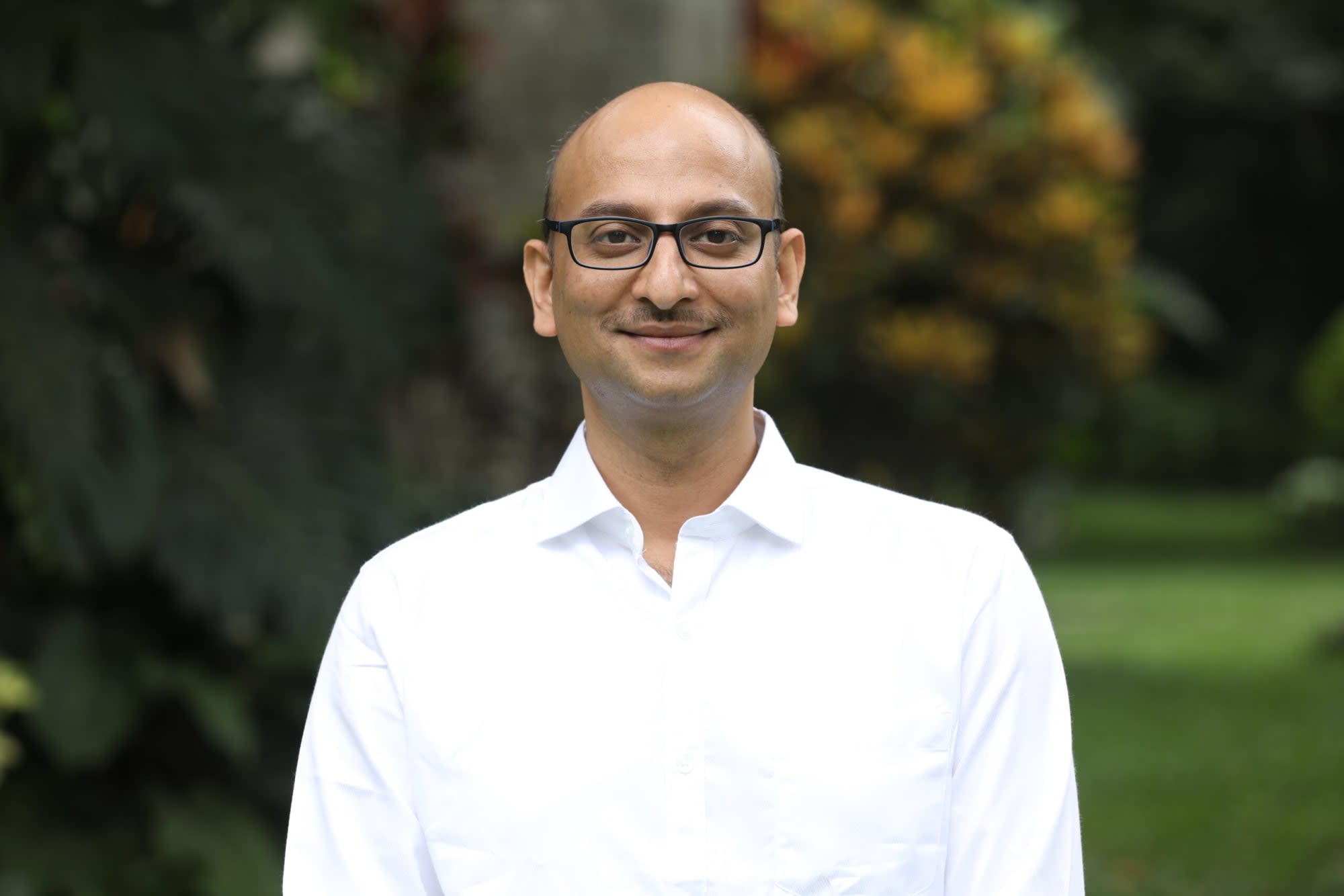
Himanshu Shekhar, Assistant Professor at XLRI Jamshedpur, specialising in strategic management, believes that in India’s fast-growing market, collaboration between startups and traditional businesses is driving growth more than competition. In this conversation with Anmol Singla, he discusses how Indian firms are blending innovation with established practices, the global potential of Indian tech solutions, and the increasing importance of sustainability in long-term strategy. He also emphasises the crucial role of academia in preparing future strategic leaders.
Can you share a bit about your journey in academia? And what drew you towards the field of strategy?
For me, academia came a little late. I had a 10-year stint across information technology, banking, and public policy. All of that motivated me to join academia, where the focus is more on knowledge creation and knowledge dissemination, which was kind of a calling for me. I thought that I could best contribute by being a professor, and that’s where I took my plunge some six years ago by doing a PhD from IIM Bangalore.
The strategy part is linked with my earlier experiences. When I was an MBA student here at XLRI in 2010, I found the discipline of strategy to be an integrator discipline. It had a higher-level view of businesses and how they make money. From there on, it kind of stuck with me, and I thought, yes, this is something I want to pursue further. Even for my PhD, I chose strategy as my focus, and that’s how I am here. I have started teaching, and I really like what I am doing right now.
How do you see strategic thinking evolving in Indian businesses, especially with the rise of new startups and digital transformation?
India, if you have been tracking it, is bubbling with business energy. The new generation is looking at creating more value, and more startups are coming up. All of this is not at the expense of traditional businesses. If you look at the stock market or how India is growing at a pretty good clip in terms of GDP, the number of people joining the real GDP growth, the number of people getting out of poverty, and the expanding middle class — all of these are areas where businesses contribute a lot.
Startups are not happening against traditional businesses; the market is expanding so fast that startups are just lapping up that market. Traditional businesses, like those in steel, cement, and infrastructure sectors, are also growing pretty fast. At the same time, e-commerce and UPI-based commerce are growing at a very fast pace. So, if you want to be in an environment where you want to see businesses grow, India is a very vibrant market right now.
Startups have provided some very good solutions to problems that customers were facing but weren’t getting the right solutions for. These solutions have been picked up even by the younger generation. In terms of e-commerce, quick commerce, and payments, we are probably on the cutting edge globally. There are some areas where other countries are ahead of India, and India will catch up there as well. But the way we are doing work on mobile itself is phenomenal — literally phenomenal. The number of services and startups coming up is really phenomenal.
India has a unique business environment with large conglomerates, MSMEs, and startups. How do strategic approaches differ among these types of companies?
As I mentioned earlier, the market is growing at a very high speed, which means there is a place for everybody. Competition will eventually happen, and that’s where strategic thinking comes in. For MSMEs and startups, you see a lot of deals happening with larger businesses. For instance, companies like BigBasket, which began as startups, scale to a certain extent, but beyond that, they need the ecosystem of larger businesses to drive further growth. They find a better umbrella under larger businesses, which provides them with the right resources and inputs to cater to the growing market.
Traditional businesses have been around for more than 200 years, even before the British left India. They have seen Indian customers evolve and have a deep understanding of the market. Startups, on the other hand, are coming up with new solutions. What India is doing very well is merging these two — traditional understanding of the market with the new solutions provided by startups.
For example, financial inclusion was a challenge 15 years ago, but today, with so many startups, it’s not a challenge anymore. Every rupee spent at a small business is monitored and used to give them loans or strengthen their business capabilities. These solutions flourish under the larger umbrella of traditional businesses. So, I don’t see a lot of competition yet; collaboration is playing a bigger role than competition.
As markets expand, new players come in, and even traditional firms are accessing the market. The supply of capital, which was a problem for emerging markets like India, is not a problem anymore. All these factors are supporting each other to create the market we see today.
India has been pushing for “Atmanirbhar Bharat” or self-reliance. What are the strategic challenges and opportunities Indian firms face in the global market?
Indian firms approach the global market in multiple ways. Some firms approach the global market very early in their incorporation, while traditional firms are finding ways to capture global markets. The challenges are that when you come from an emerging market, people don’t trust your solutions initially. So, the main challenge is the acceptance of Indian solutions in international markets, especially for new solutions.
The opportunity lies in the fact that Indian solutions cater to a larger population, not just the ultra-rich. They are built for the grassroots, and that’s why solutions like UPI are being requested by countries like Singapore. Indian startups provide solutions that cater to general customers with limited paying capacity but still create robust business models.
The key is to replicate these solutions and create use cases in India first. India is a very large market, and you can test your product here before going global. You are carrying the “Brand India” with you, and Indian tech solutions are in demand globally because they are robust. So, you have to build on that reputation.
Sustainability is becoming central to corporate strategy, especially as Indian firms expand globally. How effectively are firms aligning their strategy with these needs?
Sustainability is something that is coming from the outside, but it aligns well with strategy, which is by definition long-term. Sustainability takes that long-term view even further. If you are looking at creating value for customers for a very long time, you have to look at factors like sustainability.
Traditional businesses have been doing sustainability in their own way, especially on the social front. They have been taking care of their communities much ahead of their businesses. New businesses should also look at this because that’s how Indians do business — they connect with society and draw their strength from there.
In terms of environmental sustainability, there has been a lot of progress. Large corporates and business houses in India have been incorporating sustainability into their practices. Even newer firms like Zomato have been modifying their packaging and delivery practices to meet the latest demands. So, I don’t see Indian industry, whether old or new, lagging behind in sustainability.
What role should academia and business schools in India play in shaping the next generation of strategic leaders?
Academia and business schools are places where the next generation gets trained to deliver value to society. Given that India is a fast-growing market, academia cannot relax. It has to be at its best. Academia cannot just focus on training; it has to engage in research and business partnerships.
Activities like conclaves are important because they help academics understand what is happening on the ground. Academia needs to interact more with businesses and stay updated on the changes happening in the world. For example, today I read about a new quantum chip launched by Microsoft that will increase computing capability by a large margin. Such advancements will transform businesses, and academia has to incorporate these changes into teaching.
Academia has to update itself not only on traditional businesses but also on new businesses and large companies that are getting created every year. The largest listings last year included companies created in the last 10 years, catering to new customer requirements. Academia has to incorporate all of this into teaching and research to contribute effectively.
Any last words for students on how they should pursue strategy?
Students should always look at the larger picture. Strategy is about the larger picture and the longer-term view. The more you go into the larger picture, the more you have to go deeper in terms of value creation.
If students can identify where their firm is creating value, they will be able to devise better strategies. They should keep asking, “Where is the value creation, and who are we creating value for?” If they can keep understanding that better, they will be able to apply everything they learn in business school or through their experiences to create better strategies for every stakeholder.