


May, 2024
3 mins read
Decisions Affect Not Only The Individual But The Entire Team
 30 May 2024
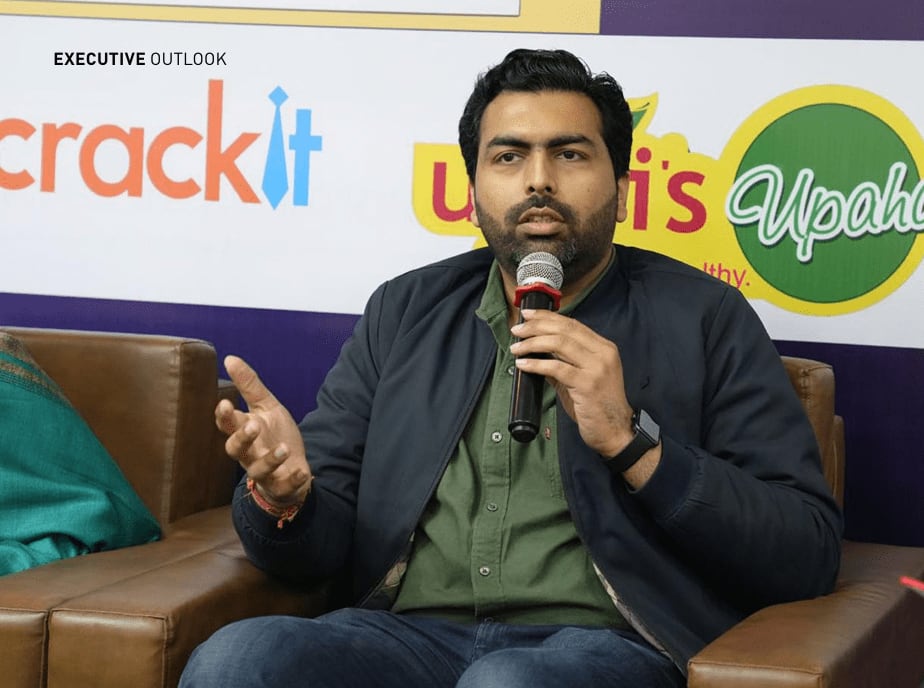
In a dialogue with Nandita Kumari and Yashank Tiwari at XLRI Jamshedpur, Abhishek Sharma, Chief Product Officer at HT Digital, discusses the impact of thoughtful decision-making on team dynamics, the evolving role of journalism in the digital age, and shares essential insights for MBA aspirants.
How does HT Digital manage to stay on top of the game in the competitive market?
You’re right; there is significant competition in the media space, especially in digital media. The inherent user behaviour shows a preference for consuming news and related content online. Many users have shifted towards finding and reading high-quality content in various fields of interest, such as sports, markets, personal finance, politics, and entertainment, primarily through smartphones. We offer a broad range of content, from generic news to specialised business news on our platform, Mint, where we focus specifically on markets, personal finance, and wealth. Our news articles feature text alongside infographics, interactive charts, highquality images, and polls. Some users prefer visual content, so we also provide high-quality video production through our video business. These are some of the ways we strive to enhance user retention on our platform. We believe that once users engage more with our content, they are more likely to return.
How do you see the role of traditional journalism evolving in the face of digital advancements and social media?
Traditional journalism has always played a crucial role, and this remains true amidst digital advancements and the rise of social media. Though we may not use the term “traditional journalism,” its essence — delivering research-based, fact-driven stories that add significant value to the audience —remains paramount. Whether consumed digitally or in print, loyal users appreciate wellresearched, fact-based content. It is essential to avoid a scenario where only one source is perceived as credible, while others lack credibility. Social media platforms offer speed in breaking news, a strength we must leverage effectively.
Being in your position must require making many decisions, whether related to business or people. What kind of challenges do you face, and how do you approach them?
Indeed, being in a leadership role involves numerous decision-making situations that impact both business and people. One of the essential skills for managers, whether they are just starting their careers or moving into higher levels of leadership, is making decisions carefully. This is crucial because these decisions affect not only the individual but also the entire unit or team. When faced with challenges, the key lies in defining and comparing priorities. Prioritising which product to build involves evaluating various problems. Whether it’s solving user-centric issues or aligning with overarching business objectives, it’s essential to adhere to core goals. As you progress in your career, the impact of your decisions grows. You will be making decisions about the vision and strategy of the product, and the responsibility to make the right choices becomes even greater.
What advice would you give to MBA aspirants? What philosophies do you abide by or suggest to us?
I believe there are two key factors that help an individual succeed in their professional life, especially in product management. The first is the right skill set, and the second is the right mindset. While they are different, both are crucial. Having the right skill set means being able to think logically, apply common sense, and think outside the box. The right mindset, on the other hand, involves behavioural traits such as taking ownership of whatever you do, empathising with your users, and understanding your stakeholders. Instead of seeing your stakeholders as just colleagues who burden you with tasks, take a moment to understand their problems and solve them. Which one should you prioritise? Ideally, both are important, but I would prioritise the right mindset first. With the right mindset, you can quickly develop the necessary skills. However, having the right skill set without the right mindset makes it difficult to be a good manager.