


January, 2026
6 mins read
Dignity at Work Is Foundational to Management
 25 Feb 2026
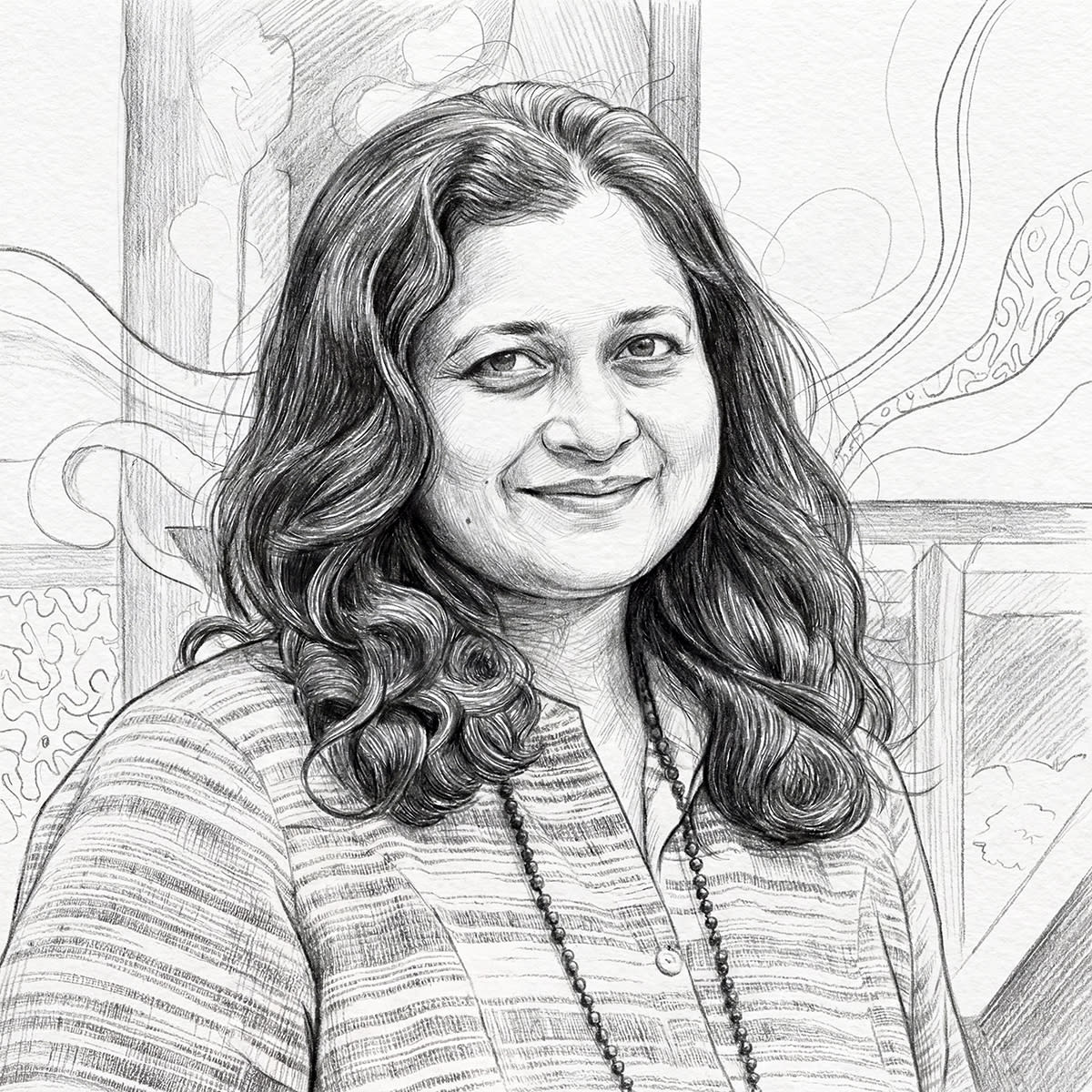
In an era where organisations are evaluated not only on performance but on how humanely they operate, questions of dignity, care and ethical responsibility have taken centre stage. Ananya Joshi speaks with Dr Ayatakshee Sarkar, a faculty member in Organisational Behaviour at XLRI Jamshedpur, whose work spans humanistic management, non-violence and workplace justice and well-being. Drawing on 15 years of experience, including research at Cambridge Judge Business School, Sarkar examines how academic ideas translate into everyday organisational practice. They discuss placing human dignity at the heart of work, and why care-oriented perspectives may be among the most critical “unturned stones” in the future of management.
You spent time at Cambridge after completing your doctorate. How did that experience shape your thinking on humanistic management and dignity at work?
Dignity at work and humanistic management are foundational to human resource management everywhere. What my time at
Cambridge really sharpened was how these ideas move beyond abstract moral values and become lived organisational practices.
Humanistic management was deeply embedded in everyday processes, such as how feedback was given to students, how
guests interacted with staff, how colleagues treated one another, and even how vendors were engaged. These values were not
confined to classrooms or policy statements; they were visible in daily behaviour. That experience shaped my understanding of
humanistic management not as a “strategy,” but as a practical, everyday practice.
In India, while the importance of these values is well acknowledged, we still have some distance to travel in terms of making them truly practice-based. Organisational values often speak about dignity and humanity, but the challenge lies inintegrating them into routine systems and processes.
Organisational behaviour theories are primarily Western in origin. Given India’s cultural diversity and its own workplace characteristics — and your work on dignity, non-violence and spirituality — do we need India-specific OB frameworks?
This is a very relevant question. Even today, most OB textbooks and frameworks, such as those by Robbins, are primarily Western, with limited contextual adaptation. While examples may occasionally draw from Indian settings, deeper integration is still lacking.
India’s organisational context is incredibly complex. Diversity here goes far beyond gender; it includes ethnicity, caste,
language, region and dialect. Indian workplaces are characterised by collectivism, a higher power distance, a sense of moral
duty, and deeply rooted spiritual worldviews.
I’ve seen this clearly while conducting corporate programmes. When I introduce ideas using spiritual language, participants
often engage deeply and enthusiastically. However, when I rely solely on Western tools, like standard emotional intelligence
questionnaires, the concepts sometimes feel distant or linguistically disconnected. Adapting them to Indian cultural meanings
becomes essential.
My work on non-violence and dignity shows that harm in Indian workplaces is often subtle, relational and normalised rather
than overt. Therefore, organisational behaviour in India must pay closer attention to cultural contexts, especially in understanding
employee emotions, silence, resilience and the meaning-making process.
The Supreme Court recently clarified that Internal Complaints Committees (ICCs) can conduct inquiries even when the respondent is from another department. As a trainer for the Prevention of Sexual Harassment (POSH) Act, how do you see this change?
This clarification is essential. In my experience as an ICC presiding officer, many individuals, women and sometimes men, hesitate to file complaints when the respondent is from another department, a higher authority, or an external consultant. The fear of retaliation creates a significant psychological barrier.
Allowing preliminary inquiries irrespective of departmental boundaries makes redressal mechanisms more accessible and
humane. It prioritises the complainant’s sense of safety over procedural convenience. In that sense, it lowers reporting barriers
and reinforces trust in institutional processes.
Beyond legal compliance, how can organisations ensure that ICCs are perceived as safe and fair spaces?
Let me share an example from within my own institution. Initially, POSH awareness and training sessions were conducted by
external consultants. While well-intentioned, their examples and frameworks sometimes felt disconnected from our institutional
realities, especially for staff members.
Over time, we transitioned to conducting these sessions through internal ICC members. I personally spearheaded this
initiative. The difference was remarkable; staff, students and faculty felt more comfortable, could relate better and were more
willing to open up.
Beyond compliance, ICC members must be trained in trauma sensitivity, empathetic listening, non-judgmental engagement
and procedural fairness. Awareness and sensitisation must be embedded within the organisational culture rather than imposed
externally.
This issue of our magazine focuses on “niche industries of the future.” From a dignity and well-being perspective, whichemerging domains matter most?
Through repeated discussions in corporate advisory board meetings, one theme consistently stands out: care-oriented and
relational forms of work.
These include roles involving emotional labour, mediation and support. While such work is often invisible, feminised or
undervalued, it is critical to sustaining organisations in the long run. Recognising and legitimising these forms of work is
essential, not just for specific sectors, but for any organisation striving to be genuinely human.
Do you see workplace well-being, ethics and restorative practices becoming specialised career paths?
Absolutely. These areas are no longer peripheral HR functions; they are becoming core organisational capabilities.
As workplaces grow more complex and fragmented, organisations will increasingly need professionals trained in restorative
practices, conflict resolution, ethics and well-being. These roles demand great skill, moral judgement and institutional
recognition. They cannot be treated merely as goodwill initiatives or “soft” capabilities.
With the rise of gig work and project-based employment, what new care-related challenges do you foresee?
Fragmentation in gig and project-based work often dilutes responsibility and accountability. No single organisation feels fully
responsible for employee well-being or dignity.
This raises serious concerns: Who ensures fairness? Who listens to worker voices? What happens to grievance
redressal? These questions remain loosely coupled with modern work arrangements, and addressing them will be a
significant leadership and HR challenge in the future of work.
Will skills like self-awareness, ethical judgement and emotional intelligence become key differentiators for leaders?
Definitely. Technical skills are easier to automate and replicate. What will truly differentiate leaders is self-regulation, emotional
regulation, relational awareness and ethical judgment.
I often hear alumni say that while finance or technology skills were easy to learn, understanding people remains their
greatest challenge. These capabilities are not “soft skills”; they are foundational for navigating complexity and moral
ambiguity in the workplace.
Finally, what is one “unturned stone” in management thinking that we often overlook?
“The threshold of harm.” We rarely ask when everyday incivility, neglect or silence crosses the line into a violation of dignity.
Management research must focus more on the outcomes of harm, beyond just conflict management techniques, and also on
how dignity can be restored and protected within organisational cultures.