


July, 2025
7 mins read
Don’t Hold Your Talents in a Napkin
 30 Jul 2025
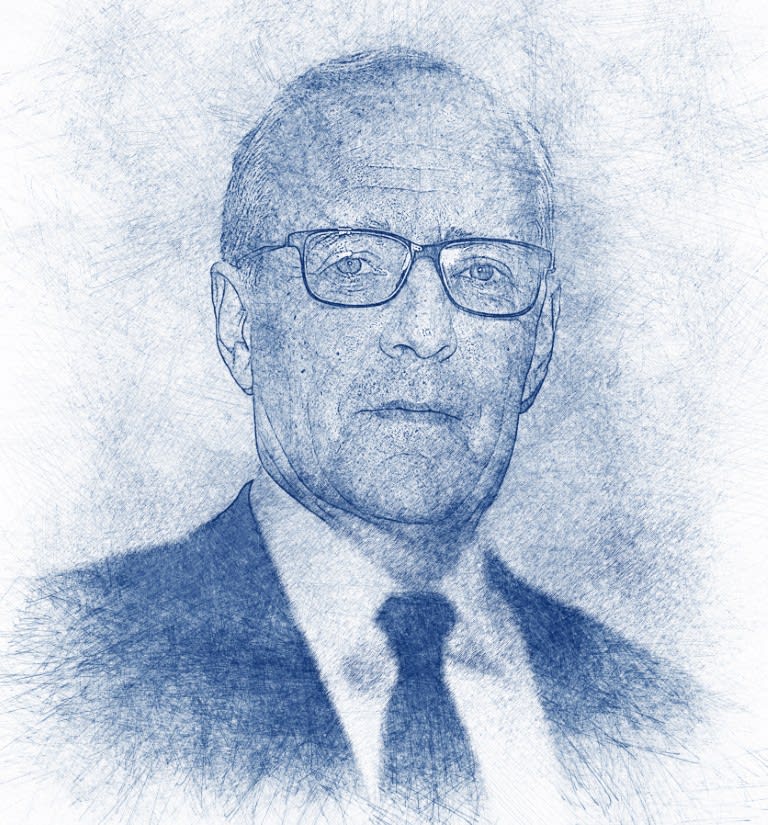
After a remarkable career spanning law, operations, and HR leadership at global giants like AT&T and BellSouth, Professor Dick Sibbernsen now teaches across continents — from Loyola University and the University of Sydney to XLRI Jamshedpur and even prisons in Chicago. In this wide-ranging conversation with Anmol Singla, he reflects on people-centric leadership, India’s rising talent, and the habits that distinguish great leaders — urging young professionals to share their time, skills, and purpose with the world.
Reflecting on your distinguished corporate journey from Tenneco to AT&T, what would you say were the defining moments that shaped your philosophy on leadership and human capital?
The defining moment for me came during my transition from law into operations. I had earned my doctorate in law and was doing well in the legal department, but then I was offered an opportunity to move into operations. Over the next 10-12 years, I worked in sales, marketing, and manufacturing — and that changed everything.
I began noticing a pattern: departments with the same products, processes, and technology often achieved very different outcomes.
The difference wasn’t technical — it was human. The best-performing teams had strong leadership, and what I came to call the “X-factor”: people management.
I observed this first-hand through three exceptional line managers. All had engineering backgrounds, yet each had a unique leadership style. What they shared was a people-centric approach grounded in trust, structure, and alignment. They delivered excellent results and advanced to senior positions — not just because of what they knew, but because of how they led people.
That experience stayed with me. Later, when I moved into corporate HR in an international company, I saw it again and again. Leadership effectiveness always came down to how consistently and deliberately leaders managed people. Products/services and technology are necessary, but they’re not sufficient. People leadership is what makes the difference.
The Leadership Pause: Four Daily Questions
Professor Sibbernsen shared a simple yet powerful framework used by successful managers around the world — four daily questions that act as a personal leadership check-in:
Who am I?
Who am I with?
What do they need?
What needs to get done — and what’s the best way to do it?
It’s a moment of pause. A return to intention. A reminder that leadership, at its core, is about people.
You began your career with a legal background. What prompted the shift into operations and HR, and how has that shaped your leadership style?
I transitioned into operations and was immediately drawn to the energy and complexity of day-to-day business — making, selling, servicing. There’s something I call the psychic reward: the satisfaction of closing a sale, launching a product, or solving a real-time challenge. That kind of gratification just doesn’t exist in the legal profession in the same way.
What really stood out was how deeply people were embedded in every part of the business flow. Whether it was frontline production or customer service, the “X-factor” of people management was at the core of success. That realization was a major turning point in my leadership journey.
After decades in global corporations, what led you to academia? How has teaching across India, the US, and Africa shaped your views?
I’ve always believed in the cycle of life: you learn, you earn, and you return. Post-retirement, I felt the need to give back — to help shape the next generation of business leaders by sharing tools and lessons I had picked up over a long career. I wanted to shape in a small way how leadership thinking is passed on.
I was always passionate about developing people — setting up systems, coaching leaders, and creating growth environments. Teaching was a natural extension of that. It gives me great satisfaction to see students strengthen their leadership muscles, particularly in people management.
I also wanted to step out of my comfort zone. As a dual citizen of the US and Australia, I’ve been fortunate to teach in India, Tanzania, and Indonesia. Each country has enriched me in different ways — both personally and professionally.
I also volunteer two days a week in a North Chicago prison, teaching a course called “Rethinking Your Thinking” to young inmates. It’s about helping them understand and process what they carry in their emotional backpack — another way I try to lighten someone’s load.
Having taught at XLRI and engaged with India’s business ecosystem, how do you view India’s talent landscape and the evolving role of Indian MBAs?
India is sitting on a tremendous opportunity. The demographic dividend is real, but it depends on whether human capital investments are prioritized. Institutions like XLRI are playing a vital role. The talent coming out of here can make an enormous impact — with both tactical and leadership skills.
Indian MBAs today are stepping into leadership roles far earlier than my generation did. They’re capable of combining technical acumen with people leadership — and that’s a powerful combination.
India’s economy is projected to grow from $4-5 trillion today to potentially $40 trillion over the next few decades. Whether or not it hits that number, it’s clear this will be a period of rapid growth — and that’s exciting.
Across countries, I’ve observed key differences. In Tanzania, students are energetic but often face gaps in foundational education. In Indonesia, there’s consistency in the education system, and students bring joy and camaraderie to learning. But in India, what’s impressed me most is the emphasis on innovation at scale.
XLRI, in particular, has created an ecosystem that fosters world-class thinking. The faculty are dedicated far beyond the call of duty. Many could earn more in the corporate world, but they’ve chosen to shape future leaders instead — and that commitment is both rare and admirable.
What advice would you give to young professionals entering the workforce amid such rapid global change?
First: don’t cheat yourself. A career is a terrible thing to waste — especially if it’s your own. Develop a disciplined approach to understanding yourself. Practice reflection. Build self-awareness like you would a technical skill — and take it seriously.
Based on decades of interviews and data, five habits consistently stand out among top leaders:
- Collaboration — They work well with others to design and deliver results.
- Self-awareness — They understand their energy patterns, triggers, and limitations.
- Trust — They do what they say. They’re consistent in both character and competence.
- Breadth of experience — They’ve worked across geographies, functions, and perspectives.
- Empathy — They’re enjoyable to work with, even during disagreements.
We also just finished surveying over 100 global companies about future workforce needs. Five leadership competencies came out loud and clear:
- Integrity
- Technical capability
- Results orientation
- Change leadership
- Interpersonal skills
These aren’t optional. They’re core.
And finally, remember: your career is a marathon. The days may feel long now, but the years will fly. Take care of your health — mental, physical, and emotional. Learn to breathe. Be calm and confident. Believe you can do this.
Keep front and centre your responsibility to build the common good as your career grows forth. Get involved! The country and the globe await your skills and ethical conduct to solve mounting social and environmental needs. You are uniquely positioned — individually and collectively — to apply a higher level of planning, fact-based logic, and technology skills to design and deliver effective solutions. Don’t hold your talents “in a napkin.” Share your time and your talent with the community and society. Not only will you solve such problems, but you will grow to your personal and purposeful best in career and life — and enjoy true joy and a deep sense of purpose.