


September, 2024
7 mins read
Factories alone won’t make India a chip superpower
 29 Sep 2024
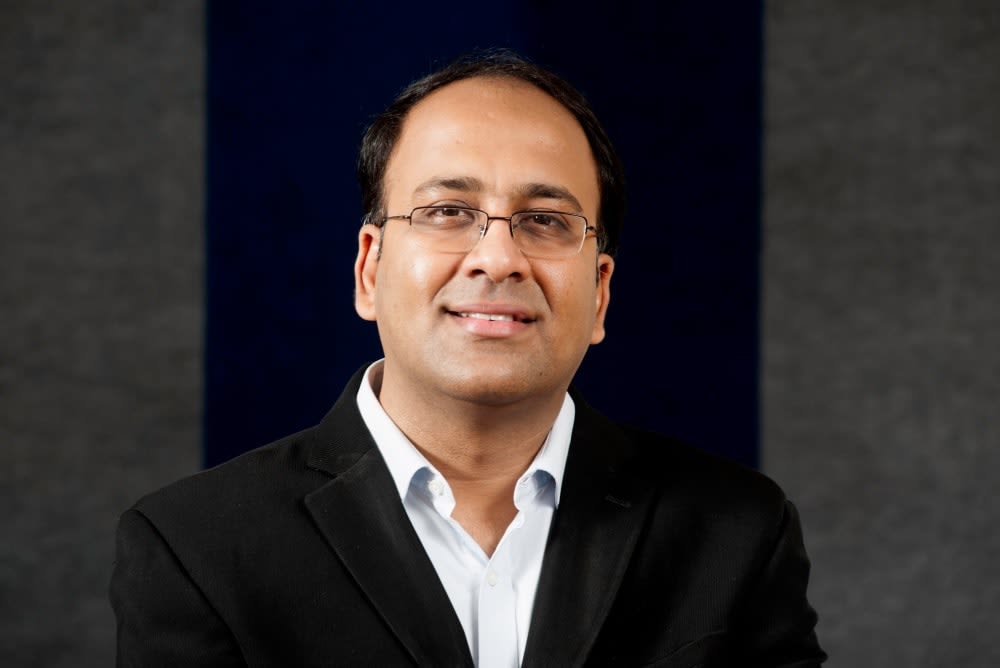
Anand Ramamoorthy, Managing Director of Micron India, offers a candid perspective on the challenges and opportunities in India’s semiconductor industry. In an insightful conversation with Sukanya Chatterjee and Gannu Murali Krishna, he emphasises that while India is making strides with initiatives like the $10 billion Semiconductor Mission, true success will require more than just factories — it demands a robust ecosystem of suppliers and talent. He also underscores the importance of cultivating a skilled workforce, noting that 30 per cent of Micron’s employees are recent graduates. Ramamoorthy reflects on his own journey from Silicon Valley to India, and how leadership, creativity, and resilience are critical for navigating this dynamic field.
From Silicon Valley to becoming the MD at Micron India, what motivated you to take this path?
It was a very different India back then, with career options still limited to multinationals and a few public sector companies. Like many of my peers, I went to the US for graduate school and later did my master’s in material science and device physics. My first job was in the Bay Area in the late ‘90s, during the era of international exuberance. Back then, I didn’t know how my journey would pan out — it was almost impossible to predict.
My father gave me simple yet powerful advice: “Whatever you do, do it well.” A few years into my job, I became more self-aware and realised that working on a small part of a chip design, without knowing its full impact or who buys it, wasn’t fulfilling. That self-awareness pushed me to explore different paths. Eventually, I realised I wanted to be a leader in engineering and product management.
I had assumed I would keep working in the US, but when I look back, coming back to India was one of the most fulfilling decisions of my life.
You emphasised the importance of finding your calling early. How did you know leadership and product management were the right paths for you?
It took a few years, but I found my calling about three years into my engineering role. I enjoyed making higher-level decisions and engaging with upper management. Presenting engineering ideas to management gave me joy, and I realised I had the presence to connect and communicate at that level.
There’s no magical moment where everything becomes clear — it’s a series of episodes and reflections. The more you push yourself, the more you stress-test your career path. If you’re not excited to go to work in the morning, that’s the first sign you might not be doing what you love.
I found my calling by reflecting on what brought me joy, and for me, it was in leadership and making high-level decisions. Over time, I moved towards that path.
You’ve been in the semiconductor industry, known for its dynamic nature and technological advancements. Could you share any challenges or creative problem-solving situations you’ve encountered?
In the semiconductor industry, creativity and innovation are required daily. Moore’s Law drives us to make silicon smaller, faster, and better, which isn’t easy. The process of designing and architecting silicon inherently demands creative problem-solving. One approach we use is flexible architecture, where we design systems that allow us to add or remove components later on.
Another important aspect of creativity in semiconductor design is simulation. Before the silicon is even manufactured, we can simulate and predict how it will perform, which is crucial for designing efficiently. We call it “shift left” in engineering — it involves moving innovation earlier in the cycle, and to do that, we need the right people with the right skills.
Creativity is not just limited to engineering — it’s also about how you handle operations, design flexible architecture, and ensure the right decisions are made early in the cycle.
There’s often a debate between being a generalist and a specialist. What are your thoughts on this, particularly in leadership roles?
Being a generalist isn’t easy. You might move from an engineering review to a finance meeting, then to a sales call, all in one day. Some people find this transition difficult because, in many of these areas, you’re outside your comfort zone.
As a generalist leader, you won’t always have all the answers, but you still have to make decisions. You need to surround yourself with people you trust and make decisions based on a mix of data and instinct. I’ve made important decisions about products, projects, and people by relying on a trusted team and my own experience.
Being a generalist doesn’t mean you need to know everything — it’s about knowing enough and trusting the specialists around you.
As someone who works closely with government bodies, what changes can we expect in terms of policy, especially in the semiconductor industry?
The India Semiconductor Mission was launched a couple of years ago, with a $10 billion initiative to support manufacturing in the country. It took a lot of dialogue between companies like Micron and the government. The thing about policy is that it’s a slow process, driven by consensus. It’s not just about what you want — it has to meet the aspirations of a variety of stakeholders.
India’s semiconductor policy cannot be a simple copy-paste from the US. We have unique constraints, and policies must address issues like employment and infrastructure
Building a semiconductor ecosystem will take time, but I’m optimistic. India is on the path, but it will likely take a decade or more to fully develop the industry.
India is on the path, but building a semiconductor industry will take over a decade. We need suppliers and an ecosystem to support this early-stage journey
Factories alone won’t make India a chip superpower. We need suppliers and an ancillary ecosystem to grow. We are still very early in this journey, but I’m hopeful.
The semiconductor industry is facing both opportunities and challenges, such as supply chain constraints and increasing demand for advanced technologies. How is Micron positioning itself strategically?
Micron is focused on resiliency and diversification. We have factories in 17 countries, which helps us manage supply chain challenges. Technology, including AI and machine learning, plays a key role in optimising our supply chain. For example, we use smart manufacturing techniques to adapt to changes in demand quickly.
Micron is focused on meeting growing semiconductor demand driven by AI and the automotive industry, while ensuring supply chain resilience
The addressable market for semiconductors is expected to reach $1 trillion by the end of the decade, driven by trends like AI and the increasing role of semiconductors in automotive and other industries. We’re positioning ourselves to meet this growing demand while maintaining supply chain resilience.
What proactive steps is Micron taking to ensure a steady talent pipeline in the semiconductor industry?
Micron invests heavily in talent development — 30 per cent of our workforce are recent graduates, and we emphasise global mobility to cultivate deep expertise
We have exchange programmes where employees can work at different Micron sites around the world to gain knowledge and experience.
In fields like technology development, where we require deep expertise, over 70 per cent of our employees have PhDs. We also hire talent globally, bringing in engineers from countries like Singapore, Taiwan, and the US. Talent mobility is key, and we focus on both proactive and reactive approaches to develop our workforce.
You mentioned two pivotal moments in your career. Could you elaborate on those?
One pivotal moment was when my son was born prematurely. Until then, I was very focused on my career, often to the point of obsession. That experience was a reset for me. It made me appreciate the importance of family and loved ones, and it changed the way I engage with people.
Another significant moment was my decision to come back to India. It wasn’t a sudden, dramatic decision — it was a slow process. Factors like family, achieving professional milestones, and the opportunity to build something substantial in India all contributed. Moving back to India and helping set up Micron’s operations here has been one of the best decisions of my life.
What advice would you give to someone considering a career in the semiconductor industry?
Semiconductor careers offer stability and fulfilment because the field is foundational to all electronics. My advice is not to become a generalist too early. Spend time specialising and understanding the different areas within semiconductors.
Also, broaden your knowledge by learning about the entire ecosystem — how chips are made, the equipment needed, and the surrounding industries. People who understand the ecosystem make better decisions and become better leaders in the long run.