


December, 2025
4 mins read
Growth Must Never Come at the Cost of Culture
 31 Dec 2025
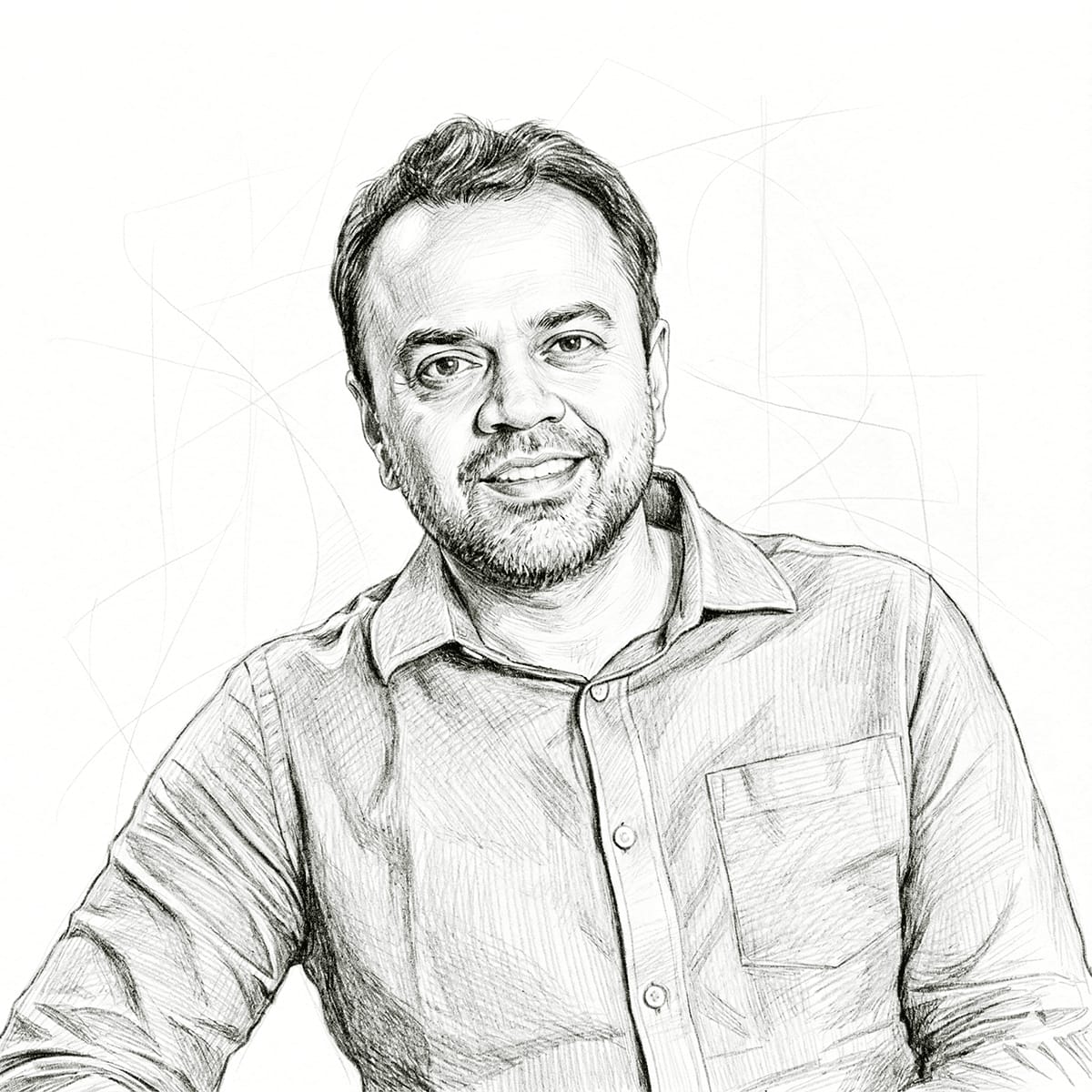
In an era of rapid technological change and constant scaling, leadership conversations often lean heavily on tools and frameworks. Yet, as Ashish Chattoraj, Chief People Officer at Tally Solutions, reflects, leadership remains deeply human at its core. Drawing from a career that spans sales floors, factory shifts and boardroom decisions, he speaks with Chirag Sachdeva about empathy, values-led leadership and why culture is shaped not by handbooks, but by everyday choices made consistently over time.
You’ve had an unconventional path into HR. How did your early journey shape your relationship with the function?
To be honest, I did not enter HR because of a long-term plan. In those days, careers unfolded more organically. However, as I progressed through various HR assignments, I began to appreciate the significant impact HR could have. HR allows you to contribute not just to individual careers, but to the identity of the organisation itself — its culture, values and long-term legacy. Over time, I fell in love with this aspect: the ability to shape environments where people find meaning and organisations
find strength. That is what drew me in and continues to keep me deeply committed to this field.
You have worked across semiconductors, manufacturing, fintech and now software. How did these transitions shape your view
of leadership?
Industries change, but people do not change as much as we think they do. Whether you’re in a plant, a startup or a global
enterprise, individuals want three things from their leaders: clarity of purpose, transparent communication, and trust that values
will not be compromised.
When you provide those consistently, people anchor themselves with confidence even in ambiguity. My experience across sectors reaffirmed that leadership is not situational; it is principled. Context may shift, but your values and leadership approach should remain steady.
Many young managers struggle to “connect” strategy with ground reality. Was there a formative experience that helped bridge
this for you?
Yes, and it came very early. When I joined as an HR management trainee, I assumed I would work in corporate HR — designing
frameworks and policies. Instead, I was sent to a small town in South India to work in sales for three months. Later, I spent
nights supervising a manufacturing plant.
At first, I was shocked. But those months were transformative. I saw firsthand the pressures, constraints and motivations that
drive people at work. I understood the gap between decisions made in conference rooms and their real impact on the shop floor.
When I returned to a corporate role, I carried that empathy back with me.
That experience taught me something foundational: you cannot lead people if you have not understood their work.
Tally Solutions is at a significant transformation point, expanding offerings and geographies. How does HR play into that
evolution?
Tally is a 40-year-old organisation with the mindset of a startup. We continually innovate to enhance the entrepreneurial
experience for our customers. As we expand internationally and explore new product lines, the role of HR becomes increasingly
central to sustaining momentum while maintaining the values that define us.
We are focused on cultivating a high-performance, high-trust culture where people feel encouraged to take risks, stretch themselves and grow. Internal capability building, mobility across roles, fostering collaboration, and holding values steady sit at the heart of our HR strategy. Growth must never come at the cost of culture; they must strengthen one another.
AI is rapidly reshaping work, particularly in HR. How do you see its role evolving?
AI is already present in how we work, whether we consciously realise it or not. It improves efficiency, streamlines processes,
and provides employees with a smoother experience. Onboarding, query resolution, and managing documentation all benefit
enormously.
However, HR is fundamentally a human function. It requires judgement, empathy, and contextual sensitivity that algorithms cannot replace. AI should amplify human capability, not diminish it. It is a tool for people, not instead of people. The challenge is not adopting AI. The real challenge is adopting it without losing humanity.
Culture is often spoken of but rarely defined clearly. How do you define and sustain culture?
Culture is what people see, hear and feel every single day. Not what is written in a handbook. For culture to be real and scalable:
Values must be upheld consistently, especially when tested. Purpose must be communicated clearly and repeatedly until it becomes a shared understanding. People need safe spaces to express their disagreements, ask questions, and challenge assumptions. When an organisation moves from instructing people to inspiring them, culture ceases to be an initiative; it becomes an identity.
What would you want young leaders and B-school students to carry forward from your journey?
Your leadership will not be defined by the tools you use, but by the way you see people. Take time to understand the experiences and realities of those you will lead. Let empathy shape your judgement. Let values guide your decisions. Let purpose be the anchor that keeps your leadership steady. Technical skills will get you started. But clarity, empathy and integrity will determine how far you go and how many people choose to walk that journey with you.