


September, 2025
18 mins read
Implementation Credibility Is the Real Currency in Consulting
 27 Sep 2025
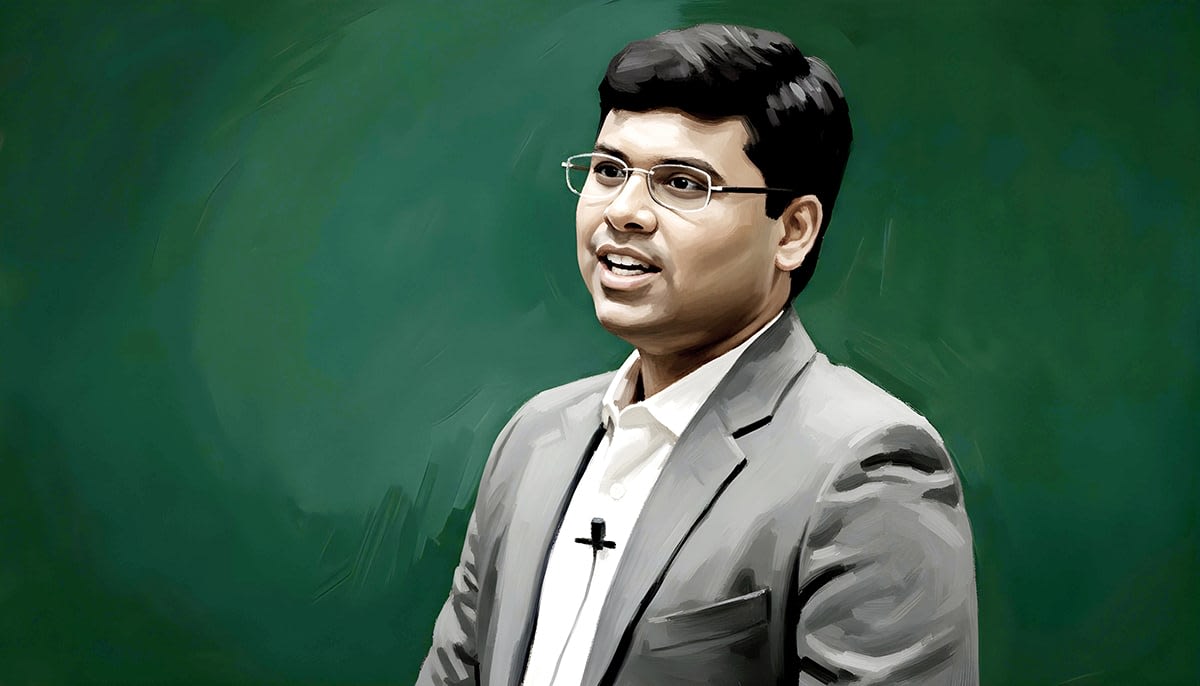
Sameep Jain, CEO and MD of Black Brix, fuses sectoral depth with a consultant’s precision. From structuring success-fee models to guiding billion-rupee infrastructure projects, he stresses that credibility in execution outweighs clever pitch decks. Drawing on mandates across maritime ports, infrastructure and emerging industries, he shares hard-won lessons on turning strategy into action, earning client trust, and staying ahead in a market where clarity outshines jargon. In this conversation with Rahul Kesar, Jain offers grounded insights into both the sectors he serves and the consulting craft itself.
Your journey has been remarkable, from your early days to now leading Black Brix. How did you land in consulting?
Consulting was always on my radar. In college you hear about consulting, investment banking, markets — people around me were preparing for it. At IIM Ahmedabad I realised it was something I could do and joined a firm called Feedback Infra. My internship converted into a pre-placement offer, so I had a strong start, working across mandates for government and private clients. That built a solid foundation. Honestly, I wasn’t sure what else I wanted to do beyond consulting, so when the chance came to work in public policy at NITI Aayog, I took it. That experience completely changed my perspective and set me on the path to starting my own consulting company.
Were there defining moments that shaped your leadership approach or vision?
My time at NITI Aayog was pivotal. Until then I was consulting from the outside, delivering on specific mandates. At NITI, it was more like in situ consulting — being embedded inside the authority. I travelled to places such as the Andaman and Nicobar Islands and Lakshadweep for a holistic development project, working closely with both government and private stakeholders. It transformed how I viewed the profession. Most consultants either rise to partner level and stay there, move to bigger firms like McKinsey or BCG, or shift into corporate management roles. I chose a different path. The NITI role paid far less than offers I was getting from clients, but it gave me the clarity and conviction — something that helped to launch my own firm.
Black Brix now has a strong reputation across a wide array of sectors — from ports and maritime to education and media. That’s quite rare. How did this multi-sector approach evolve? Was it organic or planned?
It was definitely organic. You can’t really plan a multi-sector approach. In my first four years I worked with clients across very different areas: my first was in education, the second in hazardous waste, the third in financial restructuring for a large infrastructure company. That gave me confidence to handle any sector. At NITI Aayog, the exposure reinforced this versatility — we were dealing with projects ranging from maternity facilities on remote islands to airports, schools and hospitals.
When you start a company, you pitch widely. We pitched for real estate, transaction advisory, education — you name it. In those early days we must have met thousands of people. Whatever converted, we took on and built from there. Real estate and tourism advisory were among our first wins. During Covid, maritime came in, and we grew that base. Today, for example, we’re handling asset monetisation for over 100 land parcels worth more than `10,000 crore. On the maritime side, we started with Karnataka Maritime Board and are now present in every state maritime board except Kerala.
The key is once you convert in a sector, you build the right team and keep deepening that experience. That’s how our portfolio expanded — organically. In the early days, it was also about survival: beggars can’t be choosers, so we took every project that came our way and then made it count.
You mentioned pitches and building on past experience. But how difficult is it to pitch to a client in a sector where you haven’t worked before? How do you substantiate that pitch?
It’s about demonstrating your ability to handle difficult mandates. For example, we were once asked to implement an in-flight entertainment service for a leading Indian airline. Honestly, not even the Big Four had done this. The client gave us 15 days to prepare a pitch and an implementation plan.
The key was articulating our ability to execute. We structured a success-fee model: a significant portion of our fee would be paid only after the device was active on the first airplane. In our pitch, we detailed the approach, the experts we’d involve, the authorities we’d coordinate with, and how we would engage the airline representatives. The client trusted that we could turn this difficult mandate into reality. I knew we had converted the mandate the moment I said, “Sir, we will take the money only when your device is active on your airplane.”
Implementation credibility is key. It’s the same with government projects. For instance, we’re developing a resort in Lakshadweep, and we’ve even handled a pan-India movie release with a Tollywood producer. That’s the diversity and challenge of mandates we take on — showing clients we can convert difficult projects into tangible results.
Could you share a moment — working with governments or startups — where Black Brix’s work made a tangible difference?
The most tangible difference we’ve made is undoubtedly Kenjore Port. I was fortunate to be at the right place at the right time. We had started advising the Karnataka Maritime Board, which was established in 2019. We were the second consultants they engaged, but became in situ, and that marked the beginning of Black Brix’s maritime journey.
Strategically, we had high-visibility sessions with the Government of Karnataka — the Maritime Board’s chairman is the Chief Minister himself. The first project was to establish a large non-major port in the state. Karnataka was the only coastal state without one. Other states like Kerala, Maharashtra, Gujarat, Tamil Nadu, and even West Bengal had large ports. Getting approvals for a port on a PPP model was a challenge.
When it came to the tender process, none of the top international players were interested. Access to the hinterland is difficult due to the Western Ghats, so only two players showed interest: Adani Ports and JSW Infra. During the bid, Adani’s top management got tied up with the infamous US issue, leaving JSW Infra as the sole contender.
From that point through to signing the concession agreement with JSW Infra, we negotiated multiple aspects — pricing, contractual clauses, road and rail responsibilities. It’s still early, but five years down the line, I believe I’ll be able to say: “This `4,000-crore port came into being, the biggest transaction the Government of Karnataka has signed in the last three to four years.” I was there from the start to the first rock being laid. That, for me, is Black Brix’s most tangible impact to date.
Indeed. You need to be on your toes, and my next question is along those lines. The business environment is changing rapidly — from new-age startups to digital disruptions and the growing role of consulting in shaping ecosystems. What’s your take on how consulting is evolving in India’s emerging markets?
There are two key aspects. First is talent acquisition. Consulting is a people business. In emerging economies like ours, the talent pool has expanded significantly. Earlier, consultants came from experienced professionals — chartered accountants, lawyers, doctors — or joined after building expertise in a specific sector. Then came the IIMs and IITs, producing fresh consultants directly from campus. Now, every sector has institutes of excellence: data analytics, maritime, you name it.
Consulting companies need the right mix of talent. For a maritime project, I need GIS specialists, civil engineers, and MBA talent. That combination drives relevance and growth. Clients today are more sophisticated — they operate on GIS platforms, so you can’t just deploy CAD specialists; you need teams that deliver solutions others cannot.
The second aspect is client expectations. They want quicker execution, more implementation, less strategy. They expect consultants to be embedded during the first year of implementation — like with the in-flight entertainment project. In India, there’s also significant government support. Investments in IIMs, IITs, NITs, and SPAs are expanding the talent pool. At the same time, the consulting market is opening up beyond the Big Four. Black Brix benefited from Startup India, receiving full income tax exemption for three years — a major achievement. The government recognises the need to reduce reliance on foreign consultancies. After all, these firms employ Indians but retain most of the margin for branding. The push is for “Make in India” — to deliver high-quality consulting locally, leveraging domestic talent and expertise.
You’ve worked with very different clients. How is advising a startup different from advising a government or a corporate client?
Startups are quick with decisions. Once they’ve logged on, they’ll immediately issue a purchase order and get the work started. But they’re slower on payments, which depend entirely on their funding timelines. When they have funds in their account, you get paid faster; otherwise, they’ll say, “We’ll wait for the next funding round.” There’s also a lot of scope creep — if the agreed scope is X, they usually expect X plus more. So we need to be flexible when working with startup teams.
Corporates are the opposite. They’re structured and process-driven, which means delays. A purchase order might take a couple of months, but there are perks. They have strong budgets — one client even took us to Dubai and put us up in five-star hotels.
Government work is a different ballgame altogether. Public policy is challenging, and people often expect it to be almost not-for-profit. Mandates are smaller in value, but the expectation for quality remains high. Payments, however, are painful. Getting even a single rupee released requires about ten approvals, which is fair — it’s public money after all.
So yes, each type of client — startup, corporate, or government —brings a very different experience.
You’ve covered the client side well. What do consulting firms themselves need to do to stay relevant in today’s dynamic ecosystem?
They need to stay on their toes, stay ahead of the curve and anticipate what’s coming next. Disruptions are everywhere — AI, machine learning, new technologies, even in how consulting itself is structured. Many large corporates are building internal strategy teams, so some traditional consulting work is getting absorbed in-house.
Consultants will remain essential where hiring and attrition costs are high — where companies can’t justify hiring an expert full-time but still need specialised input. They’re also vital when a lot of grunt work needs to be done quickly. Understanding where those opportunities lie is key, along with continuously upgrading technologically to stay relevant in today’s world.
Today we hear a lot about unicorns, pivots and burn rates. But under the hood, real strategy and execution matter far more than buzzwords. From your experience, what common blind spots do you see in startups, especially when it comes to long-term sustainability?
The first thing that comes to mind is a lack of patience. This isn’t only about sales or product development. Founders may stay patient while chasing a deal or building a product, but they often lose patience when it comes to monetary and financial pressures.
There’s a popular meme about a person digging for a well or a hidden gem. He stops just short of striking water or finding the treasure, while the person who keeps digging eventually succeeds. Startups can be like that. Personal timelines, financial strain and life circumstances make it hard to keep going, and many founders give up just before a breakthrough.
So founders need to be very clear about their limits — and equally aware that sometimes success simply requires staying the course.
For a consulting firm like Black Brix, when you work with a startup client, where do you typically step in? Is it more about fixing issues or building a base?
It’s both, actually. We help build foundations and we also step in to solve specific problems. Right now, for instance, we’re supporting three state maritime boards from the ground up. Karnataka came on board in 2019, Odisha in 2021–22, and we’re still helping West Bengal get its act in place. These are essentially government startups — startups don’t always have to mean private ventures.
In such cases, we create the foundation: setting up processes, drawing lessons from more established peers. Gujarat has had a maritime board for 40-50 years, Tamil Nadu for 30-40 years, and we’re present there as well. We bring those learnings to these newer states and help them put systems in place.
At the same time, we also take on problem-solving mandates. For example, in Odisha we’re advising the government on a management consulting challenge involving two private parties and a contract dispute. I can’t name the parties, but the issue is that their interpretation of the contract clauses differs from the government’s. Our role is to ensure the project moves forward in a way that’s true to the contract — without the government appearing to favour either side.
Have expectations from consultants changed compared to five or ten years ago?
Definitely. A decade ago, consultants were mainly asked to provide a strategic blueprint or master plan. Today, clients expect us to stay with them through execution. Whether it’s a corporate, a startup or a government, they want an in situ presence. It’s no longer enough to just deliver a report; they want you on the ground, helping to make the strategy happen.
So it’s really about getting involved in implementation?
Yes, absolutely. Clients now expect us to be hands-on and ensure the strategy is actually implemented. Covid accelerated this shift. Earlier, consultants could get away with desktop work. But post-Covid, once travel resumed, clients everywhere realised the value of having consultants on site. With my NITI Aayog experience, I’ve spent months on the ground — Lakshadweep, for instance. Today, mandates often require you to be on the factory floor, the shop
floor, or wherever the action is.
Let’s turn to a sector you’ve worked in that’s both traditional and quietly transformative: maritime and waterways. How are these industries changing?
You’re right — maritime and waterways were long overlooked, which makes their current transformation even more striking. This decade, 2021–2030, is really the decade of maritime growth. Private players are moving in fast. Ports were once dominated by government PSUs, but now you see Adani Ports, JSW Infra, JM Baxi and others expanding, and foreign investors are looking closely at India.
Two cabinet-approved projects alone — Vadhavan Port and the Outer Harbour at VOC — represent a combined estimated investment closer to `80,000-plus crore, while the Galathea Bay project is currently estimated at about `44,000 crore. The government is backing this with initiatives like PM Gati Shakti, Maritime India Vision 2030 and Maritime Amritkal Vision 2047.
The rationale is clear: India spends heavily on logistics. Just by trans-shipping containers through Colombo, we lose `2-3 lakh per container. Reducing such costs has a direct impact on consumer prices — every rupee saved in logistics ultimately lowers costs for the end buyer.
Beyond cargo, new opportunities are emerging. Cruise tourism is taking off. In a few years, we’ll likely see marinas in major cities where high-net-worth individuals dock private yachts. Seaplane services between islands are being planned. Water villas and island resorts are on the rise. River cruises are expanding. Even urban water transport is innovating: the Kochi Water Metro is a shining example, and authorities are already studying similar projects for 15 other locations.
The sector is becoming dynamic and fast-growing, and I’m glad we chose to focus on maritime and waterways — it’s a wave worth riding.
Among Black Brix’s other sectors — real estate, infrastructure and energy — where do you see the greatest scope for innovation and disruption over the next five to ten years?
Real estate will see the sharpest disruption. Historically it has been a safe asset, with value driven by the quality of physical and social infrastructure. Why are parts of South Mumbai or South Delhi so expensive? Because they offer good roads, reliable utilities, schools and hospitals.
As physical and social infrastructure spreads rapidly, the old distinction between city centres, suburbs and outskirts is blurring. Look at Gurugram: prices have soared as infrastructure caught up, proving that connectivity and amenities — not proximity to a traditional core — set the benchmark.
The pace of infrastructure delivery and the spread of quality schools, hotels and other services mean people no longer need to cluster near central business districts. Real estate is evolving into islands of well-serviced pockets. Investors now need to identify locations where government spending on roads, utilities and social amenities is creating the next growth corridors — say along the Bangalore-Mumbai or Chennai-Vizag routes — rather than simply land-banking and waiting.
You earlier described consulting as a people business. As CEO, how do you build teams and balance strategy with sectoral depth?
When we were a 10-member team, strategy was set over lunch or dinner. At around 40-50 people we created a steering committee —our “steer-co” — made up of senior staff to decide critical moves. We also began grooming the next generation of Black Brix leaders.
Today we follow a clear framework: a quarterly steer-co meeting and a biannual leadership off-site — sometimes in Goa, sometimes Bengaluru — to review progress, align on goals and refine the company vision. Functionally we have leads for key areas.
Sectoral depth is our next focus. We are strong in several domains but now need recognised subject-matter experts who can represent Black Brix publicly, much as McKinsey is associated with thought leadership. Until now our growth has come from delivering results and winning repeat mandates; the next step is to promote internal leaders as acknowledged sector specialists to generate pull from the market.
What’s your approach to nurturing talent that’s adaptable, curious, and future-ready, especially with AI and tech integration becoming so central these days?
We hire a lot of people straight out of college, and in fact, what I see is that they are often more future-ready than we are, because they’ve grown up in an ecosystem where these technologies were always present. What we focus on is teaching them what only experience can teach — judgement, context, subject-matter depth —while trusting that they’ll pick up the rest on the go.
We run sessions where we share scenarios, cases, and lessons drawn from experience. We’ve even gamified some of our learning processes. For example, we have HR games where team members imagine themselves as the CEO and decide what actions they would take in a given situation. These exercises help bridge the experience gap. Going forward, we plan to have more such sessions and games to keep sharpening that edge.
As management students, it’s inspiring to see how you balance AI-ready hires with experience-driven learning. What’s one piece of advice you’d give to students who want to enter consulting, launch a startup, or build their own venture?
There’s a line that keeps coming to my mind: “The fool did not know it was impossible, so he went ahead and did it.” That’s the mindset entrepreneurs need. Nothing is impossible — given the right mix of passion and patience, every problem is solvable
For consulting aspirants, I’d say immerse yourself in case studies and competitions. The wider your exposure to diverse situations, the more practical and valuable your knowledge will be in the real world. When you’ve solved many cases, you can draw quick parallels to real-life business problems, which makes you faster and more effective in finding solutions.
And finally, what’s the one key takeaway you’d like the XLRI student community to remember from this conversation?
Simply this: “Stay hungry, stay foolish.” Always stay committed to your chosen path. Commitment drives success — don’t waver or wander, stay the course.