


January, 2025
5 mins read
India needs pragmatic policies to bridge inequality
 05 Feb 2025
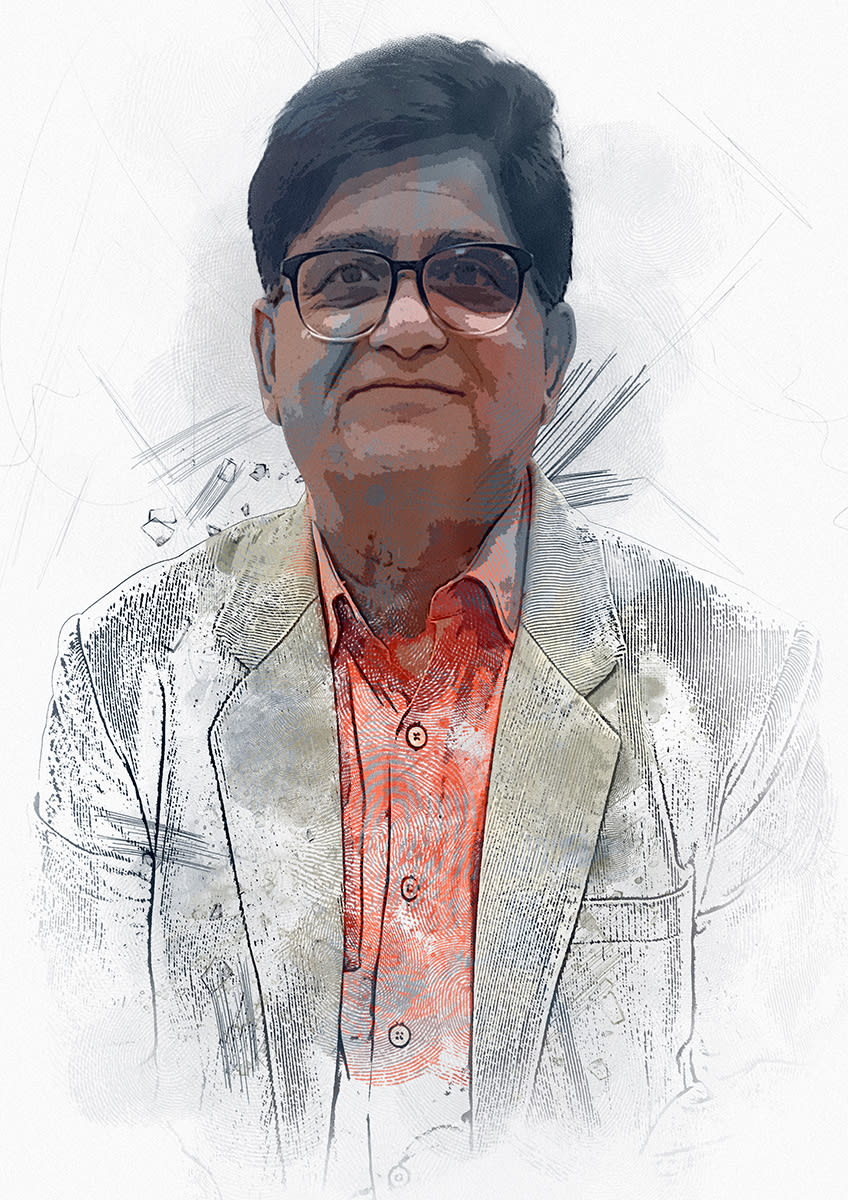
In an engaging conversation with Ashrut Sharma, Professor Vishwa Ballabh, a distinguished economist at XLRI, reflects on his transformative journey from agriculture to academia. He shares insights on economic policies, the challenges faced by smallholder farmers, and the necessity for systemic reforms. Offering candid advice to the youth, he emphasizes the value of learning, societal contributions, and pragmatic approaches to solving India’s economic challenges.
Your journey from studying agriculture to becoming an economist and transitioning into academia is fascinating. What key moments or factors drove this shift?
From my childhood, I was deeply interested in agriculture. By the time I was in the 6th or 7th grade, I had already decided to pursue agricultural studies. However, after completing my intermediate education, there was a brief hiccup. My brother suggested attending another institute in Naini, but my dream was to study at Pantnagar.
One memorable incident occurred during my first year of intermediate school when I met a student from Pantnagar who later became a District Cane Officer. His influence solidified my resolve to attend Pantnagar. I vividly remember being 16 years old, weighing just 38 kg, and travelling with a half ticket to get there.
When I reached Pantnagar, I aspired to specialize in breeding and genetics. However, due to vision issues with my left eye, I couldn’t effectively use a microscope. Friends advised me to consider agricultural economics instead. I soon realized that this field allowed me to contribute significantly to agricultural and rural development.
Later, I pursued a master’s in agricultural economics and a PhD, focusing on challenges faced by farmers in regions like Eastern UP and Bihar, where recurring floods impacted livelihoods. My journey subsequently expanded to encompass broader economic development issues.
If you were the finance minister, how would you address the concern that many policies either uplift the poor or benefit the ultra-rich, often neglecting the middle class?
India’s economic policies have evolved significantly since independence. Initially, we followed a Nehruvian economic model focused on socialism. However, over time, especially post-1991, economic reforms shifted the focus toward liberalization.
The middle class often feels neglected because policies target either the ultra-rich, with incentives for industries, or the poor, through subsidies. One critical area is the growing inequality. Without addressing this, we face risks like social unrest and weakened purchasing power among the masses.
Policies should focus on increasing rural infrastructure, creating non-farm employment, and improving supply chains. Moreover, the efficiency of public systems and subsidies needs attention. Often, funds intended for farmers do not reach the intended beneficiaries due to systemic inefficiencies. Addressing these issues could help balance the needs of all socioeconomic groups.
Do you think the current monetary and fiscal policies are appropriate for the present conditions, or are there areas for improvement?
The Budget allocations, particularly for agriculture, are sufficient. However, the utilization of funds is critical. We need institutional changes to support smallholders, who now make up 88 per cent of landholdings, averaging less than two acres.
Subsidies alone are not enough; we must focus on developing inbound and outbound logistics, interlinking agriculture with non-agriculture sectors, and creating opportunities for smallholders to grow. This requires a paradigm shift from traditional policymaking to more pragmatic and innovative approaches.
Agricultural income in India, including that of wealthy farmers, is not taxed. Do you think this exemption is justified?
The majority of Indian farmers are marginal or smallholders who genuinely require support. However, there is misuse of this exemption by individuals transferring non-agricultural income into agricultural accounts to evade taxes.
Globally, agricultural development has always involved public support. What we need is a better system to ensure subsidies and income support reach those who genuinely need them. For instance, instead of subsidies tied to inputs, income support could be provided directly, as seen in other countries.
How do you think a second term for the Trump administration would impact India, particularly from an economic perspective?
Foreign policy should not depend on personal relationships. While Trump and Modi may share a good rapport, decisions will always prioritize America’s interests.
Trump’s “America First” policy means India must negotiate effectively to protect its interests. While he might appear favorable to India to counterbalance China, his administration would remain focused on its own advantages. It’s important for India to approach such relations professionally and pragmatically.
You’ve managed various responsibilities, including admissions at Institute of Rural Management, Anand (IRMA). How did you ensure transparency and impartiality in the process?
At IRMA, we maintained a transparent admissions process, exclusive to our institution initially. When other institutions began requesting our scores, we ensured transparency in sharing data while safeguarding confidentiality.
For example, during my tenure, I revised the scoring system to better discriminate between candidates across different percentile ranges. This improved the selection process and addressed concerns of fairness. Building trust with stakeholders, including applicants and institutions, was key to ensuring the integrity of the system.
On a parting note, what advice would you give to the youth of the country?
My advice is to prioritize learning over earning. Choose opportunities where you are needed the most and where you can grow, rather than being swayed by the name of an organization or salary. Focus on making meaningful contributions to society while advancing your knowledge and skills.