


December, 2025
12 mins read
Leadership Begins Where People Are Given Dignity
 30 Dec 2025
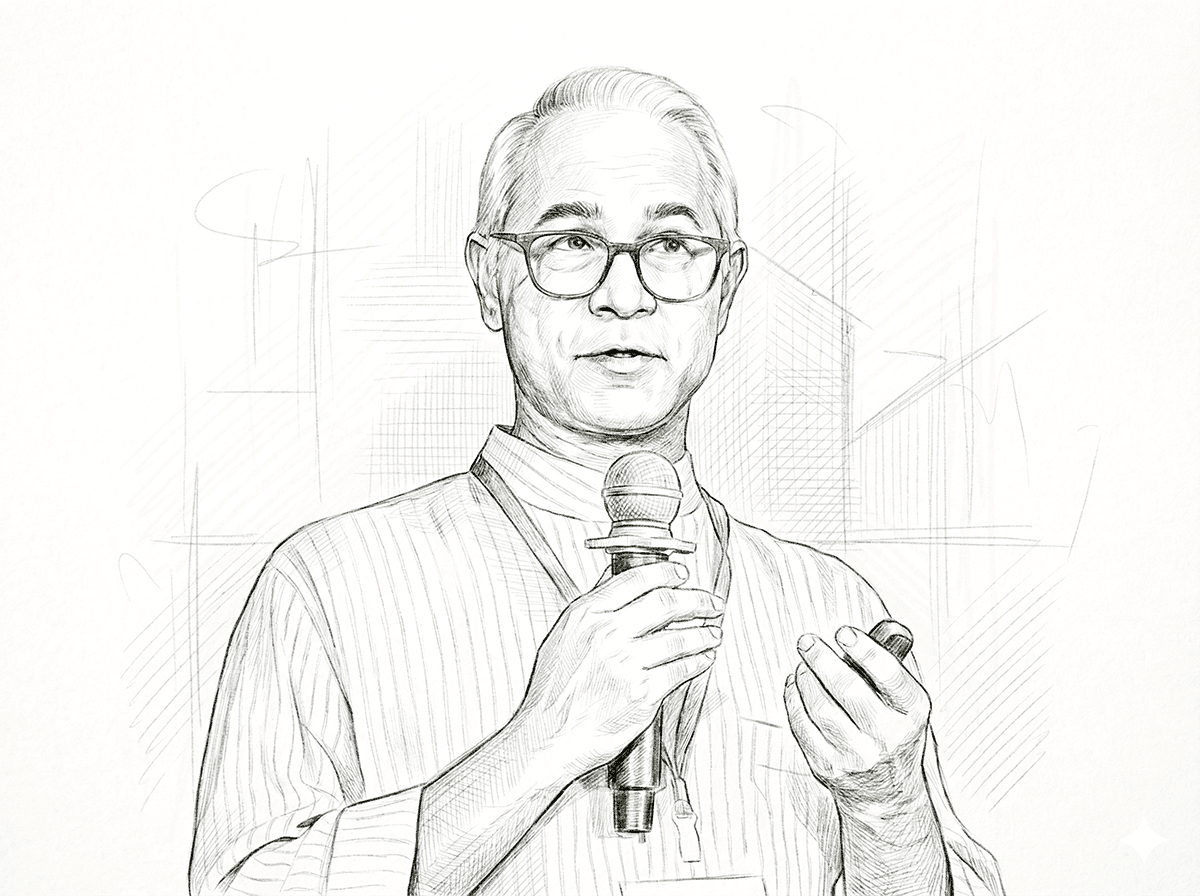
Drawing on over three decades of Jesuit formation, academic work and leadership education, Vincent Pereppadan, SJ, argues that leadership is rooted in service, integrity and inner freedom rather than authority. In this conversation with Anushka Aggarwal, the XLRI Delhi-NCR professor reflects on translating “excellence with integrity” into management education, explains how people-centred interventions can transform organisations, and shares why ethical decisions are strongest when they emerge from reflection, not fear.
You’ve navigated Jesuit formation, a PhD in the US, and years of leadership education. Was there one defining experience
during this journey that fundamentally shaped how you view leadership today? What made it so transformative for you?
Looking back across more than three decades of Jesuit formation, academic study, and leadership education, there is one
experience that stands out as truly defining: my decision to join the Society of Jesus in 1991. At the time, I had every intention of
pursuing management studies at one of India’s top B-schools — XLRI included. However, life has a way of interrupting our plans
in unexpected and meaningful ways.
As a young graduate living in one of India’s most dynamic cities, I was confronted daily with the stark contrast between
economic progress and human suffering. I saw children who had no childhood, families struggling to survive, and
communities pushed to the margins. The question that began to haunt me was simple, but unsettling: What does it mean to
aspire to corporate success in a country where so many are denied the most basic dignity?
That question eventually redirected my life. Instead of entering a B-school, I walked through the doors of the Jesuit novitiate
in Kozhikode, and that choice fundamentally reshaped how I understand leadership.
My Jesuit formation opened my eyes to the deeper realities of the world: the resilience of the poor, the silent wounds carried
by children, and the quiet heroism of people who survive despite the odds. It taught me that leadership is not born in corner
offices but in our willingness to accompany those at the bottom and to invest in their flourishing. Whether I was editing Sneha
Sena and Tik-Tik Life, two children’s magazines that shaped a generation of young readers, or later pursuing my doctoral
studies in San Francisco, the orientation of my vocation remained the same: to influence change where it is needed most.
Over the years, I have come to believe that leadership, at its core, is an act of service. It is the commitment to empower
people who have been overlooked, silenced, or underestimated. Transformation does not begin at the top of society; it begins at
the bottom, when those who have least are given the opportunity and belief to become leaders in their own right.
That conviction, born from the moment I chose the Jesuit path, continues to guide everything I do as an educator, counsellor,
and leadership trainer today.
XLRI emphasises “Excellence with Integrity.” How have you translated this motto into specific course content,
assignments or in-class exercises that help shift student behaviour or decisions?
At XLRI, “Excellence with Integrity” is not just a motto; it is an expression of the Jesuit ideal of seeking the “greater good”, rooted
in St Ignatius’s conviction that everything we do must strive toward something more. That aspiration toward “the more” is in the
Jesuit DNA. When translated into academics, it means helping students expand their imagination of who they can become
intellectually, professionally, and morally.
In my courses, especially Individual and Group Behaviour in Organisations, I consciously design every element — cases,
discussions, psychometric assessments, reflective exercises — to push students toward that sense of “the more”. Whether they
are analysing team dynamics, exploring emotional blind spots, or engaging with organisational behaviour theories, there is
always an underlying question: How can I grow beyond my current self? What is the higher version of myself that I am being
called to? That dimension of “more” is, in many ways, the divine horizon of human growth.
The second part of the motto, “integrity”, is equally central to the XLRI legacy. For over 70 years, XLRI has been known for
producing leaders whose moral compass is as strong as their technical competence. It is a heritage we fiercely protect. If, in a
difficult corporate situation, someone witnesses a leader making the ethical choice, my dream is that they might say, “That
person must be from XLRI.”
In my classes, I nurture this through intentional character formation. Students engage in structured introspection that
helps them examine their habits, orientations, blind spots, and disruptive patterns. Tools like values assessments,
personality inventories, and reflective journals help them confront their inner contradictions. Many also reach out outside of
class for deeper personal conversations, and those interactions often become powerful moments of discernment — what
Jesuits call examining our “inner movements.”
These conversations have reaffirmed for me that academic brilliance without inner integrity can do more harm than good. At
XLRI, our aim is to form leaders who are not only competent but deeply conscious, reflective, and grounded. When students tell
me that a course helped them understand themselves better or make a more ethical choice, I feel that the spirit of “excellence
with integrity” has taken root where it matters most — in their hearts.
You advocate positive organisation development. Describe one organisational intervention or workshop you led that produced
measurable change (even small). What was the intervention, how was success tracked, and what surprised you about the
outcome?
My approach to positive organisational development is deeply shaped by my Jesuit identity, which places people — not
structures — at the centre of transformation. Whether in corporations, governments, or villages, my belief is simple: when you
grow people, people grow the organisation. One of the most meaningful interventions I ever led did not begin in a corporate
boardroom, but in a remote village parish in Kerala where I served as an assistant pastor.
The community faced multiple disadvantages: economic poverty, social discrimination, limited resources, and internal
conflicts. The most vulnerable were the children. I decided to focus on them, knowing that strengthening the youngest members
would eventually uplift the entire community.
The intervention unfolded in five steps. First, we focused on building their self-esteem. We created small challenges and
activities that showed them they could achieve far more than they believed — what Jesuit tradition calls the Magis, or “the
more”. Each success expanded their sense of who they could become.
Next, we gave their emerging confidence a structure. The children formed an organisation of their own — complete with a
name, democratically elected leaders, clear responsibilities, behavioural expectations, and an annual plan. They learned how to
lead, how to collaborate, how to organise events, and how to hold one another accountable.
To strengthen their visibility, we ensured that their activities were featured in local media. Very quickly, they became
known in the village not as children in need, but as contributors to community life. Their credibility grew, and so did their
aspirations.
The children then began to collaborate with various groups — NGOs, community organisations, youth movements, and even
government departments. They discovered that networking is a form of capital, and that alliances can break down barriers that
once seemed insurmountable.
Most importantly, every activity was anchored in values: respect, responsibility, discipline, compassion, and integrity.
Leadership was never separated from character.
Over time, we saw remarkable changes — greater participation, rising confidence, and a visible shift in how adults perceived
these young leaders.
The real measurement, however, came years later and surprised me deeply. Those same children — once shy, unseen, and
unsure — have grown into leaders across India, including business professionals, government officials, political leaders,
educators, and social workers. Recently, they gathered from across the country to reflect on the journey. Listening to them
narrate how the intervention shaped their confidence, values, and leadership identity was profoundly moving.
It affirmed a powerful truth: positive organisational development is fundamentally about forming people who can transform
their spaces. The village children taught me that leadership growth — whether in corporations or communities — begins
wherever someone believes in the potential of ordinary people to do extraordinary things.
Walk us through a non-academic case (anonymised) where you helped a student or leader resolve a genuine ethical
dilemma. What process did you encourage, and what did the person do differently afterwards?
One of the most meaningful ethical dilemmas I ever helped resolve did not happen in a classroom — it unfolded in the real
world, through an unofficial consultation sought by a senior government officer. The situation involved a business owner who
was about to ship two containers of processed food to a US agency. All approvals were secured, the paperwork was complete,
and the containers had already been loaded at the port. At the last moment, one of the officer’s subordinates discovered a minor
error in the documentation — not consequential, but technically a legal non-compliance.
Based on the legal reading, the subordinate ordered the shipment to be halted and the containers offloaded. This decision
would have resulted in substantial losses: the entire consignment would perish, and the business risked losing a valued
international client. Desperate, the business owner approached the senior officer, who in turn approached me for counsel.
The officer’s dilemma was layered. If he instructed the subordinate to overlook the error, he would set a dangerous
precedent — one that could later be used to justify ignoring more serious violations or even to exert pressure for favours. If he
upheld the subordinate’s objection strictly, he would cause immense harm for a trivial paperwork mistake.
My first step was to help the officer clarify the moral and legal terrain:
Was the error materially harmful? No.
Did the subordinate have the authority to permit the shipment? Yes.
Could the decision be regularised through reporting to higher authorities? Yes.
Was the refusal motivated by genuine concern or fear of responsibility? Most likely the latter.
Instead of offering a direct solution, I encouraged the officer to approach the subordinate in a non-threatening, dialogical
manner. The goal was not to override but to empower. I suggested he invite the subordinate to reflect on the broader
consequences:
What would be the economic loss to the business? What would be the national waste of allowing a processed food
consignment to perish? What message would this send about the role of public office — rigid enforcement or thoughtful
stewardship?
The officer followed this approach. In conversation, the subordinate gradually recognised that permitting the shipment was
within his authority and ethically justified, provided he transparently reported the technical lapse. By reaching this conclusion
himself, he acted responsibly rather than fearfully.
The outcome surprised all of us in its grace: The subordinate felt empowered and proud of having resolved the issue. The
business owner was relieved and grateful. The senior officer preserved integrity without resorting to coercion.
And for me, it affirmed a conviction central to my Jesuit training — ethical decisions are strongest when they emerge from
inner freedom, not external pressure.
The principle guiding the process was simple: evaluate the gravity of the act, consider its human and economic
consequences, and approach the dilemma with both clarity and compassion. In the end, everyone was a winner — and
that, to me, is the hallmark of authentic ethical leadership.
Finally, one practice, five minutes a day, that you would recommend every young manager adopt to stay grounded and make
better decisions. Why that practice, and how should they start?
If I were to offer one five-minute daily practice for young managers, I would return to something very close to the Jesuit heart:
a grounding pause of awareness and gratitude. To stay grounded is to be fully present to the inner movements of your mind
and body, and to the outer reality in which you stand. It means living with clarity, not haste; with intention, not reaction.
Begin simply: close your eyes and take one conscious breath. This brief moment is inspired by the Jesuit “Examen”, a
centuries-old practice of becoming aware of what is truly happening within you. Then scan your body gently with your
awareness. Notice any sensations — stress, fear, irritation, excitement, hope, or joy. Notice how these emotions express
themselves: as heat or chill, tightness or ease, heaviness or vibration. Do not judge them; do not chase the thoughts behind
them. Just let your body speak.
Once you feel anchored — where you are sitting, standing, or resting — bring to mind a deliberate thought of gratitude.
Gratitude for being alive at this moment. Gratitude for your journey, your learning, your relationships, your breath. “You are” is
itself an unearned gift. Acknowledge it with humility.
And finally, ask yourself: How will I express this gratitude to the world around me today? Perhaps through patience,
kindness, fairness, or simply greater awareness in a decision you make. Breathe out your gratitude and let it flow into your
next action.
Five minutes of grounding in gratitude can transform the quality of your decisions. It reminds you that leadership is not an
exercise of control but a practice of presence — of showing up with clarity, compassion, and a heart attuned to the bigger
picture of your life. When gratitude grounds you, good decisions follow naturally.