


April, 2024
6 mins read
Operations And Production Management Are Undervalued Despite Their Critical Role
 29 Apr 2024
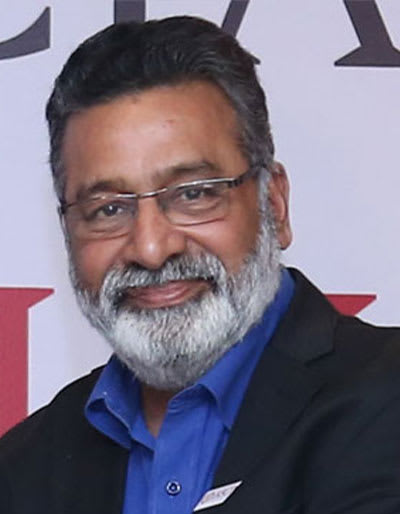
In an engaging interview, Ojaswin Nagpal chats with Dr TAS Vijayaraghavan, Deputy Director and Professor in Production, Operations Management & Decisions Sciences, XLRI, as he shares his expertise and experiences, emphasising the significance of operations, impactful projects, and the value of simplicity in management training.
What interests you towards operations and production management?
I think it’s mostly because of my background in operations research and optimisation. If I were to reason it out further, it may be the effect of Stockholm syndrome that you start falling in love with what you are trapped with! Or is it that you’re pushed into something by some force, call it karma or fate, and you accept it and keep going? Whatever it is, I find it very interesting, and challenging, too. Didn’t we see the importance of this area during Covid? The area needs more focus and attention, and my grudge is that it doesn’t get the importance it deserves in management functions in organisations and B-schools. I always share in my class that a fish lays thousands of eggs underwater, that no one notices, but a hen lays just an egg only and shouts so much that the world notices it immediately. That’s the power of advertising! Our area that way remained very humble and modest. If you see the current trends in management and technology, it is in the area of operations and production management only and hence I believe I am in the right place.
What, in your opinion, is the role of generative AI in operations?
Generative AI can play an important role in operations management in various areas, like demand forecasting, inventory management, predictive maintenance, and supply chain optimisation. It can generate valuable insights from large datasets, assist in decision-making processes, and even automate routine tasks, improving efficiency and performance in various operational aspects. Generative AI empowers supply chain managers to make informed decisions, reduce costs, optimise processes, and enhance overall supply chain performance. There are so many examples and case studies that can be cited in these areas.
Which was your most challenging research paper? How did you overcome the challenges?
For a researcher, every paper is challenging. The most challenging for me was publishing in an A category journal back in 1995. It was difficult because the reviewers were not convinced about the method and application from a developing country like India. They weren’t familiar with transportation service operations in such a context. My paper involved a scheduling algorithm related to transportation service operations. It took several revisions and the inclusion of application data to convince them to publish the paper. However, it was a satisfying exercise, as it later received several citations in future research works by many researchers.
What skill or sport do you like to pursue in your free time?
My passions and hobbies are varied! From drawing cartoons to classical music to serious topics like Indian philosophy. I used to draw cartoons in my free time, even during my hostel days at ISI/IIM (some of which I’ve shared on my Instagram page ‘tasviji’). I still draw cartoons occasionally, sometimes in my students’ answer papers when I find something amusing! For example, when students struggle to solve a probability problem and end up with answers greater than 1! I had the honour of being invited by my alma mater, IIM Bangalore, during their Golden Jubilee celebration in February, to contribute cartoons to the Reunion Handbook, reminiscing about doctoral life at IIMB. I intend to continue this passion even after I retire from XLRI. I also have a keen interest in learning more about classical music and the science behind it, as well as delving deeper into Vedas, Upanishads, and Indian Philosophy. In sports, I enjoy playing table tennis, volleyball, and cricket. I hope to continue pursuing these interests in the future.
Can you share any of your experiences about the training programmes conducted by you at PepsiCo, Tata Steel, and so on?
Most of my training programmes for these companies are in the areas of logistics and supply chain management. The interactions with managers have given me tremendous insight into the applications of concepts that we teach and how they should be implemented. Even a small concept in theory holds great value for them, as I have realised in my training programmes. For example, a simple concept like the Pareto principle (80-20 principle) may seem straightforward in theory, but its importance in application, such as in inventory management and sales, is significant to them. These were the realisations I gained from such training programmes. Most companies seek simple tools and techniques, as well as quickly applicable concepts for their managers when they attend such training programmes, and B-schools should not overwhelm them with too many jargon and frameworks. This is also one of my realisations! Of course, there is a set of programmes where such things are expected, and they are also delivered!
Can you share some projects that you worked on as a member of the faculty (Deputy Director) in the operations area at the Central Institute of Road Transport?
During my tenure at the Central Institute of Road Transport, I undertook a significant amount of research and consulting work. Here are some of the projects I was involved in:
- Project Coordinator for preparing the transportation plan for the Vasai-Virar sub-region for the City and Industrial Development Corporation of Maharashtra (CIDCO), New Bombay. The project entailed developing a comprehensive transportation plan for multimodal movements, catering to both goods and passengers for inter-regional and intra-regional economic activities for the Metropolitan Authority of Bombay. This involved conducting surveys, building mathematical models for demand projection and assignment on the rail and road network, and proposing new links and networks.
- Project Coordinator for developing the transportation plan for Vijayawada city under the Ministry of Surface Transport, Government of India. This plan addressed the transportation needs for both goods and passengers, within the city and for inter-city travel.
- Project Coordinator for the transportation plan of Nagpur city under the Ministry of Surface Transport, Government of India. Similar to the Vijayawada project, it aimed to meet the demands for the movement of goods and passengers within the city and for inter-city travel.
- I also served as one of the coordinators for developing the decision support system ‘MOBILE’ for resource scheduling for state transport undertakings in India, in collaboration with the Centre for Development of Advanced Computing (C-DAC), Pune. This project aimed to develop software for the transport sector to optimally utilise vehicles, crew, and so on, for economic gain. I coordinated this project from CIRT, Pune. The project was completed and implemented in a few state undertakings and other transport operators.