


November, 2025
12 mins read
Prioritise Deep Learning Over Career Convenience
 28 Nov 2025
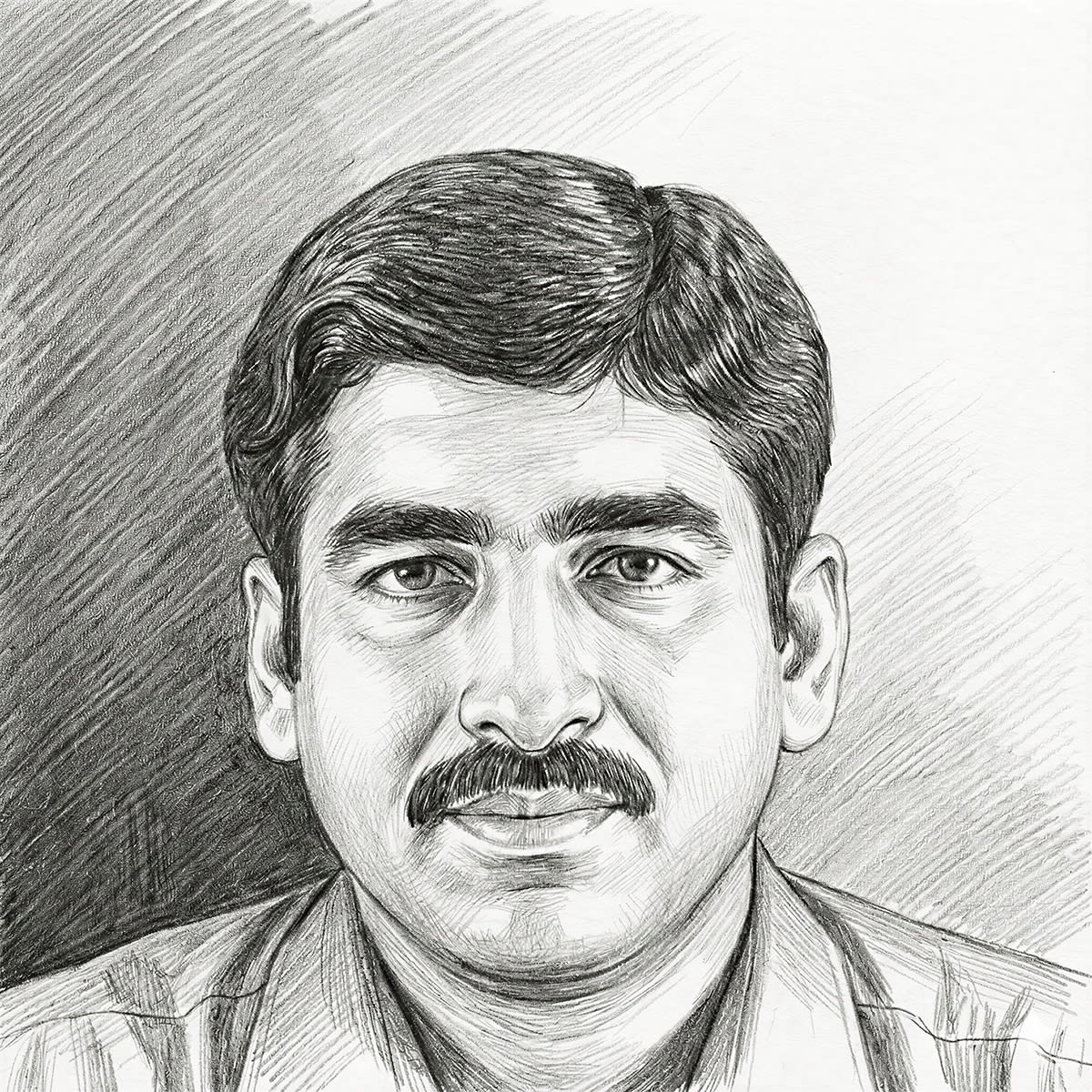
Amitava Mukherjee, Professor in the Production, Operations & Decision Sciences division at XLRI Jamshedpur, has built a career guided by a commitment to depth, discipline and applied insight. In this conversation with CP Malikah, he reflects on how early mentors shaped his academic path, why practical statistical tools matter, and why genuine leadership must rise above metrics. He also explains how curiosity, domain expertise and thoughtful teaching underpin his approach to nurturing the next generation of researchers.
What first sparked your interest in statistics and ultimately drew you towards an academic career?
My interest in statistics began during my years at Narendrapur Ramakrishna Mission, where two of my housemasters — Soumen-da (now Professor at the University of Manitoba) and Abhiman-da (now at IIM Ahmedabad, after a stint at the RBI) — were pursuing postgraduate work in the subject. Their influence planted the early seeds of curiosity. When I completed secondary school, I opted for mathematics and statistics rather than biology, which didn’t appeal to me. Instead of taking the WBJEE like many of my peers, I considered degrees that few institutions offered at the time — statistics or geology. Geology didn’t work out, and choosing statistics proved to be deeply rewarding. For my undergraduate studies, I chose St Xavier’s College over Presidency because of its learning environment and the opportunity to study under Professor AM Goon, who had just joined as a guest professor. The discipline and mentorship at St Xavier’s shaped my academic habits. I even received a job offer at a Bengali daily immediately after graduation, but it was Professor Goon who convinced me to pursue an academic career — guidance that proved pivotal.
What continues to inspire you and keep you motivated on this journey?
Contributing to statistics and related areas gives me immense satisfaction, particularly when it involves developing practical tools to solve real-world problems. Collaborations with inspiring statisticians — such as Prof Marco Marozzi, with whom I’ve worked for over a decade — have grown into enduring friendships. Dr Hidetoshi Murakami is also a dear friend and valued collaborator. I remain deeply motivated by the work of Prof Peihua Qiu, Min Xie, Markus Neuhäuser, Wolfgang Kössler, Subha Chakraborti and several others. There is nothing more fulfilling than seeing young researchers appreciate our contributions and build on them. When our methods find a place in statistical software such as R, it reinforces the essence of scholarship — knowledge advancing through collective effort.
After your postgraduate studies, you had several pathways open — research, teaching, fellowships. How did you decide which direction to pursue?
Just before my final Master’s exam, Prof Amit Ghosh — then Head of the Department of Statistics at St Xavier’s College and one of my undergraduate teachers — mentioned they were looking for a part-time lecturer and that I would be considered after completing my degree. Around the same time, I cleared the NET for the CSIR fellowship and also received a research fellowship offer from the Indian Statistical Institute. Although ISI is highly prestigious, I chose to stay at the University of Calcutta for my doctorate because I felt its emphasis aligned better with applied rather than purely mathematical statistics. You could say familiarity played a role too. As I neared the end of my PhD, I was fortunate to receive several exciting opportunities: a lectureship in Kolkata through the College Service Commission, a position in Mexico, a researcher role at the GE Money-Madras School of Economics Decision Science Lab, and a postdoctoral offer from Umeå University in Sweden. Since teaching was always going to be central to my career, I decided to move to Sweden. I later joined Aalto University in Finland as a level-5 researcher — similar to a senior lecturer — a role with only seventy-two hours of teaching a year, which gave me invaluable time to deepen my research. Working with the team of the late Prof Esko Valkeila at Aalto University was especially rewarding. Across these choices, one principle guided me consistently: prioritising deep learning over immediate convenience.
Could you elaborate on your research philosophy?
My research is driven by a genuine passion for understanding complex problems involving data analytics and a sense of curiosity, not just the goal of publishing papers. I enjoy developing flexible data analysis techniques that can be applied in various areas, such as healthcare, environmental science, and public welfare, to make a meaningful impact.
Is there any research paper that genuinely resonates with you?
Discussing a single paper can be challenging; however, I would like to emphasise the distribution-free Phase-II schemes we developed in 2009-10. These schemes facilitate the simultaneous monitoring of both location and scale parameters. When features of products, services, or processes do not conform to a common normal or known distribution, and benchmark or target values remain unidentified, the monitoring process becomes significantly more complex. Our initial publication, appearing in 2012 in Quality and Reliability Engineering International, has served as an inspiration for numerous subsequent studies and applications globally, including within healthcare systems. Fulfilment derives not from seeing it frequently cited by researchers, but from witnessing the evolution of the work through contributions by others — a testament to genuine progress in knowledge.
In today’s environment of increasing academic quantification, how do you view the pressure to publish and optimise metrics constantly?
Scientific work often involves uncertainty, experimentation, and occasional setbacks. When researchers focus excessively on impact factors, the true essence of higher education can be overlooked. Creativity and innovation flourish when driven by passion, not just performance metrics. For example, Leonardo da Vinci did not create his masterpieces based on appraisal scores. Similarly, genuinely impactful research arises from curiosity and dedication, not solely from the so-called top-tier publications. When the pursuit of high publication metrics dominates, academic activities become routine rather than genuinely meaningful.
You mentioned higher education. How do you perceive the difference in academic perspectives between primary and higher education?
Honestly, I believe higher education should fundamentally embody the principle of “by the researcher, for the researcher, of the researchers.” When considering primary and secondary education, it is crucial to demonstrate empathy and provide personalised support, acknowledging the socio-economic challenges faced by students. However, higher education constitutes a distinct journey — requiring dedication, specialisation, and preparedness, analogous to the difference between a gentle hike and the arduous ascent of Mount Everest.
The primary challenge confronting our nation pertains to the unequal quality of foundational education. Students from affluent backgrounds often benefit from robust early schooling, whereas public schools with limited resources may grapple with inconsistent instruction and inadequate infrastructure. By the time students advance to higher education, these disparities tend to be deeply entrenched. Relying exclusively on quotas to promote diversity as a temporary measure is insufficient; sustainable change requires a fundamental transformation of primary education. When every child is offered equal opportunities at the primary and secondary levels, the reliance on quotas in higher education will likely decrease naturally.
You’ve delivered invited talks and keynote addresses across Europe, Asia and the US. How has engaging with these
vibrant academic communities shaped your perspective?
Mostly, what I saw was that different people have different working styles, but share a common goal of serving the community through excellence in research. My perspectives are rather more rooted in our philosophy of ‘Karmayoga’.
You teach statistics courses at XLRI to students from diverse academic backgrounds. How do you make the subject accessible and engaging for those without a quantitative foundation?
All of our courses are thoughtfully designed to respect the diverse backgrounds of our students. We emphasise practical application and inductive reasoning, rather than just teaching mathematical deductions, making the learning experience more engaging and accessible for everyone.
How do you see the role of statistics in management?
As statisticians, we aim to see society not just through a narrow lens, but as a richly connected and complex system. Management plays a vital role within this larger social and economic tapestry. Good management decisions depend on our ability to understand variability, uncertainty, and interdependence — all core aspects of statistics. Statistics provide managers with powerful tools to convert scattered data into valuable insights, enabling them to make informed and transparent choices rather than relying solely on intuition or anecdotes. Whether it’s finance, operations, marketing, or human resources, using statistical reasoning helps us identify patterns, assess risks, and predict future trends.
In today’s world, where information is plentiful but attention is limited, thinking statistically fosters clarity and focus. It guides decision-makers in separating the meaningful signal from background noise and in assessing evidence fairly and objectively. Ultimately, statistics isn’t just a technical field; it’s a way of thinking that encourages curiosity, critical analysis, and evidence-based leadership — qualities that are essential for effective management in an uncertain world environment.
With the rise of AI and machine learning, where do you see traditional statistical methods fitting within today’s data-science landscape?
Statistics is the fundamental science behind data science. While storytelling with data is a great art, it’s not a science unless grounded in robust statistical methods. Statistics also play a crucial role in AI and machine learning. Machine learning essentially builds upon statistical concepts, such as regression, classification, and clustering, which have been a part of statistics for a long time before the term “machine learning” gained popularity. Large language models can produce results because someone first created the knowledge, which can write an essay mimicking Shakespeare or a poem copying Tagore’s style, as we had one Shakespeare or Tagore among the literary luminaries. AI reflects existing knowledge; it does not create fundamentally new tools. The large language models that power AI tools for statistics depend on a wealth of input from existing scholarly work. If access to new statistical research becomes more limited, it could slow down the progress of future AI tools in analysing complex and ever- changing data.
As MBA students prepare for leadership roles, what qualities or habits should they cultivate to make thoughtful, data-driven and ethical decisions?
MBA programmes mainly aim to train students as effective managers, but real leadership also depends on mastering core skills. Legends like Kapil Dev, Sourav Ganguly, and MS Dhoni in Indian cricket didn’t achieve greatness through management classes
— they built extraordinary cricketing skills that helped them perform under pressure. Similarly, in any field, true leadership
requires a deep understanding of the discipline.
While knowing a little about many things can be helpful, having strong expertise in at least one area is what truly counts when it matters most. Supervision without depth can only go so far. Real leaders stand firm when needed, inspire their teams, and deliver outstanding results even in tough times. For instance, leadership in higher education demands a deep understanding of the diverse needs of different disciplines, rather than viewing things from a macro perspective.
You stress that leadership in academia requires domain-specific expertise. Why is this crucial?
I can discuss various types of research that statisticians conduct, including theoretical research, which aims to establish mathematically valid results, methodological development of tools and techniques using existing theoretical foundations, and applied research focused on data analytics. Their output volume and timelines vary. Measuring all of them by a single metric is counterproductive. You cannot expect a leader with poor judgment to understand this.
Today, if academic thought leaders believe that research in artificial intelligence and machine learning, industrial engineering, epidemiology, or probability and statistics, among others, is unnecessary because some university ranking agencies do not separately assess these fields, they are simply unwise, not true leaders. Leadership in any technical discipline must come from someone who understands these nuances. The role of a leader is to foster excellence, not impose uniform productivity metrics. Just as cricket champions succeed through deep mastery and character under pressure, academic leaders require expertise and judgment rooted in their field.
Why do management models from industry often fail when applied to academia?
Industries generally prioritise profit generation, whereas universities are motivated by a dedication to learning and discovery, rather than solely financial gain. When universities begin to operate like commercial entities, emphasising metrics, targets, and rapid results, they risk neglecting the intrinsic value of exploration and the significance of long-term scholarly work. Occasionally, fundamental and curiosity-driven research is sidelined in favour of short-term projects aimed at achieving quick publications. It is essential to recognise that universities possess distinct objectives and should be guided by leadership approaches that align with their academic missions. A university is not a commercial enterprise, nor should it be managed as such.
Finally, what advice would you offer to emerging researchers today?
Remember, your work is incredibly valuable — not only for what you contribute today but also for how it helps others build on it in the future. Keep your eyes open for exciting research opportunities beyond just aiming for prestigious journals! It’s also essential to find mentors who inspire you and support your growth during your master’s or doctoral studies, rather than just trying to boost your resume. Choose institutions that nurture your curiosity and let you follow your passions, rather than focusing only on prestige. Approach your research with enthusiasm, valuing meaningful exploration over quick publications. Let your passion be your guide more than metrics or numbers. Think of yourself as part of a long, exciting journey of discovery, rather than just aiming for a personal milestone.