


October, 2025
8 mins read
Relevance Comes from Learning and Unlearning
 26 Oct 2025
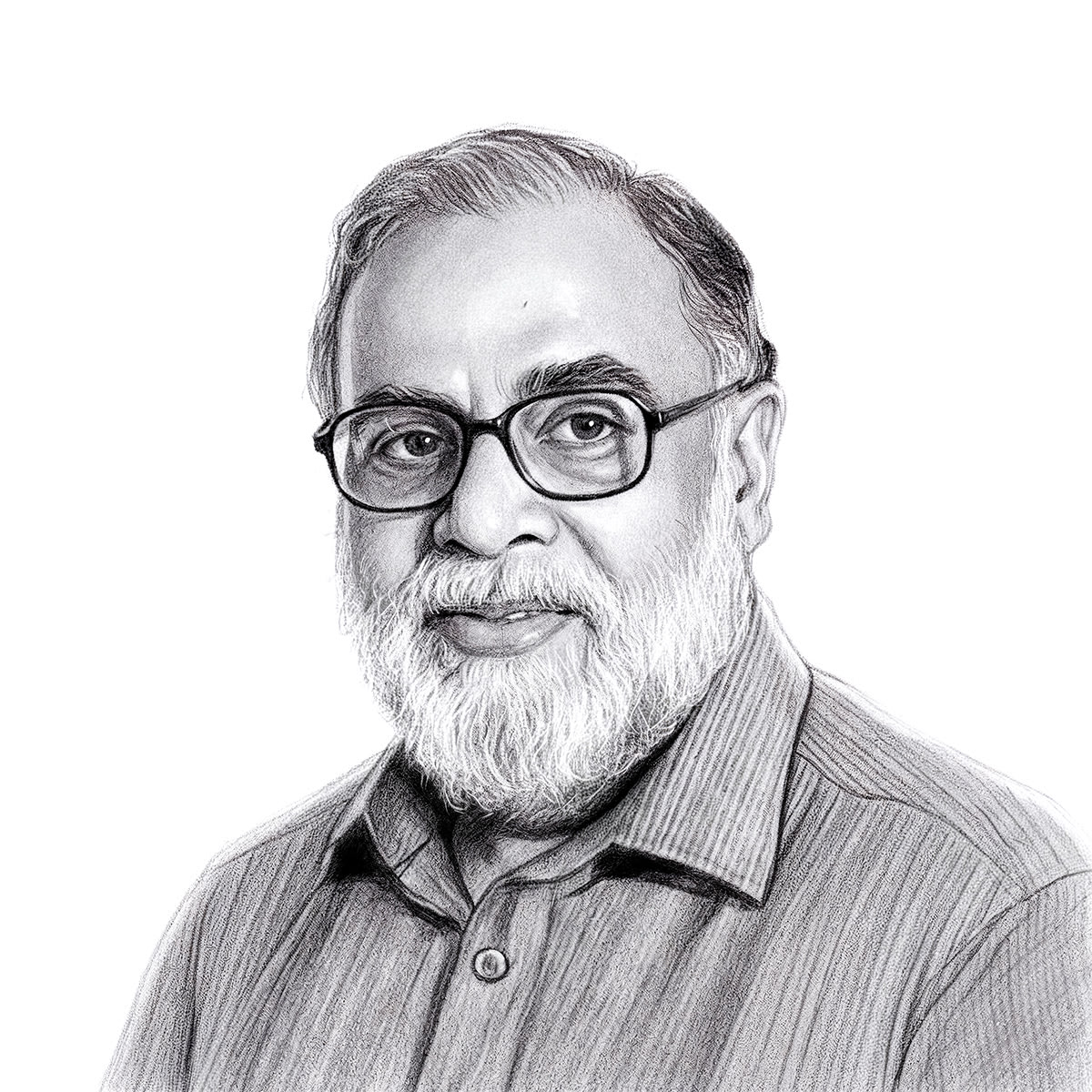
For over three decades, Professor Madhukar Shukla shaped generations of managers at XLRI Jamshedpur with his quiet emphasis on reflection and renewal. Speaking to Abraham Aby, he traces how adult learning, cross-cultural understanding, and organisational change converge on one timeless idea — that staying relevant demands both the curiosity to learn and the humility to unlearn. His words bridge classrooms and boardrooms, reminding us that adaptability, not certainty, sustains success.
Professor Shukla, you’ve had a rich journey spanning teaching, research, consulting, and even international exposure at ESADE, Barcelona. Looking back, what pivotal experiences shaped your philosophy of management and teaching, and what continues to inspire you in your work today?
I must first clarify that I am a retired person now and have no professional or work engagements by choice anymore. So, the question “what continues to inspire you in your work today” does not apply. But looking back, I think my understanding of what teaching and training are all about was shaped by my decade-long experience as a trainer and consultant prior to joining XLRI in 1990. I used to work with the NPC (National Productivity Council) and ASCI (Administrative Staff College of India), and my clients and participants were practising executives. Working with them helped me to understand and refine the nuances of andragogy — that is, how adults learn, change and develop. Unlike pedagogy, or teaching children who mostly learn by rote and by external incentives, adult learning requires a different set of conditions. Adults need to feel enthused and responsible for their own learning. And this can happen only when they see that the teaching is relevant to their current and future professional and personal needs, that it is more problem-oriented than merely content- focused, and that they are active players in the learning process and not just passive recipients of knowledge.
To the best of my ability, I have always designed my courses and sessions around these precepts of adult learning. You’ve worked extensively on cross-cultural management and co-authored Cultural Detective India. In today’s global business landscape marked by hybrid teams and digital collaboration, what cultural blind spots do Indian leaders most need to be aware of, and how can they overcome them?
I think we have an advantage in working globally, since India is a multicultural society. The fact that people have different cultural beliefs and norms comes to us naturally. Also, because of our colonial legacy and the history of migration from other places, we are more exposed to a diversity of cultures.
On the other hand, as people with strong regional identities, we can also be quite parochial and narrow in our appreciation of cultural differences. This can sometimes become a blind spot, since an awareness that each culture is different and “correct” in its own context is a prerequisite to working in a global landscape.
More specifically in an organisational or managerial context, concepts such as authority and power, time-orientation, interpersonal relationships, and so on, differ widely across cultures. Some cultures are more hierarchical while others are more egalitarian; some are more focused on the past to draw conclusions while others focus on the future; some are collectivistic while others are individualistic, and so on. The acceptance that such differences are culturally natural is an important precondition for negotiating global business realities.
Knowledge management (KM) and learning organisations were central to your early books and research. With AI and digital platforms transforming how organisations learn and share knowledge, how do you see the principles of a “learning organisation” evolve in the next decade?
In my work, I have found two distinct ways in which organisations manage knowledge and learning. One approach treats knowledge as something tangible and explicit. It equates KM with a comprehensive way to capture, sort, categorise, and disseminate information through IT-enabled platforms such as intranets, groupware, document management, bulletin boards, data mining and warehouses, and so on.
However, this approach only enables efficient application of knowledge, but not the creation of new knowledge — that is, for spurring creativity and innovation. Knowledge-creation requires a different approach, which is somewhat “messy”: it recognises that critical knowledge is tacit and intangible, and resides not in databases, but in the experiences, practices and in the informal networks of people. Tapping into this kind of knowledge requires building cultural processes and practices, which are informal, somewhat unplanned and spontaneous.
My hunch is that one of the key challenges of promoting organisational learning and innovation will be to find ways to use the emerging technologies for knowledge-creation, and not just for knowledge-application.
You’ve advised companies like Infosys, ITC, and Mahindra & Mahindra through phases of transformation. In the current environment of rapid technological disruption and employee expectations around purpose and well-being, what do you believe are the most critical elements for leading organisational change effectively?
Yes, it is true that the aspirations and expectations of employees have changed over time. However, the basic human need to be recognised, to find meaning in one’s job and ‘feel the agency’ in one’s work and life has not changed. We must also recognise that people actually like change and like to be part of it; what people dislike is being changed, or being a victim of change. Successful organisational change has always revolved around this basic human need. In the current environment, this requirement of keeping people at the centre-stage becomes even more crucial for the change to be sustainable and lasting.
For the current and future generation of business leaders, what would you identify as the top three takeaways for building sustainable careers and organisations — especially in an era of uncertainty, innovation, and cross-cultural complexity?
I think the “era of uncertainty…” and so on, is not really something new. In fact, even the term, or acronym, VUCA (volatility, uncertainty, complexity, ambiguity), which is popular these days, was actually coined about 40 years back in a book on leadership challenges of the 1980s by Warren Bennis and Burt Nanus.
So, one can safely say that though the nature of changes may be different, business leaders across generations have faced their own share of uncertainty, complexity, and disruption in the business environment of their times. What such a business environment does is to change the nature of required skillsets and capabilities. Many old roles and jobs cease to exist, and get replaced by jobs which did not even exist five years ago.
The key implication of such changes for careers and organisations is not three, but just one! And it has not changed over the years. Whether as a person or an organisation, to remain relevant and keep growing, the critical challenge is to keep acquiring new skills, knowledge and capabilities — and to keep unlearning the ones which are no longer relevant. The latter, that is, unlearning, is often more difficult.
How has XLRI changed from the time you joined and now, and how do you reflect on this journey of XLRI?
Like any institution, XLRI has evolved and changed over the years. When I joined in 1990, we were a small community — about 20 faculty members, about 200-220 students in all, and around another 100 non-teaching and support staff. So, in a way, everyone knew each other, and there was a personal connection among people.
Since then, XLRI has grown both in the number of people and in size (the campus used to be much smaller then). In a way, this growth comes with a trade-off. With the increase in size and numbers, some of the old intimacy has gone. On the other hand, now XLRI hosts a larger and more diverse talent pool, and is thus able to make a greater impact — and is known and recognised in the outside world. For me personally, watching and experiencing this transition has been an exhilarating learning experience.
Your LinkedIn posts on the history of XLRI are really interesting and have been a point of discussion for many of us. What made you start writing on those and how big of a role do you think it plays in connecting the XLRI of past and now? How can XLRI improve the culture of preserving such timeless pictures and info over the years?
XLRI has a rich and inspiring history of how over time, a small initiative which started in 1949 from a room in the Boulevard Hotel, Bistupur (Jamshedpur), has bloomed into a world-class global management school. I think it is important to trace this history not only because it is an amazing case-study of institution building, but also to preserve the core values and purpose on which the institute was founded.
This history, to my mind, cannot be captured through a centralised repository of data points. It is a shared history of people who have passed through the portals, and retain memories and artefacts of that time. All I have been sharing on LinkedIn are some slices of this history which some XLRI friends and alumni share with me from time to time. I do think that it would be a good idea for XLRI to havean interactive online archive, a repository of sorts, where not only the history and milestones of XLRI are preserved, but also where old alumni, faculty and staff can share their memories and artefacts from their time.