


April, 2026
4 mins read
Risk Is No Longer a Function; It Is a Mindset
 28 Apr 2026
In an era defined by volatility, disruption and accelerating complexity, risk is no longer a function; it is a mindset. CA Dipen Trivedi, Partner at BDO India, brings over two decades of experience across enterprise risk, governance and strategic advisory, spanning India, the GCC, Africa and Europe. An alumnus of IIM Indore and a mentor to emerging professionals, his philosophy — ‘be aware to care’ — offers a compelling lens on leadership in uncertain times. In this conversation with Venkata Ram Prasad N, he reflects on what it takes to build resilient organisations today.
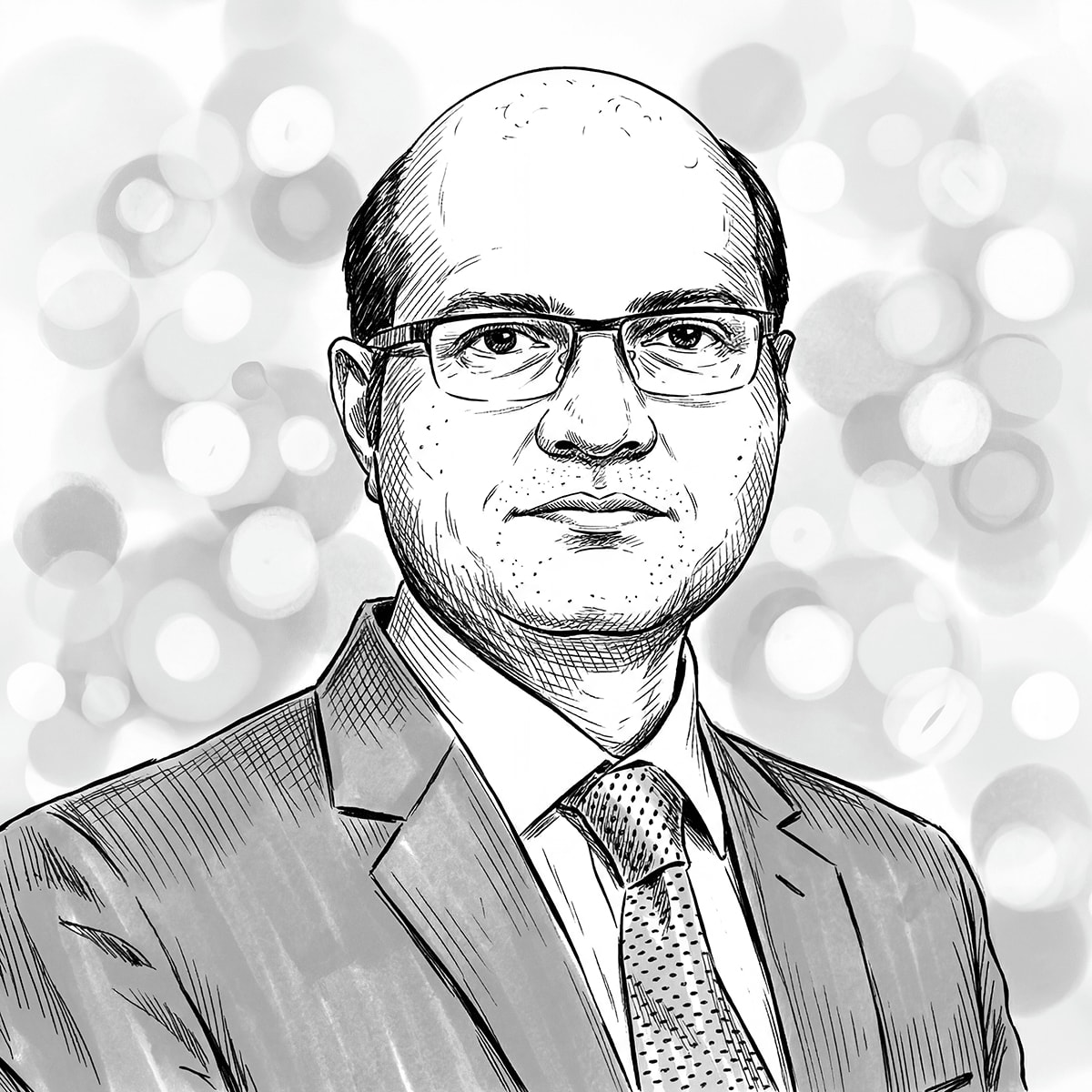
Your career spans leading firms and diverse sectors. What drew you to risk and advisory, and what has sustained your journey over the years?
My journey began with a simple but enduring instinct: the need to understand problems at their root. Advisory, at its core, is not about offering solutions; it is about discovering truths. That pursuit of clarity, combined with the responsibility of delivering meaningful client outcomes, has kept me anchored.
Over time, what evolves is not just expertise, but purpose. And for me, that purpose continues to renew itself with every new problem, every new context.
You often speak about creating order from disorder. How does this philosophy play out in real organisational contexts?
Disorder is not an exception; it is often the default state in moments of change. Whether organisations are scaling, stabilising or navigating disruption, complexity manifests as chaos.
The role of leadership, then, is not to react impulsively, but to introduce structure with intent. This begins with pausing, returning to first principles, and systematically identifying root causes.
Order is not merely about control; it is the precursor to stability, and stability is what enables sustainable growth.
Clarity precedes control, and control enables progress.
How do enterprise risk management, corporate governance and sustainable finance come together in today’s business environment?
These are often seen as parallel domains, but in reality they are deeply interdependent.
Enterprise risk management builds anticipatory capability; it prepares organisations for what could go wrong. Governance provides structural discipline, ensuring accountability and transparency in the present. Sustainable finance introduces long-term responsibility, aligning business with environmental and societal priorities.
What binds them together is governance — not as a compliance mechanism, but as an enabler of coherence and execution.
What differentiates organisations that embed risk into their DNA from those that treat it as a checklist?
The difference lies in whether risk is lived or documented.
When risk management is reduced to a checklist, it becomes passive and reactive rather than proactive. But when embedded in decision-making, it evolves into a capability.
Organisations must transition from being risk-averse to risk-aware, and eventually to risk-intelligent. That progression defines their maturity and their ability to navigate uncertainty.
What is your approach to building high-performing teams?
Organisations often emphasise processes and technology, but ultimately it is people who drive outcomes.
High-performance teams are built on three foundations: trust, empowerment and accountability. Leaders must create environments where individuals feel ownership, receive candid feedback, and are supported through both success and failure.
When people are empowered to evolve, the organisation evolves with them.
Processes scale efficiency, but people scale possibility.
How do you foster trust in
client engagements?
Trust is not built solely on expertise; it is built through proximity to the problem.
Advisors must immerse themselves in the client’s context, understand the nuances, and co-create solutions rather than prescribe them. This requires iterative dialogue, continuous validation, and a willingness to challenge assumptions — including one’s own.
Solutions gain acceptance only when they are co-owned.
What should students focus on if they aspire to build a career in advisory?
Before strategy comes fact-finding. The ability to uncover, structure and interpret facts is what builds credibility. Without it, even the most sophisticated recommendations lack substance.
Equally important are analytical rigour and clarity of communication. Advisory is not just about thinking well; it is about making others see clearly.
What keeps you motivated after decades in the field?
The realisation that there is always more to learn.
Every disruption — whether technological, geopolitical or sectoral — creates new contexts and new questions. Remaining relevant requires both curiosity and agility.
Today, agility is not a competitive advantage; it is a baseline expectation.
What trends will define the future of risk?
We are entering a phase where multiple forces are converging:
Geopolitical instability is reshaping global dynamics.
Technological acceleration, particularly AI and GenAI.
Cybersecurity threats are expanding in scale and sophistication.
The challenge is not just to understand these risks in isolation, but to navigate their intersections.