


February, 2026
6 mins read
Start With the Problem, Not the Solution
 26 Feb 2026
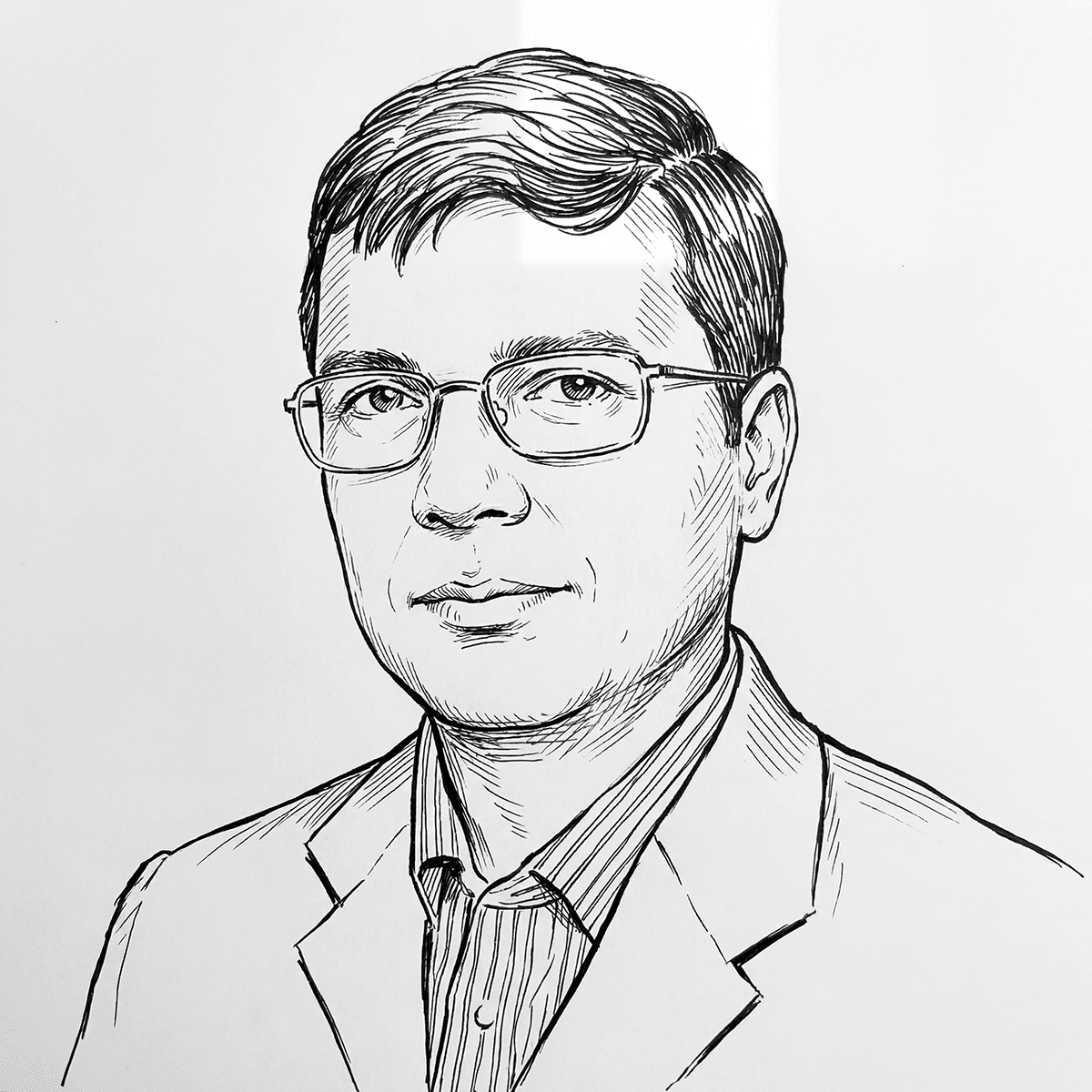
Product leadership in large enterprises is often seen as a trade-off between innovation and stability. In reality, it is a discipline built on clarity of thought, structured experimentation, and the ability to scale ideas within complex systems. Shruti Jain speaks with Sunil Mishra, Senior Director, Product Management at Publicis Sapient, a seasoned product and innovation leader with more than two decades of experience across digital banking, enterprise technology, and global consulting. From Infosys Finacle to McKinsey, Accenture, and Oracle, his journey reflects a blend of strategic rigour and execution. He discusses how a product mindset transcends industries, why structured innovation matters, and how AI is reshaping the way products are imagined, built, and scaled.
Looking back across banking technology, consulting, and product management, what is one constant in product leadership, and one thing that has changed dramatically?
One thing that has remained constant is the essence of product leadership itself: starting with a clear problem statement. No matter the industry or era, a product leader’s responsibility begins with understanding what problem needs to be solved.
What has changed dramatically is how we solve those problems. The tools, methodologies, and technologies have evolved
significantly. Today, AI has made many aspects of product development far more efficient. But the foundational responsibility —
defining the problem — has stayed the same.
What does it take to successfully launch an innovative product within a large, established organisation?
Business-as-usual operations typically consume large organisations. Their time and energy are focused on supporting existing
customers and revenue streams. As a result, innovation often struggles to find the bandwidth it needs. The most effective approach I have seen is creating a small, empowered, and insulated team dedicated to innovation. This team must be free from daily operational burdens and organisational constraints, with the mandate to make independent decisions and pursue blue-sky thinking.
You often speak about “product mindset.” In a world full of buzzwords, what does it truly mean to you?
For me, product mindset goes far beyond product development. It can be applied to almost anything. First, it is about outcome over effort. Customers pay for value, not for the effort that went into building something. Measuring success by effort is a flawed paradigm. Second, it requires a lifecycle perspective — from inception and development to launch, adoption, and long-term value
maximisation. Third, it is about owning the problem statement. In services, you build what the client asks for. In product organisations, the product manager defines the requirement, synthesising inputs from customers, stakeholders, and the market.
Finally, product mindset means building for scale, ensuring strong product-market fit, and continuously iterating against the
original problem.
How do you anchor product vision when client requirements and priorities keep shifting?
If you mindlessly execute every client request, you are not managing a product; you are running a feature factory. Product managers must always ask “why.” You can say yes to a request, but only after understanding its purpose and relevance to the broader market. Build for the market, not for a single client. Acting as a gatekeeper to the roadmap is a critical part of the role.
Personalisation drives engagement, but privacy concerns are rising. How do you balance user delight with trust?
Trust always lags technology. We saw this with internet banking decades ago; people were initially hesitant, yet today it is second nature. With any new technology, trust develops over time, supported by strong guardrails, transparency, and responsible implementation. If the value is clear and the safeguards are strong, user behaviour eventually adapts.
When faced with competing priorities from sales, engineering, and leadership, how do you decide what to build next?
Traditional prioritisation exercises often fail because everyone believes everything is essential.mOne technique I have used is constrained prioritisation. For example, I give stakeholders a hypothetical budget, say $1,000, and ask them to allocate it across requirements. Constraints force real trade-offs and reveal true priorities.
How do you manage the creative tension between product, engineering, and design teams?
The key is a shared product vision. When everyone understands the problem being solved and buys into the vision, roles
naturally converge. With AI accelerating convergence, engineers may prototype experiences, and product managers may build minimum viable products (MVPs) themselves. Alignment comes from clarity of purpose, not rigid role boundaries.
How do you ensure product vision remains consistent while being communicated across diverse teams?
Once the team truly understands and believes in the vision, translation happens organically. Each function interprets the vision in its own domain. The leader’s role becomes facilitative, ensuring coherence without micromanagement.
What is your philosophy on building a minimum viable product, and how do you decide whether to pivot or proceed?
An MVP is the stage at which a customer can experience the product and provide honest feedback. Until that happens, you should not over-invest in development. The critical decision point lies between MVP and the first paying customer. If that gap persists despite repeated validation attempts, it is time to pivot.
You introduced formal innovation labs in large organisations. Why is structured innovation critical?
In large enterprises, ideas rarely die because customers reject them; they die navigating internal politics. A structured pathway with sponsorship, funding, and insulation from business-as-usual constraints allows ideas to survive long enough to prove their value. Dedicated incubation teams prevent innovation from competing directly with core operations.
How do you decide what not to build, or when to sunset products?
Sunsetting products is one of the most complex product decisions, yet it is essential. Organisations often waste resources supporting products everyone knows will not scale. Portfolio prioritisation requires courage to drop features, products, and even entire lines of business when they no longer serve strategic goals.
Which phase of the product lifecycle has AI accelerated the most?
AI has impacted all phases, but ideation has seen the most significant shift. What once took months — prototyping, experimentation, and feedback — can now happen over a weekend. Faster ideation leads to more rapid learning cycles and a dramatic increase in experimentation.
Your book Mysteries of Mind explores empathy and human cognition. How does that influence your product practice?
Product management is ultimately about storytelling. Customers are the heroes of the story; the product serves as a guide that
helps them overcome a challenge. Understanding how the human mind processes narratives helps in shaping compelling product stories, both internally and externally.
In product teams, what is the biggest thief of focus and momentum?
Stakeholder alignment. Product managers act like mini-CEOs, aligning leadership, engineering, sales, and customers. This invisible work — communication, alignment, and expectation management — consumes enormous time but determines
product success.
Beyond Apple or Google, which strategies excite you today?
The future belongs to companies that combine people and product. We are already seeing this shift: product firms adding consulting capabilities, and services firms building products. Adaptability will define the winners.
One daily task you wish AI could do perfectly?
Prioritise my work and personal commitments across teaching, writing, and product leadership. A faithful personal assistant would be invaluable.