


June, 2024
24 mins read
The AI industry is in a bubble that will deflate
 29 Jun 2024
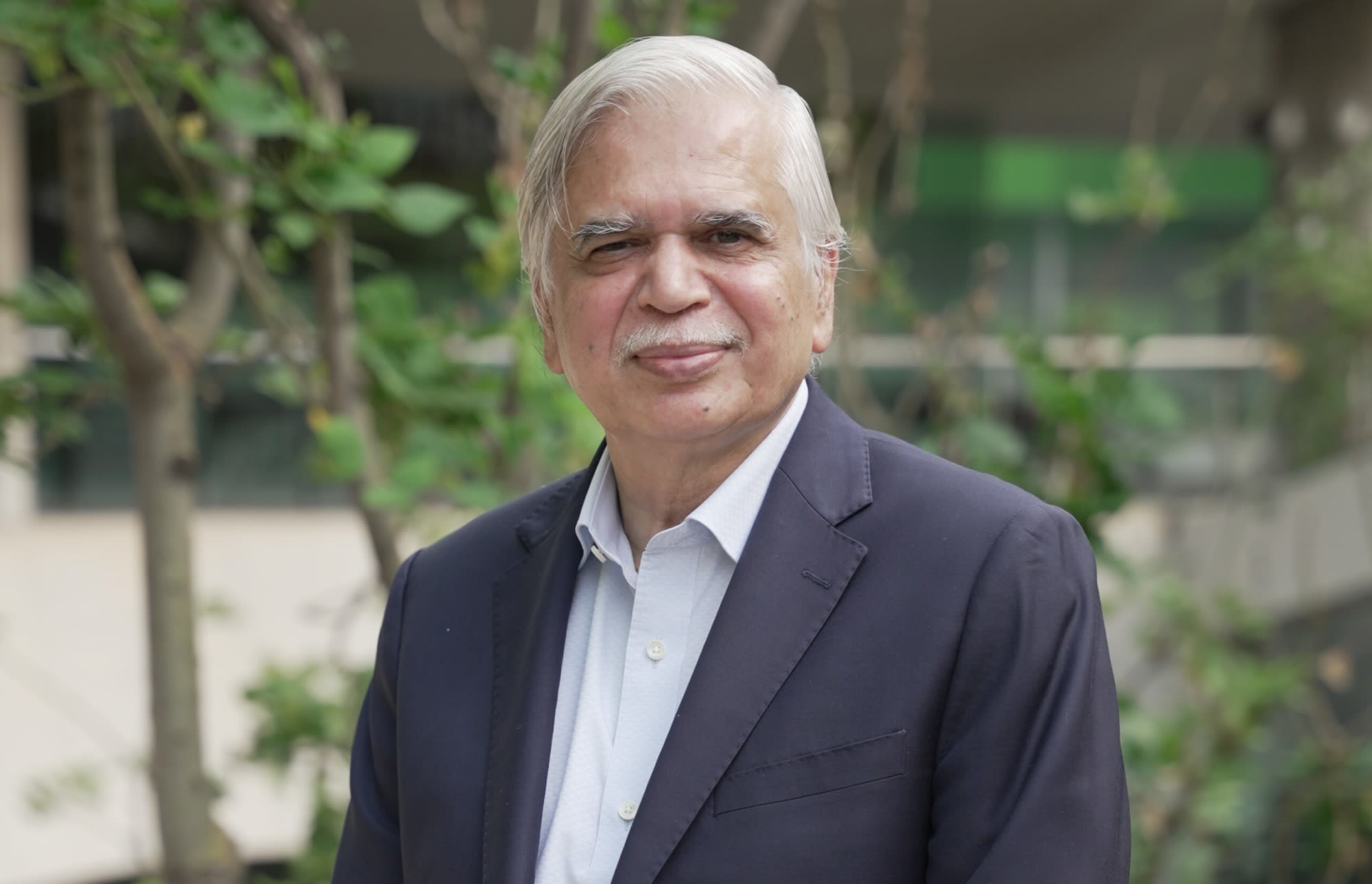
Richard Rekhy, renowned for his transformative tenure as CEO of KPMG India, brings a wealth of insight into the challenges and opportunities facing modern businesses. In an exclusive interview with Deepak Yadav of CEO Lounge, he addresses pressing issues from ethics and governance to the future of work and social responsibility. Rekhy highlights the overhype of the AI industry, cautioning against inflated expectations. His assertion, “Leadership extends beyond hard work; integrity is at the core,” encapsulates his philosophy. With a steadfast commitment to sustainability and innovation, Rekhy’s perspectives resonate deeply in today’s dynamic business environment. As a respected industry mentor, his influence continues to shape global business practices, advocating for a balanced approach to profitability and purpose.
In today’s business world, there’s a pervasive focus on short-term metrics, often referred to as the ‘SMART formula’ — specific, measurable, actionable, relevant, and time-bound. How do you perceive this trend? How would you advocate for the importance of long-term investments that might not provide immediate bottom-line benefits?
In recent times — slightly before Covid hit — the industry began to shift dramatically. Technology was overtaking everything, and the startup community was disrupting business models left and right. The way people conducted business was evolving rapidly. At KPMG International, we conducted a global survey of around 200-300 CEOs, all from international firms. We asked them what they feared the most. Surprisingly, they didn’t fear their traditional competitors; they feared the guy in the garage next door.
That was an inflection point for many in deciding their future direction. The focus on short-term profit and growth got us to where we are today. Let’s not take that away. The growth of countries and corporations happened because of this short-term economic focus, prioritising shareholder value and increasing share prices. However, people eventually started realising, ‘This is not sustainable.’ Sustainability became a big thing. Businesses began questioning their long-term viability.
For those requiring investments, new business models were emerging. They needed to address future market changes and cater to new customers. Today, your customer doesn’t even see you; it’s all online, so brand loyalty has almost become zero. So, how do you keep the customer engaged and connected with your brand?
In the early part of my consulting career, innovation was a term thrown around lightly. Today, everyone has to innovate constantly, thinking about how to do something differently every day or even every minute. This constant innovation creates new ways of doing business and entering new markets. Companies are now collaborating with the startup community to bring innovation because it’s tough to innovate and change in a large corporate setting. The corporate structure and hierarchy don’t allow for quick changes.
For example, at KPMG Singapore, when we initiated the digital practice, we dedicated a new floor in a well-known building to startup teams. This space had no dress code, allowing individuals to wear jeans and t-shirts. Their mission was to brainstorm innovative solutions for the financial services, insurance, and banking sectors. Creativity had to be built. It cannot be built by people in suits and ties and where everything works on a structure. Creativity flourishes best in an environment free from traditional corporate and hierarchical constraints.
ESG (Environmental, Social, and Governance) has become a significant topic. People are discussing it, but the real question is how to invest in it and create value. Brand here has become a crucial element. The most intangible value lies in the brand, which is often the highest valuation. Apple is a prime example — consider the cost of making a phone versus its selling price. They charge you for the brand. The aspirational value of owning an Apple phone is immense.
When I was at KPMG, during town hall talks, I used to say that you should reinvent yourself every two years. Today, I would say that reinvention should happen every month because the pace of change is incredibly fast. People need to reinvent themselves and invest in the future. Corporations must create a safety net for employees so that if they fail, they are still supported. The real issue is the fear of failure. To encourage innovation, you have to remove the fear of failure.
It’s essential for leaders to invest in their people, their learning and development, and their capacity to innovate. Companies should also invest in new products, services, and solutions to offer their customers something they have not seen before. This dual focus on people and innovation is key to staying competitive in a rapidly changing world.
You’re suggesting that breaking down long-term problems into short-term goals is key. Building a culture takes time and is achieved through a series of short-term goals. Now, in our constantly changing world — shaped by social media, technology, and globalisation — what was relevant yesterday may not be today. We need a learning mindset and the ability to unlearn. What is one widely accepted business truth that needs to be unlearned, and why?
The first truth dawned on me pretty late. I became part of a setup in KPMG Global to develop a higher purpose. That was the first time we looked at what I would call the ‘why.’ Why does KPMG exist? If KPMG disappeared from this earth, would the world miss anything? That opened my eyes to many things.
Higher purpose is simply the ‘why’ of your life. Why do you do something? Why do you come to the office? Why are you working with this client? Why do you work for KPMG? You start asking yourself those questions. You know what you do and how you do it, but that is different. I explain it like this: My salary is my current account; my higher purpose is my capital account. You know where your capital is getting built, where you’re becoming wealthy, and so on. This changed my concept of moving away from just profit.
The one thing we should unlearn is the focus on profit. My focus is: What legacy do I leave behind? We had a great firm, a big firm, but I wanted to make KPMG a happier place to work
To do that, you have to unlearn the profit notion and focus on making the workplace more human-friendly and people-friendly. The impact was tremendous. People were motivated. They came to me and said, ‘You don’t need to tell us what to do. We see what you do and get inspired.’ A leader should inspire and take the journey himself, bringing others forward in that spirit.
Let me provide you with a personal example. At KPMG, we transformed the workplace with remarkable results from 2012 to 2017, fostering high motivation and energy. I communicated our ambitions and empowered the team to chart their own course, prioritising values and collaboration over revenue. ‘Firm before self’ was my guiding principle.
We faced tough decisions, such as relinquishing significant audits during rotation. Critics questioned why we passed on lucrative opportunities, but standing firm earned us respect from corporate leaders. Our focus on long-term integrity over short-term gains garnered enduring respect and new opportunities.
Often, we need to shift focus away from short-term wins and goals to consider the broader perspective. Such decisions demand considerable courage. Walking away from immediate financial gains is challenging and invites criticism, but standing firm can yield unexpected benefits.
You’ve articulated that well…
Let me share another insight. Integrity is the most essential quality for any leader. If your integrity is beyond question and you have no hidden agenda, your concern for the firm stands out. Let me give you two examples unrelated to KPMG.
First, there’s Patagonia, an apparel company valued at $3 billion with $100 million in annual sales. They exemplify corporate purpose, prioritising governance, clear supply chains, and sustainable materials. Patagonia has earned immense loyalty from both employees and customers due to their operational ethos. Today, consumers support environmentally friendly businesses, and Patagonia excels in this regard, topping the list of sustainability leaders.
Another inspiring figure is Paul Polman of Unilever. When he took over, Unilever was thriving, but he transformed its ethos by championing sustainability and reshaping procurement practices. He even stopped giving quarterly guidance. Despite initial stock price declines and takeover threats, he persevered. He added eco-friendly brands to Unilever’s portfolio and implemented sustainable practices across the company. Today, Unilever employees credit Polman for their sustainable foundation. Though they faced short-term setbacks, their long-term growth and sustainability journey began with his vision.
Have you ever encountered a situation where adhering to ethical standards cost the company financially?
Yes, giving up millions of dollars in fees certainly cost us financially. But you know something, I have never looked at financials just as numbers. During my tenure as CEO, every metric more than doubled — partner headcount, employee headcount, turnover, and profitability. We worked hard and honestly, but we avoided unethical opportunities. For example, when tempted with lucrative government contracts, I refused. We did business with governments, even if it meant smaller contracts, but ethically.
Integrity is the most essential quality for any leader. If your integrity is beyond question and you have no hidden agenda, your concern for the firm stands out
It’s hard to calculate the financial loss from not taking those accounts, but consider the brand reputation and potential damage avoided. Today, I walk down the street without any titles, and the respect I receive from corporate leaders and global board members speaks volumes. They greet me warmly, they hug me, and this tells me we did something right that the firm is proud of.
Have any crises led to positive transformations?
I’ll approach this question a bit differently. Often, people argue that adhering to ethical standards incurs costs. They question why we do it. When we look at various crises — whether the financial crisis or Covid-19 — it’s clear that many were not handled appropriately because the necessary systems and processes were lacking.
A former US Deputy Attorney General once said, “If you think compliance is expensive, try non-compliance.” The billions in fines paid by companies post-crisis prove this point. During the 2008-2009 financial crisis, although India wasn’t immediately impacted, we anticipated the downturn and decided to continue investing. While others cut training costs, we did the opposite, preparing our team for the market rebound. This counter-cyclical approach paid off, positioning us for growth when the economy recovered. We didn’t just survive the crisis; we thrived because we were ready with new ideas and innovative solutions.
One clear example of a crisis leading to positive transformation is the Johnson & Johnson Tylenol case in 1982. Tylenol had a 37 per cent market share in the US paracetamol market when some capsules were laced with cyanide, leading to deaths of several people. In response, the CEO made the tough decision to recall every single drug from the market. He conducted a thorough investigation and found nothing wrong with their manufacturing process. Despite the crisis, their stock price soared, and two months later, Tylenol was reintroduced. It quickly regained its market share, rising from 7 per cent back to 30 per cent. This crisis tested and ultimately reinforced Johnson & Johnson’s ethos, solidifying its reputation as a value-driven company.
Since we’re talking about crises, I’ll add a question there. Is there an industry you foresee heading towards a bubble at this point in time?
There are three industries, in my opinion, facing this risk.
The first is real estate. It’s overheated. In China, it’s already crashed. In India, it’s very overheated. If you look at real estate prices today, they are crazy. Is it a bubble? Yes. Will it burst? I don’t know. Time will tell. Now, real estate is intricately linked to the stock market and the broader economy, where government regulations serve to stabilise market dynamics.
The second is cryptocurrency. It’s on a high again, but no one really knows why. The volatility and speculative nature of crypto make it a potential bubble.
The third one, which might shock you, is the AI industry. AI itself is very beneficial — we need AI. But right now, AI is unregulated and has the potential to cause more harm than good.
The companies with solid AI products will survive, but many are just riding the wave of AI hype. Everyone claims to be an AI company today, but where is that leading us?
Let me give you an example: a friend of mine runs an AI startup and was looking to raise $10 million. The investor told him, “You’re an AI company, why aim for $10 million? Go for $100 million or $200 million.” This hype is driving companies to jump on the AI bandwagon. The companies with solid AI products will survive, but many are just riding the wave of AI hype. Everyone claims to be an AI company today, but where is that leading us? In my view, these are the three industries currently in a bubble, and the AI hype, in particular, is bound to deflate.

As someone who has been on the front lines of risk management, can you identify a critical blind spot in contemporary risk management practices that most companies are currently overlooking?
One significant blind spot is the interconnectedness of risks. Companies often address risks in isolation, which can inadvertently create vulnerabilities elsewhere. For instance, focusing solely on financial risks without considering supply chain or geopolitical risks can lead to significant oversights. Understanding that risks are interrelated is crucial. This is where companies have failed. Effective risk management involves recognising how various risks — geopolitical, brand, technology, competitive — interact and impact each other. For example, an auto company facing market pressure to discount prices must consider supply chain stability, market share, and financial health simultaneously. Robust risk management systems provide data and insights, enabling informed decisions that mitigate overall risk without creating new issues.
Mitigation strategies are essential. Risks cannot be eliminated but can be managed through proactive mitigation measures. This approach incurs costs but reduces the impact of potential shocks. Integrating and connecting disparate risks into a comprehensive risk management framework ensures better preparedness and resilience against unforeseen challenges.
In summary, the biggest blind spot is not recognising the interconnected nature of risks. Effective risk management requires a holistic view, integrating various risk factors and preparing for their cumulative impact.
A major risk often overlooked is dictatorial leadership. When a CEO adopts a dominant, dictatorial style, it can lead to the collapse of companies, as evident in cases like Paytm and Byju’s, internationally, Enron.
The leadership style in these instances stands out as a significant factor. While governance and other issues play a role, a leader who believes they can do no wrong poses a severe risk.
For example, the fall of Yes Bank involved a dictatorial leader, and although it has since rebounded with a great leader, the impact of such leadership was clear. Dictatorial leaders don’t listen to anyone, stifling valuable input. If you hire smart people, you should listen to them; otherwise, you might as well hire robots who will only follow orders. Hiring smart people means leveraging their advice to grow and avoid pitfalls.
The path to professional achievement seems straightforward: work hard, acquire new skills, perform well, and advance in your career. But do companies truly reward merit, or are there other, less visible factors at play?
There are two parts to this question. First, do companies reward merit? I believe this is an area where many organisations fall short. When someone does an exceptional job, do they get rewarded disproportionately for their efforts? Often, they do not.
However, career advancement is about more than just hard work. It involves displaying strong values, collaborative behaviour, and a commitment to the firm. How you treat people, whether you are respectful and supportive, plays a significant role.
A high-performing leader who is selfish and rude will struggle to maintain a motivated team. A motivated team rallies behind a leader who prioritises their interests. This distinction between a boss and a leader is crucial. A boss dictates; a leader inspires. A leader engages people in their vision, encouraging participation in decision-making. When team members are involved in the process, they become passionate about the work.
Nelson Mandela once shared that his father, a tribal leader, taught him to listen first. By considering everyone’s views, a leader ensures that all voices are heard, fostering a sense of collective decision-making.
Moreover, a leader’s networking skills are vital. How well they are connected with senior business leaders from other industries, their reputation, and the trust they build with competitors and regulators, all matter. Trustworthiness is crucial, especially when dealing with serious situations. If regulators trust you, they are more likely to consider your perspective.
Leadership extends beyond hard work. While hard work is essential, integrity is at the core. Without integrity, other qualities don’t matter. Being honest with your people builds trust, which in turn motivates them to go above and beyond. An honest day’s work and a commitment to integrity are fundamental to true leadership.
How can leaders foster genuine commitment to responsible practices in sustainability, avoiding the pitfalls of greenwashing?
In July 2023, new environmental, social, and governance (ESG) metrics for mandatory disclosure were introduced for the top 1,000 listed companies in India. Eventually, this will extend to most companies. However, in many cases, it’s likely to be a mere tick in the box for 80-90 per cent of them. Only a few companies will genuinely commit to these standards. We need to move away from a mindset where regulation drives behaviour and shift towards a genuine commitment to sustainability and ESG compliance.
ESG compliance can be quite straightforward. The easier part is managing measurable environmental (E) factors because they are clearly defined and can be systematically addressed. The challenging part is the social (S) aspect — dealing with diversity, equity, and inclusion (DEI), improving conditions for women in the workplace, addressing working conditions, and eliminating salary disparities. These issues simmer in boardrooms worldwide, not just here. They are often neglected because there are no measurable goals for them. Leaders need to have a vision for their organisation, driven by the CEO, rather than delegating it to lower executives. This cannot be an agenda for the number two or three in the organisation. It has to be led by the CEO.
ESG must be integrated into your corporate strategy, not treated as a bolt-on. Anything that is simply bolted on will remain secondary. An ESG leader must be empowered to hire a team and make capital investments. Committees should be established to review these investments and allocate resources transparently and honestly.
Employees must be part of the story. This begins with practices in the office and factory — reducing waste, using efficient lighting and air conditioning, and integrating ESG principles into daily operations. For example, if you have a large back office or global capacity delivery centre with thousands of taxis transporting employees, consider transitioning to electric vehicles or enabling work from home.
Collaborating with suppliers is also crucial. A company committed to ESG must ensure its suppliers are compliant as well. As a CEO, you need a motivating tagline that inspires employees each morning. ESG compliance should permeate their lives — at home, at work, and in the community.
For instance, I used to work at Arthur Andersen and initially thought India could never achieve high quality due to a ’chalta hai’ (it’s okay) attitude. However, at Arthur Andersen, quality was non-negotiable. Every document underwent rigorous reviews and iterations, embodying what premium service truly means.
Premium service begins with hiring the best talent and taking care of them, enabling them to focus on significant issues rather than minor problems. This empowers you to say no to clients who aren’t willing to pay for premium services.
Leaders often struggle to meet their diversity, equity, and inclusion goals. The question that comes to mind is whether leaders truly understand how to create an inclusive environment.
Our challenges often begin at home, within our patriarchal society. From a young age, children are conditioned into gender roles — boys are encouraged to explore while girls are expected to stay home and handle domestic chores. This early conditioning persists into the workplace.
I recall a revealing story from a coaching experience where two candidates, one female and one male, vied for a top position. The female candidate received coaching focused on confidence-building, while the male candidate was groomed in strategic business skills. Predictably, the leadership role went to the male candidate, underscoring the inherent biases and differing standards set for men and women.
In discussions on DEI, we often emphasise gender and disability, but I would like to take this discussion a little further. Why should age be seen as a barrier? If a 19-year-old can successfully start a company, why shouldn’t a 28-year-old have equal opportunities to be a CEO?
Language, again, shouldn’t be a barrier. A person may not be fluent in the language you and I speak, but he may be a brilliant mind sitting there. Language proficiency should not limit opportunities; brilliance exists beyond fluency in the dominant language.
Socioeconomic background is another crucial consideration. During my tenure at Arthur Andersen, I hired individuals from lower-middle-class backgrounds. Why? Because I saw fire in their belly. They exhibited exceptional drive and determination, often surpassing their peers.
Geographical location should not restrict talent recognition either. Exceptional individuals can emerge from any region, not solely major cities like Mumbai or Delhi. We must actively identify and nurture talent from diverse backgrounds and locations.
With the rise of remote work, what do you believe is the future of physical office space?
Frankly, I can only speculate because we haven’t seen how this will play out. Personally, I believe there’s greater productivity and connection when people meet face-to-face, even in meetings. For instance, during a year-long merger discussion between Saudi Arabia and UAE firms, progress was stagnant until we could physically meet post-Covid restrictions. Virtual meetings have their challenges — people might not engage fully, turn off their cameras, or face network issues. Genuine interaction fosters engagement, which is crucial for effective collaboration.
Even before Covid, as CEO, I collaborated with HR on implementing a work-from-home policy to cut real estate costs amid soaring prices. Today, I see offices transforming into collaborative spaces, where flexible desks and vibrant environments replace fixed workstations. This shift accommodates a hybrid model, leveraging co-working spaces like WeWork to reduce commuting stress and environmental impact, particularly in cities like Bangalore and Delhi.
However, remote work has its drawbacks. Productivity has declined, with some employees juggling multiple jobs without oversight, leading to ethical concerns. Regulations are needed to address these issues without stifling flexibility. Despite these challenges, a hybrid work-from-anywhere policy seems viable, preserving corporate culture while adapting to changing work dynamics. Building a cohesive organisational culture requires occasional in-office check-ins, balancing remote work’s convenience with the benefits of physical interaction and idea exchange.
Moreover, remote work has also introduced challenges such as decreased professionalism and instances of laziness. For example, the casualisation of virtual meetings reflects a shift in workplace norms. These changes must be managed carefully to ensure that the professionalism and dedication essential to a productive work environment are maintained, despite the flexibility of remote work policies. Covid-19 accelerated these shifts, but long-term solutions must prioritise preserving a strong and purposeful work culture.
Let’s touch on leadership as well. Given the rapid developments in technology, what skills will leaders need in the future? How should they balance hard and soft skills?
In my opinion, we live in a T20 world and need a T21 leadership — a 21st-century leadership model that can navigate fast-paced changes. Leaders must empower their teams and be visionaries. They need a strong vision, not just for today but also a vision to be able to foresee what the future might bring. We live in a world of unknown unknowns. It’s like somebody putting you behind the steering wheel blindfolded and saying, “Please drive the car.” What’s going to happen? It will be very difficult for you to drive that car. So, what is required? It requires risk-taking ability, guts, overcoming the fear of failure, and taking a leap of faith.
In such an uncertain environment, visualisation, creativity, and innovative, out-of-the-box thinking are crucial. A new leader must be as swift as a player in a T20 cricket match. There’s no time to regroup; you need plans A, B, C, and D ready. If one plan fails, you must quickly move to the next. Flexibility, mobility — not just physical but mental — agility, and what I call antifragility are key. Antifragility means thriving and growing stronger in the face of adversity, not just bouncing back.
Leaders need to empower their teams, be fair, and prioritise employee well-being. We must move from empathy to compassion. Empathy is asking how someone feels; compassion is empathy in action — helping their family, supporting them in tangible ways. This builds loyalty, which is priceless and earned through actions. Trust and loyalty are built when leaders genuinely care and support their teams.
Additionally, integrity should be a given, but passion is essential. Leaders must be passionate about their work, willing to stick with it through tough times, and fully invested — not just financially but emotionally. Just as we protect our family name, we should protect and invest in our company’s reputation. Loyalty should be a two-way street, making employees feel wanted and respected.
You’ve emphasised the importance of building relationships and networks for leaders. Can you elaborate on that?
A network is one of the most valuable assets as you advance in an organisation. Building genuine, not merely transactional, relationships is essential. Unfortunately, many fall into the trap of reaching out only when they need something. True relationships are built on giving without expecting anything in return.
Throughout my career in consulting, I’ve learned that nurturing relationships beyond transactions is crucial. For example, a long-standing client followed me from Arthur Andersen to KPMG, trusting me personally, not just the firm. This trust required consistent effort and genuine care.
It’s important to build deep relationships where people are willing to go the extra mile for you. I advise junior professionals to cultivate relationships with their peers, as those individuals will eventually rise to senior positions, becoming invaluable connections later in your career.
Additionally, maintain relationships at all levels within your organisation. I made the mistake of not cultivating relationships with the second and third in command, relying solely on the top person. When that person left, I was at a disadvantage.
Networking is about giving without expecting anything in return. At a senior level, your network becomes a significant asset. Employers value your ability to bring in business and make connections. I always ask people, does your ‘net work’ for you? It’s important for you to invest in it consistently.