


March, 2025
9 mins read
The Diversity of Responsibilities Keeps Me Energised and Inspired
 06 Mar 2025
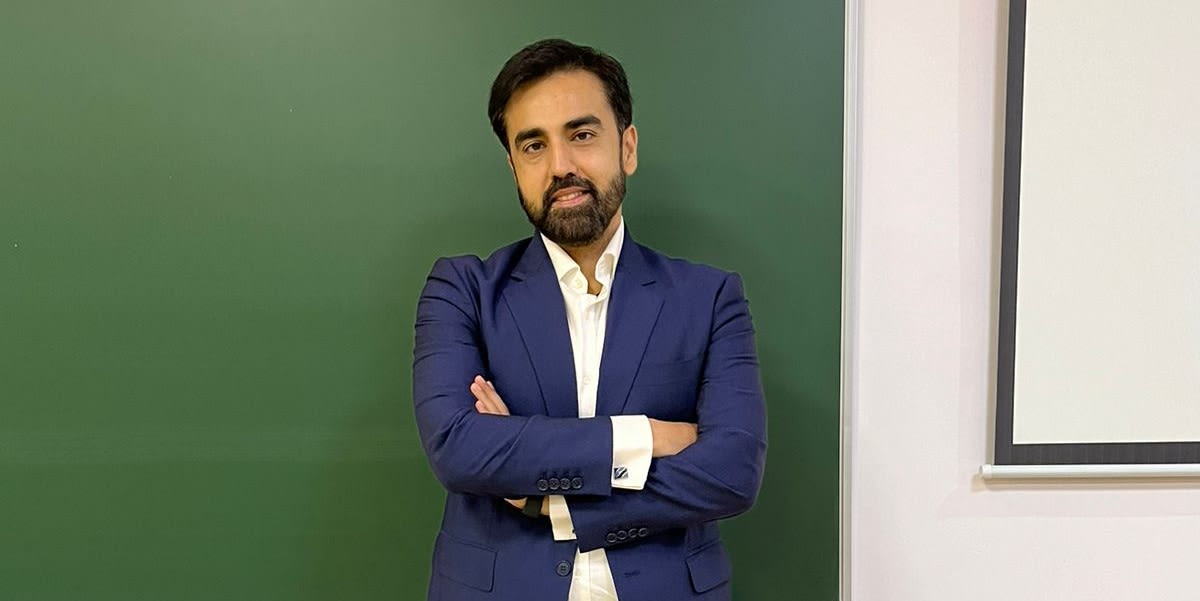
Roopank Chaudhary, Global Partner at Aon and Country Head for its Talent and Rewards consulting business, brings over 24 years of diverse experience across multiple sectors, from banking to consulting. In this insightful interview with Riya Jain, he shares how the variety in his role fuels his passion, while also offering a unique perspective on the evolving expectations around compensation, particularly for Gen-Z. As he puts it, “Today’s workforce seeks immediate rewards and value in lifestyle factors, not just long-term benefits.” He also opens up about his journey as a poet and founder investor in a peer-to-peer lending platform.
As Aon’s Global Partner and Country Head for its talent and rewards consulting business, you oversee a diverse and expansive portfolio. How do you stay focused and inspired while managing such a wide range of responsibilities? You excel in client relationships as well — how do you manage and balance these priorities effectively?
Managing a broad portfolio is interesting because of the inherent diversity it offers. If I were working on something monotonous, it would be harder to stay motivated. Consulting, with its dynamic and diverse portfolio, keeps me inspired. The variety of tasks and challenges energises me, and I believe it also comes down to knowing oneself well. With over 25 years of experience, I’ve developed the ability to approach different solutions — whether it’s talent rewards, consulting for clients, business development, managing teams, or creating in-depth solutions.
The key is balancing these areas effectively. It’s a vast universe, and not every single day is perfectly structured. Over the week, my focus is divided — three days may be dedicated to client engagements, while the rest are spent on internal projects or developing viewpoints. This interplay between different aspects keeps me engaged and excited to return to work. The diversity of responsibilities not only keeps me motivated but also allows me to bring fresh perspectives to each challenge, ensuring I stay focused and deliver value consistently.
Having led rewards and benefits, you’ve had first-hand experience with the evolving expectations around compensation. Gen-Z, known for their tendency to switch jobs more frequently, presents unique challenges. What challenges do you face in designing a reward system that engages them effectively?
One way to view this is that many of the people entering the workforce today have grown up in an environment where everything is instant — whether it’s Amazon, Flipkart, or certifications being available at their fingertips. This “instant-results” mindset creates a challenge in reward and compensation design because long-term wealth creation and compensation systems inherently take time to build. Sometimes, this generation struggles to see the value in long-term benefits.
Another significant challenge lies in the shift in preferences around benefits. Earlier, things like car loans, home loans, or gratuity were highly valued, but these no longer appeal to the younger workforce. Many now prefer immediate cash benefits or rewards they can access in the near future. Additionally, compensation today goes beyond the transactional — it’s about lifestyle and relational aspects, such as work culture, learning opportunities, and personal growth. However, many still focus solely on transactional benefits and fail to recognise the value of these relational elements.
Interestingly, work-life balance is emerging as a critical factor. Though not directly tied to compensation, it’s becoming increasingly important. For example, offering flexible work schedules, three-day work weeks, or time for hobbies is catching on. Employees today are even leaving companies that fail to offer good work-life balance, making it a vital aspect of designing rewards for this generation.
Your journey as a published poet is fascinating. How does the experience of crafting poetry influence the way you see the world, both personally and professionally? Are there moments when the creativity or introspection from poetry finds its way into your work?
I think when you enter the workforce, you often choose a particular path, sometimes swayed by money, opportunities, or practical considerations. For me, I always felt I could have chosen to be an investment banker and worked 18 hours a day. But I realised that having four to five hours for myself to engage in things I enjoy, like writing, was more fulfilling. Writing has been a habit of mine for nearly 30 years. Publishing books was never about monetary gain — books don’t sell enough to be financially rewarding. It was more about bringing out something personal, a form of expression deeply meaningful to me. Those who know me well understand where it comes from and what it means.
Regarding your second question, I’d say poetry has subtly influenced my consulting work. People find it intriguing that a management consultant writes poetry, and it often serves as an icebreaker with clients. It’s also helpful in any creative aspect of work, like presentations or storytelling. For example, in-house events often rely on me for proofreading, writing, or designing because my creative background gives me a unique way of crafting narratives. It’s rare to blend creativity with consulting, and I think that adds a distinct dimension to my work.
You are also the founding investor in a peer-to-peer lending NBFC. Could you share what excites you about this venture, and how it aligns with your varied interests and experience?
The venture stemmed from a strong sense of belief and alignment with a group of close friends who are startup founders, many of whom are doing incredible work in the social impact space. When they approached me, they were looking for someone with a financial services background to help develop and refine their peer-to-peer lending platform.
The platform itself is quite simple — it allows individuals to lend directly to others, and the borrowers repay with interest. What intrigued me most was the untapped potential in rural areas. Borrowers in these regions often face exorbitant interest rates, sometimes as high as 24 per cent. This presents both a challenge and a massive opportunity. Rural borrowers are generally very reliable, with microfinance institutions in these areas boasting repayment rates of 99 per cent.
The idea was to target these underserved communities, especially in the South and East, and offer loans at fairer rates, such as 12-15 per cent, which are still attractive to lenders compared to traditional instruments. By addressing this need, the platform not only benefits borrowers but also offers lenders a good return.
For me, this venture perfectly integrates my financial expertise with my desire to contribute to social impact, making it a meaningful way to diversify my efforts and energy into a worthwhile cause.
As a visiting faculty at JBIMS for total rewards and compensation, how do you bridge the gap between academic theory and real-world practice?
I don’t focus heavily on academic economic models because students already have the intelligence to grasp those concepts from their professors or textbooks. What I bring to the table is real-life experience accumulated over the years working with clients. My role is to supplement theory with practical insights and actionable examples.
I bridge the gap by incorporating case studies into the curriculum, which are often derived from actual client scenarios I’ve dealt with. These cases allow students to analyse real-world challenges, discuss potential solutions, and simulate decision-making. I guide them through what was done in those situations, what the outcomes were, and what they might have done differently in my place.
Additionally, I strive to make the learning reflective of current industry trends. For example, I use simulations to mimic real-world conditions, ensuring students can connect textbook concepts to actual practices. This approach helps students develop a clearer understanding of how theoretical principles translate into real-world applications, making their learning more relevant and engaging.
The goal is to provide students with practical nuggets of knowledge that prepare them for real-world challenges, while still being grounded in academic rigour.
You have dedicated an impressive 18 years to one firm, which is quite rare these days. So, what has kept you inspired and committed to the firm for nearly two decades?
The fact that I’ve stayed with the same organisation for so long boils down to three broad factors: quality of work, culture, and people. These are what truly matter in a long-term career, and they’ve been consistent motivators for me.
Firstly, the people I’ve worked with have always been exceptional, offering a collaborative and stimulating environment that has helped me grow. The culture has also been an ideal fit for someone like me — one that values integrity, teamwork, and learning. In fact, I once left the firm for another opportunity, but quickly returned because I couldn’t find the same alignment of values elsewhere.
Secondly, the firm has provided me with opportunities across diverse market segments and roles, which has kept my journey dynamic and exciting. The chance to explore multiple areas without having to change organisations is another reason I’ve remained committed. This combination of great people, values, and opportunities has made staying with the firm for nearly two decades not only fulfilling but inspiring.
Reflecting on your diverse career, if you could offer one unconventional piece of advice to your younger self at the start of your consulting journey, what would it be?
Most advice you hear is about gaining industry expertise or specialising in technology. However, my advice to my younger self would be to take three to six months off at some point to introspect and reflect on the bigger picture.
A consulting career is extremely dynamic and high-pressure — you’re always on the move, managing business, clients, people, and projects. Over time, you realise that pausing could have provided the clarity to assess your goals, priorities, and what truly matters to you.
I’ve seen people who took a break — either by choice or circumstance — return with a far more liberated mindset and evolved outlook. They’ve had the chance to think deeply about their next steps, whether it’s pursuing social impact, achieving personal growth, or exploring other areas of interest. This time off helps you recalibrate and align your career with what you truly want.
So, my advice would be to pause and reflect, even in a fast-paced career, because it ultimately leads to more thoughtful decisions and a greater sense of fulfilment.