


June, 2026
7 mins read
Business Strategy and Technology Are No Longer Separate
 17 Jul 2026
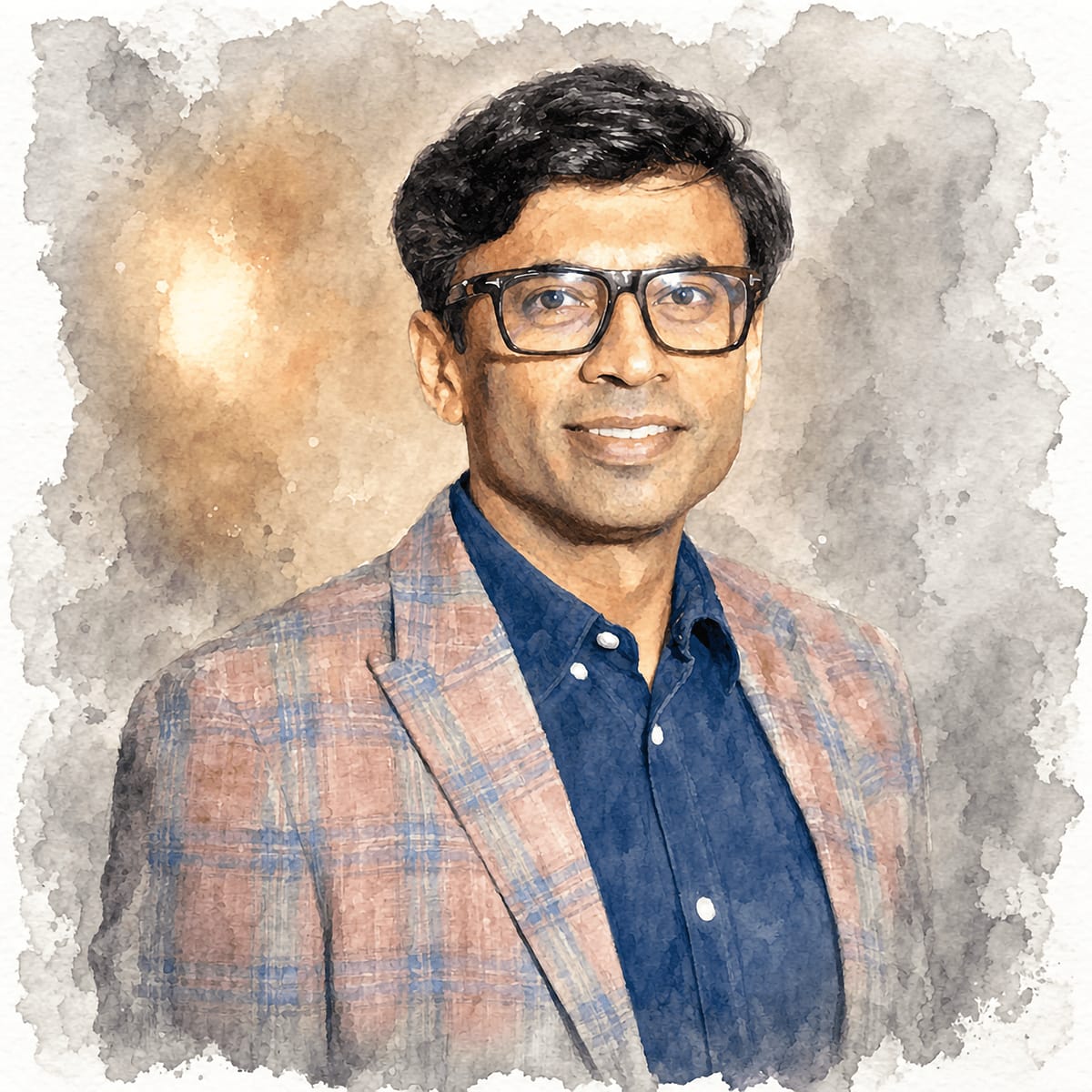
Dr Rupesh Kumar Singh, Partner — SAP Practice at EY India, has spent more than two decades working across manufacturing, consulting, and technology leadership, with stints at Tata Steel, PwC, and EY giving him a front-row view of enterprise transformation. In conversation with Arjun Raisurana, Singh argues that business strategy and technology can no longer be treated as separate conversations, with technology now woven into strategic planning itself. He reflects on the difference between digitisation and true transformation, building scalable centres of excellence, and how marathon running and poetry have shaped his leadership philosophy.
Q: Your career spans manufacturing, consulting, and technology leadership. What
inspired this journey, and how has this multidisciplinary experience shaped your
perspective?
According to Dr Singh, the driving force behind his career has always been curiosity.
Beginning his professional journey at Tata Steel, he developed a deep understanding of how
manufacturing organisations operate and create value. As he transitioned into consulting and later into
technology leadership roles, he gained exposure to various approaches to solving business problems
through technology and process optimisation.
This multidisciplinary experience helped him recognise an important distinction between digitisation and
transformation. Simply converting manual processes into digital workflows does not necessarily solve
business challenges. True transformation requires rethinking how work is performed, redesigning
processes, and creating measurable business value through technology adoption.
His ability to understand both operational realities and technological possibilities has allowed him to
develop solutions that are practical, scalable, and aligned with organisational objectives.
Q: How do you see the relationship between business strategy and technology evolving today?
Dr Singh believes that business strategy and technology are no longer separate conversations.
In the past, organisations would first define business strategy and subsequently determine the
technology required to support it. Today, technology has become an integral part of strategic planning
itself.
Organisations pursuing ambitious growth objectives must simultaneously rethink workforce models,
supply chain structures, operational processes, and digital infrastructure. Technology decisions
increasingly influence business possibilities, making IT strategy and business strategy part of the same
transformation thread.
Whether organisations are pursuing geographic expansion, operational excellence, or large-scale growth,
aligning strategy with technology has become essential for sustainable success.
Q: What is the biggest challenge when translating operational complexity into a digital
transformation roadmap?
One of the most significant challenges lies in balancing human-centric processes with digital systems.
Most operational processes have evolved over decades and were originally designed by people to solve
real-world problems. Introducing enterprise systems and digital workflows often requires changing
deeply ingrained behaviours and ways of working.
While organisations have become increasingly comfortable with ERP systems and digital technologies,
new complexities continue to emerge as products, markets, and customer expectations evolve.
Transformation, therefore, cannot be viewed as a one-time implementation exercise.
Instead, organisations must continuously optimise processes while ensuring that technology enhances
rather than disrupts human effectiveness. Successful transformation requires creating harmony between
people, processes, and digital systems.
Q: You established EY India’s SAP Centre of Excellence. What principles are essential
for building scalable and impactful Centres of Excellence?
Dr Singh emphasised that successful Centres of Excellence are built on far more than technical expertise.
The first requirement is a deep understanding of market challenges and industry needs. Organisations
must ensure that the solutions they develop address genuine business problems rather than simply
introducing new technology.
The second principle is research-driven innovation. Products and solutions should be continuously
refined in response to evolving customer requirements, industry trends, and operational challenges.
The third and most important principle is maintaining a human-centric approach. Every technology
solution must ultimately serve people. Understanding how users interact with systems, addressing
adoption concerns, and creating empathy-driven designs are critical to ensuring long-term success and
scalability.
Q: Having worked on both the client side and consulting side, what lessons have you
learned from each experience?
Dr Singh credits his manufacturing experience with teaching him operational excellence and process
discipline.
Organisations such as Tata Steel demonstrated the importance of building systems and processes that
operate consistently regardless of individuals. This experience gave him a strong appreciation for
governance, ethics, quality, and process-driven execution.
Consulting, on the other hand, taught him how to view challenges through the customer’s lens. Having
experienced operational realities firsthand, he empathised with clients and anticipated challenges before
they emerged.
Combining operational understanding with consulting expertise allowed him to bridge the gap between
strategy and execution, helping organisations navigate transformation more effectively.
Q: How does EY differentiate its SAP transformation practice in a highly competitive consulting landscape?
According to Dr Singh, the key differentiator lies in viewing engagements as transformation programs
rather than technology implementations.
Instead of focusing solely on ERP deployment, EY begins by understanding industry-specific processes
and business challenges. Domain experts work alongside technology professionals to identify
opportunities for operational improvement and long-term value creation.
This approach enables organisations to align technology investments with strategic objectives rather
than treating technology as an end in itself. By combining industry knowledge, process expertise,
research, and technology capabilities, transformation becomes more meaningful and sustainable for
clients.
Q: Where do you see the next wave of digital value creation emerging in India?
Dr Singh believes India’s digital growth story is fundamentally driven by the integration of technology
with human needs.
He cited the success of UPI as an example of how technology adoption succeeds when it becomes
accessible and relevant to everyday users. While technological innovation is important, long-term
success depends on widespread acceptance and usability.
Whether in manufacturing, digital infrastructure, or AI-enabled services, future value creation will come
from technologies that seamlessly integrate into people’s lives and solve real-world challenges at scale.
For him, digital transformation is most impactful when technology and human behaviour evolve together
rather than independently.
Q: What mindset has contributed most to your leadership journey?
Dr Singh attributes much of his professional growth to maintaining a strong sense of curiosity.
He believes curiosity drives learning, encourages experimentation, and creates environments where new
ideas are welcomed rather than resisted. By fostering open discussions around challenges and
opportunities, leaders can create cultures where innovation becomes everyone’s responsibility.
He also emphasised the importance of teamwork and collective success. No transformation leader
succeeds alone. Sustainable impact comes from building capable teams, creating trust, and aligning
everyone toward shared objectives and customer outcomes.
For Dr Singh, leadership is less about individual achievement and more about enabling others to
succeed.
Q: How have marathon running and poetry influenced your leadership style?
Beyond his professional achievements, DDrSingh finds inspiration in marathon running and poetry.
Running has taught him the value of endurance, consistency, and long-term thinking. Transformation
journeys, much like marathons, require persistence through uncertainty, setbacks, and changing
conditions. Success often comes not from speed but from sustained commitment and resilience.
Poetry, meanwhile, nurtures empathy and reflection. It encourages him to think deeply about people,
society, and human experiences. This perspective helps him approach leadership with greater
understanding and emotional intelligence.
Together, these pursuits have shaped a leadership philosophy grounded in endurance, purpose,
empathy, and continuous growth.
Conclusion
The conversation with Rupesh Kumar Singh offered a compelling perspective on what it truly means to
lead transformation in an increasingly digital world. Drawing on experience across manufacturing,
consulting, and enterprise technology, Dr Singh emphasised that sustainable transformation is not
achieved by technology alone. Instead, it emerges from aligning strategy, processes, people, and
technology around a shared vision of value creation. His reflections on curiosity, operational excellence,
customer-centricity, and continuous learning highlighted the qualities that enable leaders to navigate
complexity and drive meaningful change. Equally inspiring were his personal lessons from marathon
running and poetry, which reinforced the importance of resilience, empathy, and purpose in both
professional and personal journeys. For aspiring consultants, technologists, and business leaders, the
session served as a reminder that successful transformation begins with understanding people and ends
with creating impact.