


April, 2024
6 mins read
We Obsess With Consumer Delight — Being Their Companion Is Our Unique Value Proposition
 29 Apr 2024
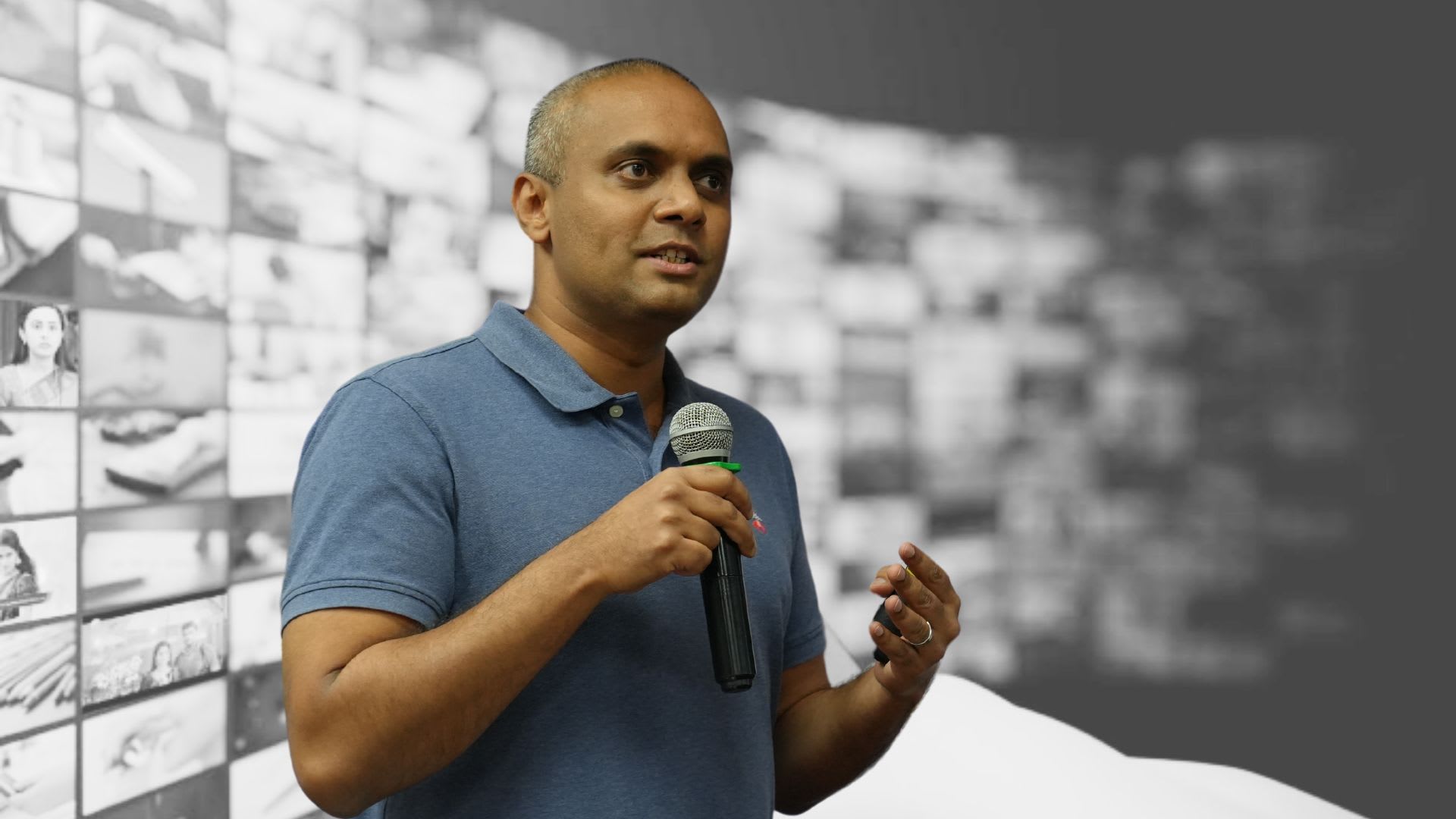
Meet Bhushan Kolleri, Chief Product and Innovation Officer at Zee Entertainment, who leads transformative projects driving Zee’s growth. In an interview with XLRI’s Afrin Pathan & Nandita Kumari, he discusses Zee’s differentiation strategies, innovative initiatives, and the importance of empathy and integrity in leadership. Kolleri shares insights from his unconventional academic journey and offers advice to aspiring leaders.
In today’s competitive landscape, how does Zee Entertainment differentiate itself in the industry, and how do you stay on top of the game?
If we imagine India as a socio-economic pyramid, ZEEL serves the body of India. And we do that in each language market that we operate in, making us a truly pan-India media and entertainment company. Using that model, we obsess with consumer delight. For most of our consumers, Zee is a companion — part of the daily rituals in their lives. That is our differentiating value proposition. But we don’t allow ourselves to be complacent. Entrepreneurial spirit and frugality are deeply ingrained into our operating model. Our founder instilled it into the company culture right from inception three decades ago, and our current MD & CEO has amplified it.
Instead of replicating what the competition does, the mindset across the organisation is to look at the problem statement and come up with our own solutions.
That is reflected in everything we do, from the meticulously detailed call sheets to the complex technology systems that power our programming and broadcast operations, all of which are made entirely in-house. We deliberately prioritise efficiency and cost-effectiveness in the pursuit of consumer delight.
In the rapidly evolving entertainment landscape, innovation is vital for market competitiveness. As Zee Entertainment’s Chief Product and Innovation Officer, what initiatives have you taken to improve the customer’s experience?
We continuously revisit everything we do and ask ourselves if there is a better way of doing it. The harder part is identifying the problem statement. Innovative solutions generally emerge when there is clarity on the problem to be solved. Technology is a very versatile tool in this context. In the media business, most of the technology operates behind the scenes. But our digital platform ZEE5 showcases some consumerfacing innovations. Personalised content discovery, intelligent adaptive streaming based on the consumer’s device and quality of connectivity, dualscreen experiences, and so on, have all contributed to making ZEE5 the highestrated OTT app in the country. We are perhaps the first media company in India to leverage data and generative AI for a variety of use cases, including conversational search, dubbing, background scores, contextual advertising, and so on.
How does Zee Entertainment stay updated with the latest media and entertainment technologies, and how do you use these advancements to stay competitive?
There are two complementary ways that we stay updated on the emerging technologies. The first is the advantage of our market leadership today. In some sense, we are a prime customer for most of the emerging technologies in the media industry, so companies and individuals from around the world pitch their technologies to us. The second is our culture of openness to new ideas and willingness to embrace change. Our MD & CEO repeatedly encourages everyone in the company to experiment and learn from failures. This culture allows us to try out new technologies, whether they come knocking at our doorsteps or we go looking for what is new out there.
We found your educational background intriguing, particularly your studies at Stanford, the National Defence Academy, and San Jose University. Could you share how your experiences at these institutions have contributed to your leadership roles?
I have had a slightly unconventional academic journey. I was a cadet at the National Defence Academy in India, then moved to the United States to pursue my undergraduate studies, eventually doing a product management programme at Stanford. I did not have financial aid, so I had to work really hard to pay for my education. And during that grind, I constantly questioned my own choices. But reflecting on that journey now, I would say that each experience taught me some valuable lessons. NDA taught me that our mind can be a blocker or an enabler when confronted with the hardest challenges. Microeconomics transformed the way I saw the world of business. Software programming equipped me with a powerful toolset and opened up my horizons on what was possible. Creative design helped me improve my communication with stakeholders. And product management enabled me to apply all of the above using ‘first principles thinking.’
As a leader, what are the challenges that you face and how do you approach them?
If I oversimplify any organisational hierarchy, there are three stages in the journey of the employee: Individual contributor, manager, and eventually leader. An individual contributor is assigned one well-defined goal or task at a time. Managers have multiple non-conflicting goals, which they must delegate to the individual contributors. They too have a fair amount of clarity on their goals. But leaders are responsible for translating ambiguity into clear goals and defining the boundaries of ownership. They are also responsible for shaping the culture in which the managers and individual contributors function. As a leader, the challenge therefore is: How do you ensure that each employee has clarity of purpose, ownership, and is functioning in a culture that enables them to excel?
What advice would you offer MBA students and aspiring leaders who aim to reach the positions you hold and aspire to do what you do?
Here are five essential principles:
- Cultivate intellectual curiosity. When you are a student, read up about industries and current affairs. When you enter the workforce, ask questions and learn about everything around you.
- Embrace ambiguity. As students, you get clear instructions. In the workplace, you will frequently confront ambiguity. Practice the art of ‘first principles thinking’ to develop structure out of chaos.
- Practice being decisive. Bias for decisiveness and action is often more important than making the right decision.
- Always be empathetic. As MBA students at XLRI, you are destined to become leaders of people. Your decisions will have a deep impact on many lives and households. You are responsible to your employees just as you are to the management and shareholders.
- Uphold integrity at all times. Develop your own personal values and principles for peace of mind and clarity in decision-making. This helps in your personal and professional lives
Despite the potential challenges in practising empathy, how can we maintain our integrity and continue to be empathetic, even when our intentions are not fully understood or reciprocated by others?
In the cut-throat competitive world of business, it is often forgotten that people make all the difference. When people are inspired and motivated, they will step up for you. To earn their trust and goodwill, you must be sincere. One simple way of practising empathy is to go out of your way to help others, without expecting anything in return. But do so within the boundaries of your personal principles. They may be sceptical or even suspicious initially. But if you are consistent and sincere, they will see it. The goodwill you receive in return compounds over time. This is one of the greatest assets you can have as a leader