


September, 2024
10 mins read
What intrigues me is the problem, not the industry!
 29 Sep 2024
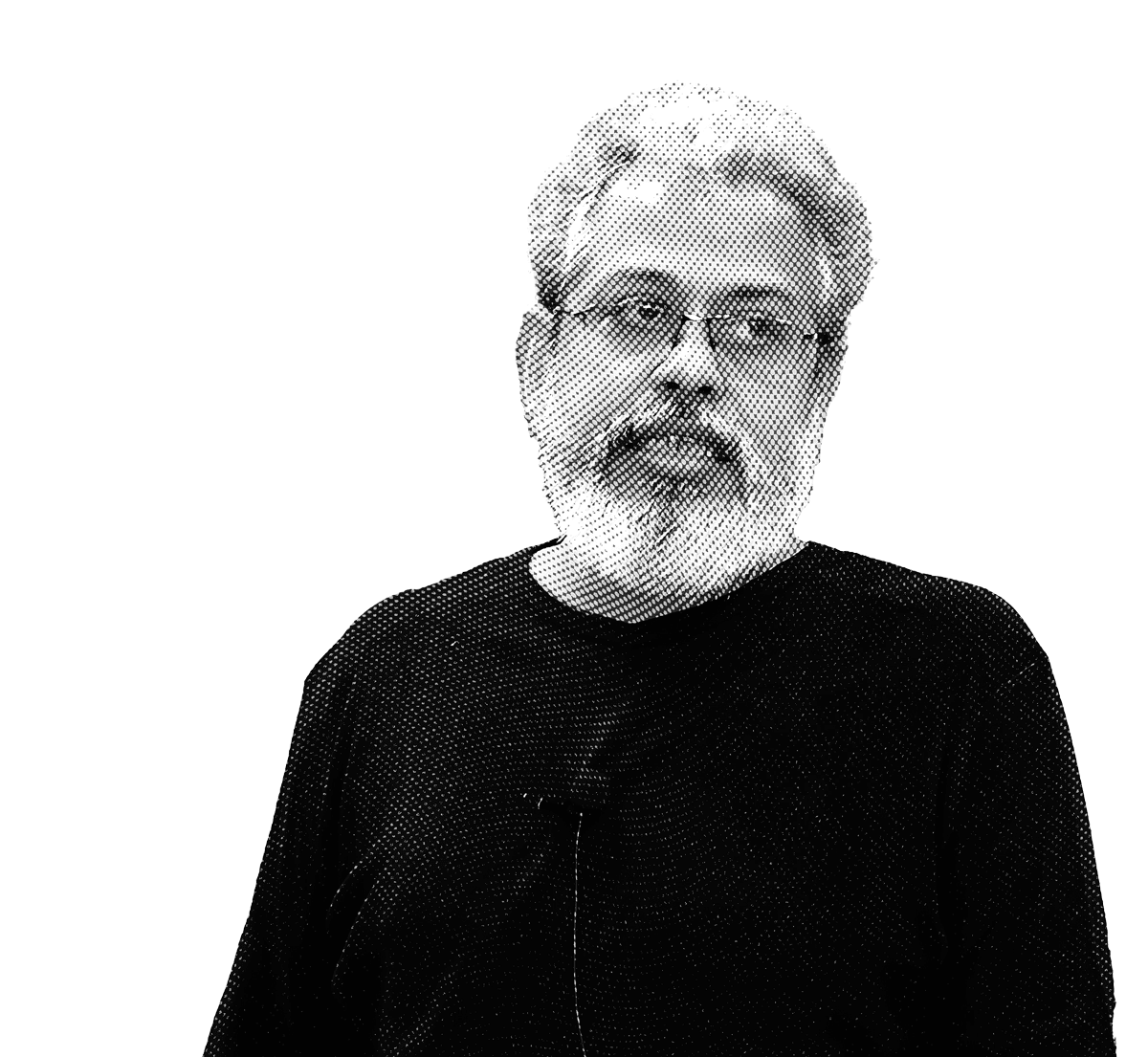
In this engaging conversation, Professor Sumit Sarkar of XLRI Jamshedpur shares his unconventional journey from studying economics to becoming a thought leader in applied game theory, behavioural economics, and sports analytics. Speaking with Ojasvin Nagpal, Sarkar explains how his passion for problem-solving and game theory has shaped his diverse research, from social media platforms to football strategy. With his deep analytical approach, Sarkar offers valuable perspectives on how economic theory intersects with real-world behaviour and decision-making, all while maintaining a personal fascination with football’s strategic depth.
What inspired you to pursue a career in economics, and how did you develop your specific research interests in applied game theory, experimental and behavioural economics, and sports analytics?
In high school, I studied science. However, I had no interest in engineering or computation. Mathematics and social sciences interested me. I came across two books — A Contribution to the Critique of Political Economy by Karl Marx and Foundations of Economic Analysis by Paul Samuelson. Although I did not understand most parts of those books, the former sparked my interest in the historical discourse of capitalism, and the latter’s slick mathematical approach convinced me to pursue economics academically. In due course, I graduated with honours in economics and completed my master’s degree. By then, I had taken courses in microeconomics and game theory and was fascinated by the logical approach of game theory applied to analysing the strategic behaviour of firms operating in imperfectly competitive markets.
Fortunately, I received a research fellowship from the University Grants Commission of India, and without hesitation, I joined the PhD programme in economics at JNU, New Delhi. During my doctoral research, and for some years thereafter, I focused on markets for networks and systems, applying game theory.
Game theory assumes that the players are perfectly rational — they know what they want and have the cognitive ability to achieve their goals. In the words of Richard Thaler,
Game theory assumes that the players are perfectly rational, like Spock in Star Trek — they know what they want and have the cognitive ability to achieve their goals. In reality, people are more like Homer Simpson
I had read some of Daniel Kahneman’s work but remained unconvinced by his criticism of economic theory. Nonetheless, I decided to learn how to conduct experiments in economics and attended a summer school at the University of Amsterdam, where Arthur Schram introduced me to the world of incentivised experiments, as proposed by Vernon Smith. I found Smith’s experimental method more convincing than Kahneman’s approach, and thus, I began experimenting with some of my ideas — primarily on XLRI students. I’ll come to sports analytics shortly.
Your research covers a wide range of topics, from supply chain management to football analytics. How do you choose your research topics, and what motivates you to explore these diverse areas?
I really appreciate this question, particularly because it comes from our students.
I have worked in diverse areas, including network industries, platforms, supply chains, renewable energy, insurance, bankruptcy issues, consumer behaviour, vaccine avoidance, and, of course, football. I can’t blame someone if they think I am a jack of all trades. However, a closer look at my research papers reveals that I have mainly conducted two kinds of research — theoretical modelling in pricing and contract design and experimental research on economic behaviour. The former stems from my background in applied game theory, and the latter from my relatively newfound interest in understanding human behaviour in economic decision-making.
What intrigues me is the problem, not the industry where it originates. Once I get hooked on a problem, it’s like solving a puzzle.
Any theory requires empirical validation. Data collected from experiments undergo tests to verify statistical significance. Many of my papers, therefore, include sections on numerical analysis, simulation, or statistical analysis. Typically, my co-authors handle those parts while I develop the models, all of which apply game theory, and design the experiments.
Football is my passion. Well, let’s reserve that for the end of this interaction.
Your work on social media platforms charging their users has garnered attention. What were the major conclusions of this study, and how do you foresee the future of social media economics?
I don’t use any social media. You won’t find me on Facebook, Instagram, or Twitter (or X). I have an account on LinkedIn, but it’s now hibernating. Honestly, I am allergic to social media or socialisation in general, so I had no idea what was happening in the social media world. My co-author, Soumya Kanta Mishra, who was doing his PhD (or FPM) under my guidance, wanted to work on social media and provided me with countless examples.
The paper was triggered around early 2023 by observing a radical shift in the revenue model of social media. Traditionally, these platforms earned revenue predominantly from advertisers. Recently, however, some platforms began charging users. Snapchat launched Snapchat Plus, a paid service, and Twitter introduced a paid service in November 2022. In February 2023, Meta tested a subscription bundle. Twitter even started charging users in New Zealand and the Philippines for basic services. We wondered what had changed. Our research question sought to identify the conditions that make it feasible for platforms to charge users.
Our main finding is that when users “single-home” — that is, maintain accounts on a single platform — those platforms may charge them, provided the platforms are sufficiently differentiated in terms of content format and features, and users have strong preferences for these attributes. In contrast, when users “multi-home” — maintaining accounts on multiple platforms — platforms are better off charging advertisers for revenue. This stems from the understanding that social media platforms are two-sided markets. Advertisers value cross-side network effects, but users face cross-side disutility. In simple terms, advertisers benefit from reaching more users, but users find ads annoying. Therefore, advertisers are willing to pay more to reach a large user base, while users are willing to pay for an ad-free experience. However, multi-homing behaviour has declined as different platforms now cater to different user needs.
You teach a variety of courses, including microeconomics, game theory for managers, and behavioural economics and experimental methods. How do you tailor your teaching methods to engage MBA students effectively?
The courses I teach align closely with my academic interests — game theory and behavioural economics. Microeconomics is a broad subject, but I particularly enjoy teaching about imperfectly competitive markets applying game theory.
To engage MBA students, I use examples to illustrate models or demonstrate their applicability. I also employ simulation games and minor experiments in class, which I believe helps students conceptualise decision-making scenarios. Additionally, I engage students in problem-solving exercises to help concretise theoretical concepts. Judging by their feedback, this approach seems to work well for most students.
What advice do you have for MBA students interested in pursuing research or academic careers?
A PhD is your gate pass to academia. Now, pursuing a PhD is more than a full-time job. To conduct respectable research and complete the programme on time, research scholars often need to work for 12 hours a day. Those who don’t put in that level of effort either take too long or produce subpar work. Talent helps with generating ideas and quickly learning new techniques, but most of it boils down to hard work.
A PhD is a very different ballgame compared to an MBA. There will be a lot of fruitless effort, and results may not always materialise. Patience and perseverance are crucial, as research work often faces rejection from journals. So, unless you’re highly motivated and willing to work hard, don’t pursue it.
I would also recommend working in industry for some time before you go for a PhD. Industry experience can be useful in developing research ideas, but be mindful that many industry problems are not novel research topics.
As a Fulbright Nehru Academic and Professional Excellence Fellowship recipient, can you share your experiences and how this fellowship has influenced your work?
I received the Fulbright Fellowship in 2020 based on a proposal to study the effects of soft interventions in curbing corruption and the misappropriation of public resources. Specifically, I designed an experimental game where a private contractor proposes a deal to a government official to misappropriate resources allocated to a common citizen. The official may accept or reject the bribe, while the citizen can only express disapproval. One intervention involved generating public opinion to see if disapproval would deter misappropriation, with the results shown to the government official.
In 2020, just before the pandemic, I ran this experimental game with XLRI students. I was supposed to administer the same experiment at the University of Utah during my Fulbright Fellowship. However, the pandemic delayed my visit, and by the time I arrived, the Omicron wave hit. Initially, the university was operating online, and later, when in-person classes resumed, experiments were not permitted due to exposure risks. So, I could not run the experiment in the US.
Instead, I worked with my co-researchers from the University of Utah to develop and analyse a game-theoretical model of the experiment and conducted statistical testing on the data from XLRI. Apart from that I presented my work in faculty seminars there. Interactions with the faculty and research scholars were helpful in shaping some of my ideas.
Later, along with my co-researchers there, I wrote an elaborate research paper and submitted it to a renowned journal. However, the journal requested a slightly different treatment, which I conducted in January this year. We resubmitted the paper in April and are awaiting the journal’s decision. This is the mundane life of an academic.
What are your hobbies and interests outside of academia, and how do they influence your work?
Ah! Now that’s more interesting. I read a lot of books, both fiction and non-fiction. Reading broadens my perspectives, which I try to reflect on in my classes and research. For instance, I’m currently reading Identity by Francis Fukuyama, which explores the human struggle for recognition. It has sparked some research ideas.
I also enjoy films across genres. Documentaries and socio-political fiction enrich me in the same way books do, while crime thrillers and recordings of epic football matches are purely for entertainment.
And that brings me to football. I don’t just watch football — I study it. I analyse football from different perspectives — strategic, economic, cultural, and historical.
On-the-pitch strategies can be as complex as chess, and that’s an area I research!
My football-related research involves game theory, and although I generate the ideas, my co-authors handle the data analytics. The economics of the football transfer market also interests me somewhat, but a lot less than on-pitch strategies. Had I not been teaching game theory to MBA students, I would have taught football to school kids.
For me, there is one God of football — not Maradona or Messi, but Johan Cruyff (former Dutch footballer)
Lastly, for any student of football, I suggest the following four books: Inverting the Pyramid by Jonathan Wilson; Football and Chess by Adam Wells; How Football Explains the World by Franklin Foer; and Football Against the Enemy by Simon Kuper.
Thank you, team Xplore and the readers for tolerating my babble. Cheers!