


January, 2025
13 mins read
You can’t copy-paste strategies; Rewrite the rules, think fresh, and adapt
 05 Feb 2025
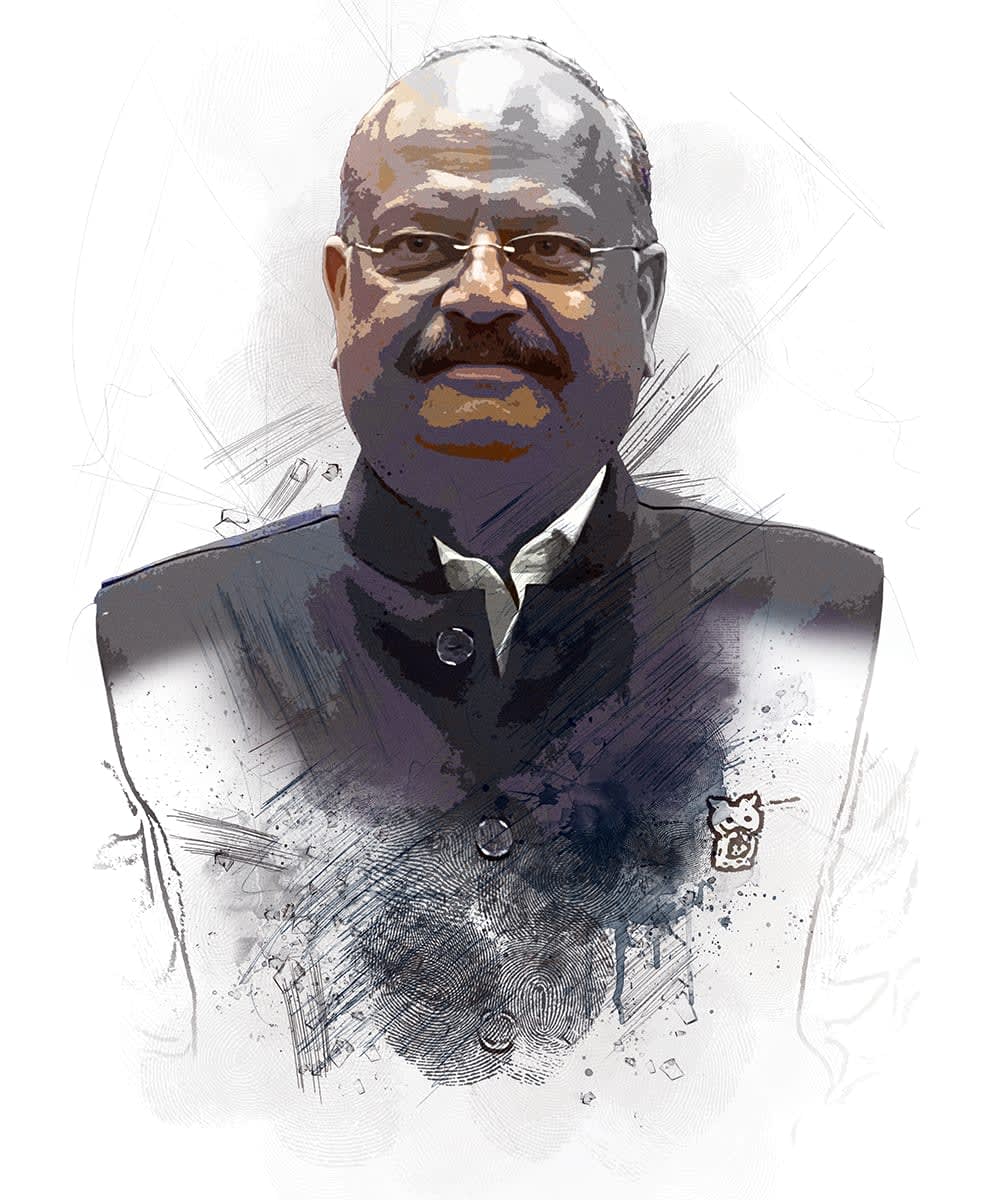
Dilip Sinha, CHRO of Vedanta, brings a wealth of experience from leading roles at Reliance, Jindal Steel Works, and the Indian Police Service. In this insightful interview with Reibhu Sant, he shares how agility, technology, and a performance-driven culture shape HR practices in today’s dynamic business landscape. From fostering functional engagement through initiatives like Project Neev to prioritising diversity and inclusion, Sinha outlines his goals of building a balanced workforce and cultivating an environment where all voices are heard. (Sinha was CHRO at Vedanta at the time this interview was conducted. He recently joined Jindal Steel & Power as President & CHRO. The references and context in the interview reflect his previous role at Vedanta.)
Your career spans leading organisations like Reliance, Jindal Steel Works, and Vedanta. How have these experiences shaped your approach to HR leadership?
One part you missed: I was part of the Indian Police Service. My career, spanning government, retail, and core manufacturing, has shaped my HR leadership in unique ways. Early in my career, working in government, I developed strong decision-making capabilities and the courage to act.
Retail taught me agility — the ability to respond and perform quickly. At Future Group, for instance, running campaigns like “Buy One, Get One” for 2.5 million SKUs required immense adaptability and business acumen.
Core manufacturing, particularly at Reliance and Jindal Steel Works, taught me to think big and manage large-scale operations. At Reliance, I helped build the retail and Jio teams, overseeing a workforce of 4.5 lakh people. At JSW, during a major expansion phase, we aimed to double plant capacity, targeting 50 MTPA by 2030. These experiences instilled in me a mindset where even monumental challenges seem manageable. If your fundamentals are correct, I believe things naturally fall into place.
In today’s rapidly changing business environment, how do you see the role of organisational culture evolving? What strategies have you found most effective in shaping it?
The only culture that exists in any organisation is performance culture — nothing else. Promoters or company leaders primarily focus on volume, cost, EBITDA, and cash flow. To align with this, you need to engage people and evolve a culture that reflects these priorities.
Engaging employees both behaviourally and functionally is key. Behavioural engagement is straightforward — building world-class infrastructure, such as gyms, swimming pools, and auditoriums, helps create a positive environment. At Vedanta, for instance, our township has seven swimming pools, a 650-seat auditorium, and state-of-the-art gymnasiums.
The real challenge is functional engagement. Young employees often feel disengaged with routine tasks. To address this, we launched Project Neev at Vedanta, allowing them to take on live projects across the company. I was amazed to see over 74 projects initiated by young employees. Each quarter, we reward participants, offer face time with the chairman and vice-chairman, and provide opportunities to attend international workshops.
Even if 10 out of these 74 projects succeed annually, the benefits to the company are immense. This approach fosters a performance-driven culture that motivates employees and drives results.
What were the performance statistics after implementing these strategies?
Vedanta is known for disproportionate growth. We are the largest producer of aluminium, silver, gold, and zinc, and we’re now entering the semiconductor and display manufacturing sectors. As the largest natural assets management company, our growth trajectory speaks for itself. To support this, we’ve built a culture that aligns with and drives these ambitious goals.
As HR functions continue to be digitised, what do you see as the most promising technologies, and how are they revolutionising traditional HR functions?
For me, digitisation isn’t just about adopting software — it’s far more comprehensive. Software makes up only about 10 per cent of the digitisation effort. I’ve would divide the process into three parts, based on my own approach to driving results:
- Digitisation for the workforce
- Digitisation for the workplace
- HR delivery
HR Delivery involves systems like Darwinbox or SuccessFactors, which streamline processes effectively. However, workplace digitisation is equally critical. For instance, we’ve implemented geofencing to secure hazardous areas, PPE alarms, and safety measures for high-risk zones like potlines and casthouses.
For the workforce, digitisation includes initiatives like happiness indices and seamless exits. We recently introduced a facial recognition system (FRS) that tracks eight emotional states, helping us analyse why certain employees might feel dissatisfied. Additionally, we’ve added barcodes to helmets, storing emergency contacts and blood group details. In an industry prone to accidents, having this information readily available can be life-saving.
How is technology transforming HR functions, and how have you leveraged analytics in strategic HR decisions?
Technology has become indispensable in managing a workforce of over one lakh, especially as our business expands across aluminium, copper, zinc, silver, gold, iron, and steel. For instance, when hiring 2,000 young professionals last year, we digitised the entire induction process a month in advance — traditional methods like filing forms are no longer practical.
HR today is data-driven. Managing a large organisation with plants, ports, and mining operations requires robust control systems. Workforce modelling, for example, helps increase productivity by relying on data to inform decisions. Expectations from HR have shifted dramatically. Promoters now expect HR to contribute to key business metrics like volume, cost, and cash flow. Concepts like cost rationalisation and workforce modelling were unheard of in HR a decade ago, but technology has made them essential for meeting these demands.
With rapid technological advancements and a surge of data, how is HR training evolving?
Training has transitioned to predictive modelling, where data drives decisions. For example, during expansion or cost rationalisation, HR goes beyond traditional approaches by focusing on skill assessment, workforce productivity, and cost optimisation.
Reducing costs isn’t just the responsibility of operations — HR must innovate by analysing data, upskilling contract workers (who make up 80 per cent of our workforce), and implementing effective workforce modelling. These strategies ensure sustainable outcomes for the organisation.
Performance management is also constantly evolving. What unconventional methods have you experimented with, and how did they impact employee productivity and engagement?
We don’t follow traditional performance management models like 360-degree feedback, MBOs (management by objectives), balanced scorecard, or OKRs (objectives and key results). Instead, our system is rooted in extreme common sense and practicality.
Our KPI delivery sheet is just one page. It answers four simple questions:
- Where are we now?
- Where do we want to go?
- What’s the timeline?
- Who is the project manager?
Every quarter, we review progress and offer disproportionate rewards — out-of-turn promotions, significant increments, or awards. These rewards can even run into crores, tied directly to results delivered.
We also challenge traditional systems for employee growth. Recently, through an initiative called “V Desire,” employees were invited to express their aspirations without barriers of age, qualification, or experience. For example, someone in HR could opt to work in CSR or advocacy. Out of 1,800 applications, we entertained 300, empowering employees to chart their own paths.
At Vedanta, age and experience don’t dictate growth. There’s no “two-year residency” rule for promotions. It’s all about performance — creating a culture that prioritises and rewards excellence.
Your emphasis on performance and leveraging technology is inspiring…
Working with Vedanta has been very interesting. Our chairman often says, “Don’t wait; just go ahead. Hundred per cent trailer fit cannot happen. Even if you are 60 per cent ready, take the leap.”
This philosophy drives not just our decisions but also how we approach promotions. If someone is 60 per cent ready, we still move forward, ensuring the remaining 40 per cent through guidance and hand-holding. This approach helps us build agility while fostering confidence and growth within the organisation.
Looking ahead 5 to 10 years, what radical changes do you foresee in HR practices, and how are you preparing your team and organisation for these shifts?
I believe in keeping things simple. My advice to the HR fraternity is to focus on four pillars: People, process, technology, and safety. These four elements are universal — whether it’s retail, supply chain, or services, they drive every business.
People are the most critical asset, processes ensure efficiency, technology adds relevance, and safety is non-negotiable. No fifth factor is required. Simplifying HR practices into these pillars comes with age and experience. Understand operations, focus on these essentials, and move forward confidently.
If you could go back and advise your younger self starting out in HR, what would be the most valuable lesson you’d share?
I’d sum it up with key lessons: focus on people, process, technology (PPT), and safety. And, most importantly, embrace agility. Agility is the need of the hour — every promoter and business demands it. Without agility, survival is difficult. It’s a trait that’s indispensable in life and work.
Talking about agility, how do you see businesses that are pivoting their models also transforming their HR functions?
I wouldn’t say that what you’ve learned is irrelevant. Your studies and theoretical knowledge lay the foundation — they make you analytical and business-savvy. That foundation is constantly working in your mind, guiding your decisions. Having qualifications like an MBA adds depth to your wisdom, helping you use data, business acumen, and operational understanding effectively. But the most important factor is belief.
If you join a company and the leadership says, “We want to produce 10 million tons of steel this year,” you have to believe it’s achievable. That belief drives you to plan and work toward that goal. If you don’t believe, and instead think 5 million tons is enough, your efforts will reflect that limit.
Life works the same way. For instance, if you truly believe you need to reach the office by 9 am, you’ll take the necessary steps — wake up early, eat early, catch the first bus — and you’ll get there on time. If it’s not a priority, you won’t take those steps.
How did you make it to XLRI? You believed in your goal of earning an MBA from a top institution. That belief drove you to prepare, work hard, and succeed. It’s the same principle — belief is the cornerstone of achievement.
How does one make larger goals or projects more achievable?
The key is to break down your project into smaller, manageable steps. When you do that, it no longer feels like a mountain to climb. The way you design the project makes all the difference in its achievability.
When I was younger, I too faced challenges, but now, with more experience, I can make clearer decisions. Having worked across industries — retail, supply chain, metals, cement, FMCG — and in multiple countries, that wide-ranging experience helps me tackle challenges more effectively.
You’ve emphasised the importance of understanding the business thoroughly from the inside out. It’s something that not everyone gets the opportunity to do, or even thinks to do…
It’s simple — you need to make a sincere effort. The key is reading. Unfortunately, today’s younger generation often lacks the patience for it. But there’s no better teacher than reading. Books, articles — they’re easy to access nowadays. When I started, we didn’t have the luxury of digital access. We had to refer to hard copies and visit libraries during specific hours. Today, knowledge is literally at your fingertips, anytime, anywhere.
Interestingly, I observe many of my peers and younger professionals struggling with the “cut-and-paste” mentality. Just because you’ve worked in a similar industry doesn’t mean you can apply the same approach everywhere. When I worked with companies like Future Group and Reliance Retail, I had to think and operate completely differently. You can’t simply copy-paste strategies; you need to rewrite the rules, think fresh, and adapt.
Consider, diversity, equity, and inclusion, but it’s not always as straightforward as it seems. In sectors like retail, diversity is naturally higher because of the work environment — flexible hours, urban locations, and more. But in core industries like metal and cement, diversity is a real challenge. When I joined Vedanta, the female workforce was just 12 per cent. In two years, we’ve raised that to 22 per cent, and our goal for next year is 30 per cent.
Achieving this kind of diversity is not easy, and it’s not just about talking the talk. Many companies focus on hiring women for enabling functions — HR, finance, and so on. But that’s limited. The percentage of people working in these functions is small. To truly diversify, we’ve started hiring from all over India — Northeast, Kashmir, and rural areas — and even transgenders and people with special abilities. That’s real diversity. It’s not just about filling quotas; it’s about changing how you look at talent and where you find it.
How do you plan to achieve 30 per cent diversity for Vedanta?
When the chairman told me, “I want to achieve 30 per cent diversity in our company,” I kept thinking, “What can we do?” At first, I didn’t have an answer. But one night, the solution struck me: create positions specifically for females on the shop floor. That approach is both sustainable and scalable, considering 80-85 per cent of our workforce operates there.
I identified positions where women could excel and took special permissions from the governments of Odisha, Madhya Pradesh, and Chhattisgarh to employ women on night shifts, in addition to the general and day shifts. Once permitted, I launched a programme called Shakti, exclusively hiring women for the shop floor. This initiative has already made a significant impact.
Another key initiative is Project Panchhi, which is a dream project of our chairman. The idea was to hire 1,000 young women across India who had completed their higher secondary education but had dropped out due to financial hardships. These candidates had to belong to families below the poverty line, categorised under the orange and red ration cards.
Finding such candidates seemed almost impossible, but we’ve already onboarded 450 of them. These young women are being adopted as apprentices for four years. Through a tie-up with OP Jindal Global University, we’ve enrolled them in engineering and science courses to prepare them for shop-floor roles. This will not only empower them with skills but also address our diversity goals in a meaningful way.
We’ve also included transgender individuals in roles like material handling and security — another first for the industry. Diversity shouldn’t just be a fashionable concept; it requires genuine, thoughtful effort. Projects like these need to align the mind, body, and soul — not just be HR initiatives. That’s the approach I take.