


April 2024
7min read
Beyond the Boom: Redefining India Growth Narrative for an Inclusive Future or The Missing Piece: Unleashing India Potential through Inclusive Development
 27 Apr 2024
India's economic growth is impressive, but masks stark inequalities. The article urges a shift towards inclusive development, prioritizing marginalized communities and human capital. Businesses should empower rural populations and foster entrepreneurship. By investing in people, India can unlock its true potential and become a global leader.
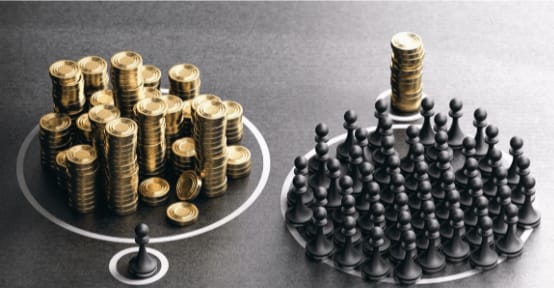
India’s economic trajectory is undeniably impressive. With a current standing as the world’s 5th largest economy and poised to ascend to even greater heights, India’s rapid growth across various sectors reflects a remarkable journey of progress. However, amidst the celebration of milestones and achievements, it is imperative to acknowledge a critical component often overlooked in the discourse of growth – the people.
While India’s economic landscape shines with promising statistics, a closer examination reveals stark realities of income inequality, wealth distribution, and persistent poverty. The recent Union budget forecasts a GDP growth rate of 7.3%, underscoring the nation’s economic vigor. However, behind these numbers lies a tale of disparity and uneven progress that demands our attention.
According to a report by Oxfam on income inequality, a staggering 40% of the wealth generated in India from 2012 to 2021 found its way to just 1% of the population. Conversely, a mere 3% trickled down to the bottom 50%, amplifying the gap between the affluent and the impoverished. The pandemic further exacerbated these disparities, with billionaires witnessing a 121% surge in wealth while hunger and poverty plagued millions.
Disturbingly, the top 1% in India commands over 40.5% of total wealth, while the bottom 50% struggles with a meager 3%. Such skewed distribution underscores the urgency of reevaluating our growth paradigm. The average national income of Indian adults stands at ₹2,04,200, with the top 10% earning over 20 times more than the bottom 50%. This growing chasm threatens the fabric of inclusive development and social cohesion.
Moreover, the criteria for identifying households below the poverty line (BPL) appear archaic, with an annual income limit set at a mere ₹27,000. Such thresholds fail to capture the true extent of poverty and deprivation, leaving millions marginalized and excluded from welfare schemes and opportunities for upward mobility. To truly harness India’s potential and ensure sustainable growth, we must prioritize inclusive policies and initiatives aimed at uplifting the marginalized segments of society. A paradigm shift is imperative, one that places human capital at the forefront of our development agenda.
In this pursuit, businesses and entrepreneurs play a pivotal role. Rather than viewing rural populations solely as labor, we must invest in upskilling and empowering them to unlock their full potential. By harnessing their talents and nurturing entrepreneurship at the grassroots level, we can foster a culture of innovation and productivity that transcends traditional boundaries.
Efforts to promote skill development and entrepreneurship can bridge the divide between urban and rural economies, fostering synergies that drive collective prosperity. Empowering small businesses and integrating them into efficient ecosystems holds the key to unlocking the latent potential of India’s vast and diverse workforce.
India’s role as ‘China + 1’ presents a unique opportunity to redefine our growth trajectory and emerge as a global leader across sectors. By prioritizing inclusive development and equitable growth, we can harness the collective energy and ingenuity of our people to propel India towards becoming a developed nation.
In conclusion, India’s journey towards economic prowess must be synonymous with inclusive growth that leaves no one behind. The onus lies not only on policymakers but on every stakeholder to champion the cause of social justice and equitable prosperity. As we navigate the path ahead, let us remember that true progress is measured not by GDP figures alone but by the well-being and dignity of every citizen. Together, let us build a future where the promise of India’s greatness is realized by all.