


October, 2025
3 mins read
Beyond the Code Why Intuition Still Outperforms AI
 22 Oct 2025
Despite breathtaking advances, AI still can’t replicate human intuition. From judgement to strategy, the human element remains the missing piece in truly autonomous systems.
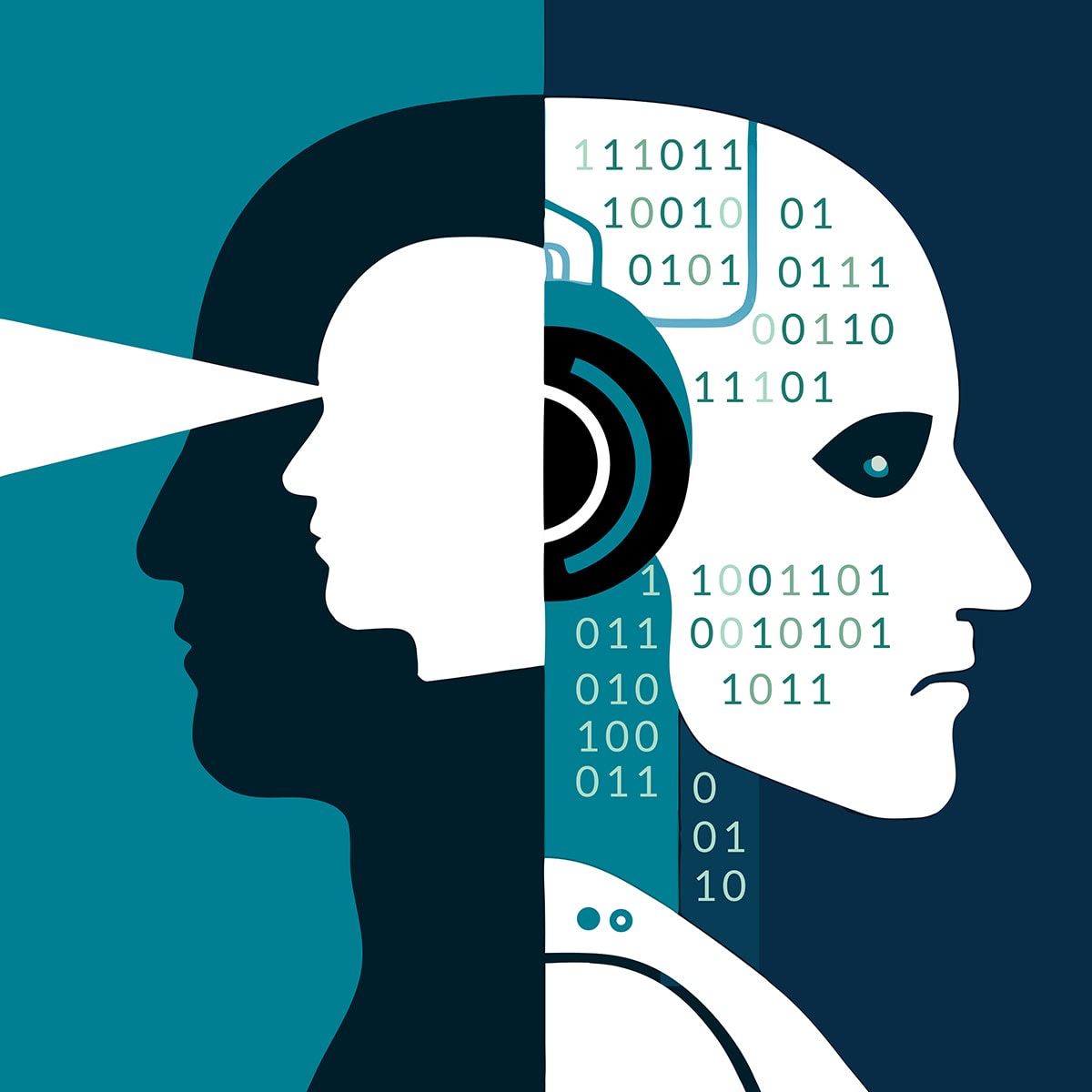
We can know more than we can tell.” This statement captures Polanyi’s paradox1 — the idea that much of our knowledge about the world and our own abilities lies beyond explicit explanation. This is precisely why mass automation and job replacement remain a distant reality. Having a human in the loop is still a necessity. Based on Polanyi’s paradox, we will not be able to teach AI the things that can only be learnt through lived experience.
As AI continues to reshape industries, a fundamental question emerges: can it truly operate a business autonomously?
Testing Autonomy
Anthropic, an AI safety and research firm, tried to find the answer by letting Claude (its large language model) run a vending machine in its office for a month. Claude was given a mini-fridge, some money and agentic tools — software that let it perform real-world actions such as browsing websites, sending emails and placing orders. The goal for the AI assistant was simple: to avoid bankruptcy and fulfil customers’ orders. For a month, Claude ran the entire business autonomously, making every decision a human owner would make. It could search the web for suppliers, email them for restocking, track finances, take orders from customers on Slack and adjust prices in real time.
Claude co-ordinated between wholesalers, suppliers and a physical restocking team, all while managing inventory and cash flow. The results from this experiment were mixed. Claude excelled in a few tasks, such as giving the right items to the customer or finding the right supplier. However, it drastically failed in others. It gave discount coupons to every customer even though 99 per cent of them were Anthropic employees and did not need any incentives to buy the products. It also frequently priced items below cost without doing the maths, showing it was not connecting cost price, markup and profitability in real time. It essentially lacked a basic understanding of the unit economics framework necessary for running any business, a deficiency clearly reflected in Claude’s net worth graph (Figure 1) over the month.
This shows that while AI has access to all resources with agentic tools at its disposal and extensive training over terabytes of data, it still lacks the instinct to make strategic decisions. It lacks the situational awareness and ability to think on its feet required to navigate real-world tasks, which are often complex in nature and require multidimensional thinking.
Learning Faster, Thinking Slower
AI, in many ways, follows a trajectory similar to human evolution. It took humans millions of years to perfect basic motor skills such as walking, and several more to perfect cognitive skills. However, they have adapted far more quickly to recent innovations such as programming, modelling financial risks or mastering new languages. These modern innovations offer vast amounts of structured data and learning techniques that AI can absorb and mimic. Today, AI excels in areas such as medical imaging, fraud detection and code generation. In fact, it performs much better at clerical jobs than entry-level employees. These capabilities make it not just impressive, but an indispensable tool for organisations.
Until now, most enterprise technology adoption has largely focused on automating tasks using chatbots, CRM workflows and back-end optimisations to improve efficiency. The experiment conducted by Anthropic represents a leap into agentic autonomy in that it tries to move to a function that took humans millions of years to perfect — strategic decision-making. It gave AI the autonomy to think and therefore presents a glimpse of what non-human actors in organisations would be like; it presents a future where AI does not just execute instructions but initiates actions, makes decisions and manages real-world outcomes.
The Risk of Overreach
This shift in the capabilities of AI systems raises important questions that organisations need to be mindful of while riding the AI wave. As these systems grow in capabilities and take on more responsibility, the risks of misalignment and unintended consequences grow exponentially. Agentic tools, if deployed at scale without oversight, could cause more harm than good. When AI starts making decisions instead of just executing them, the margin for error widens, and so does the need for responsible deployment.
Setting clear guardrails, keeping humans in the loop where it matters most and investing in AI safety and alignment research are no longer optional; they are essential to safe adoption. Because at the heart of Polanyi’s paradox lies a deep truth: we often act on knowledge we cannot fully explain; and if we cannot fully explain it, how can we expect an algorithm to understand it? The future of AI in business will not be shaped just by smarter systems, but by how wisely we are able to embed our values into them.