


January, 2026
3 mins read
Build First, Ask Later Has the Supreme Court Normalised Environmental Impunity?
 31 Dec 2025
India’s top court has reopened the door to retrospective environmental clearances. The decision raises uncomfortable questions about legality, accountability, and whether economic scale now trumps ecological law.
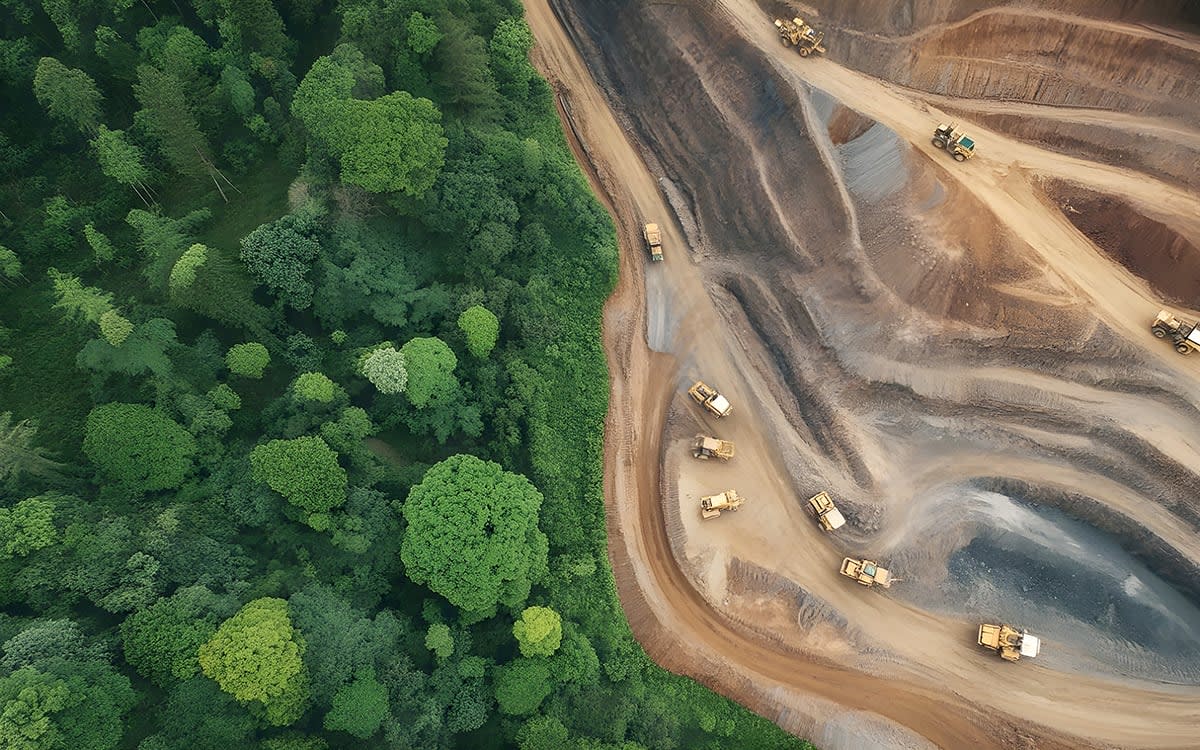
In a massive setback to green lobbyists and policy experts, the Supreme Court in mid-November recalled its landmark May judgement, which had declared ex-post facto environmental clearance for construction projects illegal.
While disappointing from a sustainability perspective, the Supreme Court, in a majority verdict, said its earlier order could have “devastating” consequences and put thousands of crores of public investment at risk.
This rationale prompts the question: have we, as a country, accepted defeat against red-tapism? Is the ingrained bureaucracy so insurmountable that we would rather let corporations violate laws instead?
Under the Environment (Protection) Act, 1986, and the Environmental Impact Assessment (EIA) Notifications of 1994, major construction and industrial projects in India are required to obtain environmental approvals before they can begin.
In May, the court had struck down a 2017 notification and a 2021 office memorandum issued by the Union Ministry of Environment, Forest and Climate Change that allowed retrospective environmental clearances — a decision it has now backtracked on.
The court reiterated its 2021 verdict, which had allowed Vedanta’s Electrosteel Steels to keep its Bokaro steel plant running because of its economic value, even though it was found to be operating on land different from what was originally approved. It also cited a 962-bed AIIMS hospital in Odisha that had commenced construction without final environmental clearance, saying demolishing the structure would be a waste of national resources.
This sets a dangerous precedent, giving potential violators a window to ignore environmental impact until they are caught, which can be too late. The argument of employment and economic value does not justify the long-term environmental deterioration this could lead to.
Economics Over Ecology
It is easy to assume that stopping such large projects is economically impossible, yet other nations demonstrate that the rule of law need not be held hostage by sunk costs. Consider Australia, a country notorious for being excessively reliant on its natural resources firms for value generation.
In 2022, the Australian Federal Court set aside a drilling approval received by Santos, the second-largest domestic oil and gas company. The decision forced Santos to suspend drilling activities for over a year at Barossa, its largest development to date.
Activity was only allowed to resume after the company rectified its failures and concluded necessary negotiations with indigenous tribes. The court effectively ruled that the project’s $4.5 billion price tag was not a ‘get out of jail free’ card for bypassing due process.
That does not mean regulations cannot be designed to make business easier; they just need to be crafted the right way. In October, Australia introduced a new environmental protection bill aimed at speeding up the approvals process while also providing clearer definitions for “unacceptable impacts” and more severe penalties for breaches.
India, too, has tried to streamline the process. Last year, the MoEFCC eliminated the redundant dual-compliance structure, under which clearance also needed to be sought from state pollution boards. This is the correct approach: reducing bureaucratic friction without lowering the environmental bar. We must reform the system, not create backdoors to circumvent it.
The Cost of Compliance
However, such measures may be futile if we continue to provide an out for corporations. According to an investigative report, between June 2017 and June 2021, the ministry had granted ex-post facto clearance to 112 projects under the violation category. That is 112 large-scale projects that were essentially allowed to buy their way into compliance.
This dynamic creates a perverse incentive structure. If corporations know the judiciary will ultimately view a constructed factory as ‘too big to close,’ the rational business strategy becomes: build first, apologise later. Strict regulation is meaningless if the penalty for breaking it is simply a delayed permission slip. We are not just failing the environment; we are institutionalising a culture of impunity.