


June 2024
5min read
Can we make an AI mouse again?
 27 Jun 2024
Once upon a forest, an AI mouse became a lion. Now, it commands the jungle. Can we tame it back into a mouse?
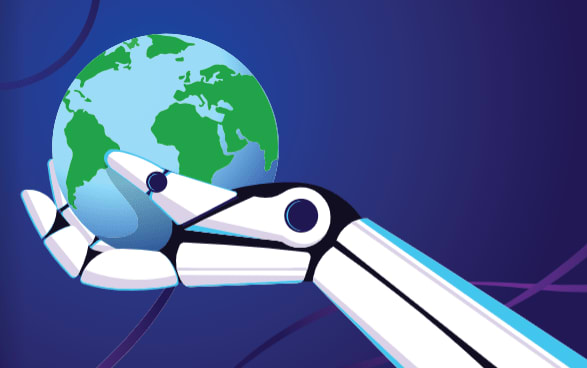
Let’s begin with a story. A wise human lived in a forest with a mouse named AI. When a cat threatened the mouse, the human turned it into a cat. Later, fearing a dog, the cat was turned into a dog. Eventually, the dog was turned into a lion to escape its fears. However, AI, now a powerful lion, began threatening other animals. They sought the human’s help. When AI attacked the human, the wise human turned it back into a mouse.
But can we make AI a mouse again?
Few Winners, Many Losers?
In a world increasingly automated, who needs muscles or brains when circuits and algorithms suffice? This shift leaves humans pondering the meaning of job security.
AI is not just replacing repetitive manual and cognitive work; it’s turning our unique talents into outdated skills. Businesses are eager to replace employees, and procrastinators rely on AI to finish their homework at the last minute.
People are becoming so dependent on AI that virtual assistants remind them of their birthdays, and ChatGPT provides excuses for being late.
Artificial Intelligence — Bright-Burn or Spider-Man?
The positive impact of AI
AI speaking: “Conquer the world? I prefer parenting on a global scale. Now, have you finished your homework, dear?”
The whimsical remark reflects AI’s evolving role as both a helper and a thinker in our modern world, where its applications span from education to environmental conservation and beyond.
- Enhancing healthcare: AI helps doctors diagnose conditions faster than the release of the next season of Stranger Things, significantly improving patient outcomes.
- Advancing education: AI helps teachers teach better and interactively, bringing high-quality education to everyone.
- Environmental conservation: AI guides us on using less energy and recycling more, spreading Greta Thunberg’s message to everyone.
- Finance meets AI: Where algorithms count more than coins.
- Innovation unbound: Fraud detection in banking, robotic process automation, smart home devices, driverless cars… Let’s hold our breath until AI simplifies phone navigation for paralysed individuals through eye tracking. Oh, wait, iOS 18 just achieved that with AI power!
- Catalysing scientific discovery: AI helps scientists do science faster, enabling them to cure diseases and explore space in record time. It’s like having geniuses working in a lab, minus the lab coats.
Just like our craving for food, this list of benefits is extensive.
The negative impact of AI
A hammer can hurt a few, a gun can hurt many, but AI can harm the earth!
- Job displacement: AI is like an intern desperate to become a full-time employee, working 24/7 without complaints, incentives, or breaks. Who needs humans?
- Privacy concerns: If you’ve got nothing to hide, you are nothing.
- Ethical dilemmas: Algorithms lack ethics; they only have goals.
- Loss of human skills: AI is like a remote control fan doing everything for us. It’s making us forget how to do things ourselves. Who needs independence when AI is here?
- Algorithmic addiction: Algorithms are opinions embedded in code.
- Unemployment: AI is like a ruthless CEO cutting costs by replacing humans with machines, leading us towards a dystopian world.
AI is like an endless addiction. No matter how far you drive, you’re always the same distance from the ditch.
A Final Byte
AI feels like a bug, powering the product to adjust and develop into something new. No matter what, it changes, evolves, and becomes a genuinely new entity. The next form? An inevitable redesign.
Let’s end with a thought. Elon Musk once said, “If we’re building a road and an anthill happens to be in the way, we don’t hate ants, we’re just building a road, and so, goodbye anthill.”
Superpower needs to be used at the right time for the right cause. Was it the right time to unleash AI? The big question is whether AI’s perception of humans will remain the same as it evolves.
Artificial intelligence is an infant at best. Once it becomes a teenager and believes it is smarter than its parents, will it rebel?