


April, 2025
2min read
Chip Wars and India’s Big Semiconductor Push
 27 Apr 2025
From smartphones to defence tech, semiconductors power the modern world. As global players scramble for dominance, India is positioning itself as the next big hub.
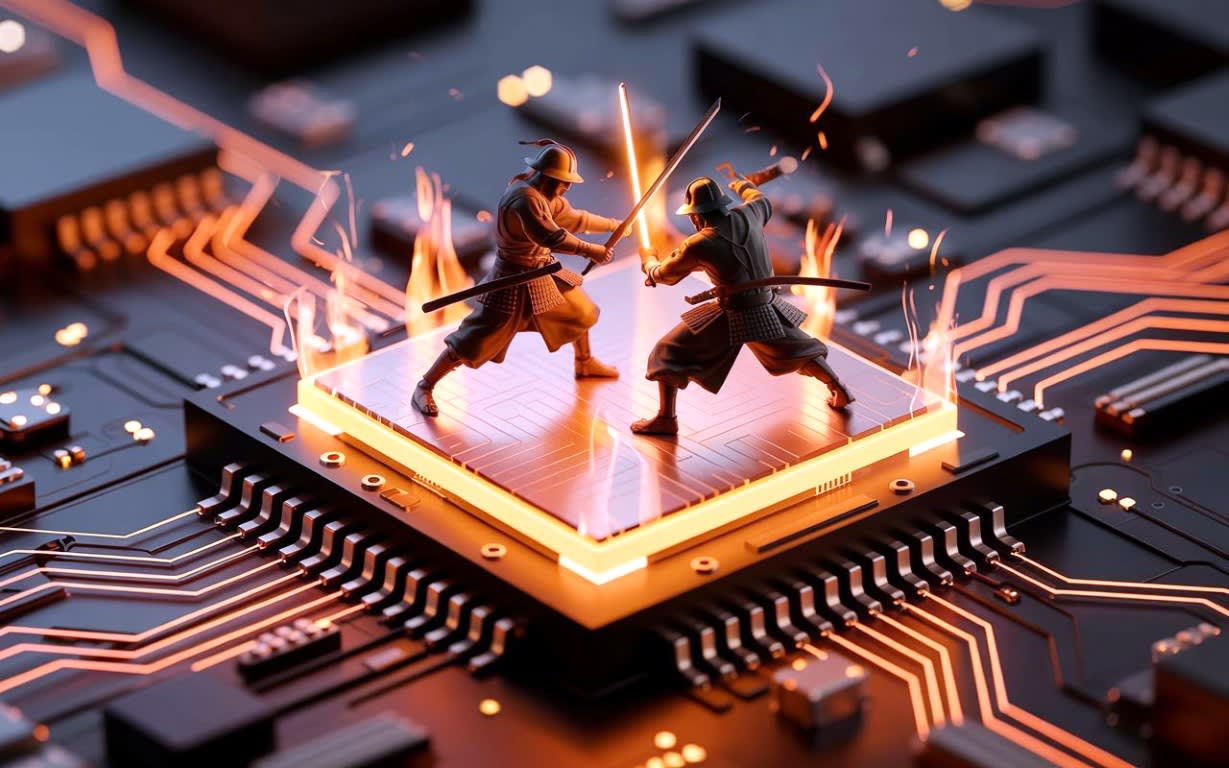
Semiconductors have become a vital component of the global economy, driving progress in sectors such as defence, household electronics and smartphones. The chips inside these products are revolutionising the way we live, and the pace of technological advancement is so rapid that consumption struggles to keep up. The ongoing ‘chip war’ reflects the strategic importance nations now place on semiconductor dominance.
As Chris Miller notes in Chip War: The Fight for the World’s Most Critical Technology: “Chips from Taiwan provide 37 percent of the world’s new computing power each year. Two Korean companies produce 44 percent of the world’s memory chips. The Dutch company ASML builds 100 percent of the world’s extreme ultraviolet lithography machines, without which cutting-edge chips are simply impossible to make. OPEC’s 40 percent share of world oil production looks unimpressive by comparison.”
Let’s take the example of a smartphone chip and trace its journey from raw material to the final product. First, the design and cutting-edge technology come from engineers in the US, are sent to foundries (or fabs) in Taiwan. In these fabs, the chips are fabricated, and afterwards, they are shipped to assembly lines in China. Here, they are put together using machines from countries such as the Netherlands, Japan, South Korea and the US, to produce end-products such as smartphones for clients like Apple. In China alone, about 450,000 people are employed in assembly lines tied to semiconductor production.
Given the widespread geographic involvement in this value chain, external disruptions, such as the pandemic, have exposed vulnerabilities. McKinsey projects the semiconductor industry to reach a value of $1 trillion by 2030, but to achieve this, the industry must tackle critical challenges, including talent shortages and supply chain gaps.
India’s Big Semiconductor Opportunity
The semiconductor wave has already touched many economies, and now the Indian government, through the Ministry of Electronics and Information Technology (MeitY), is pushing manufacturing industries with production-linked incentives (PLI). With growing headlines about acquisitions, mergers and joint ventures involving companies from the US, Japan, Taiwan and China partnering with Indian firms, the market is shifting. PSMC has partnered with Tata Electronics for a fab, Foxconn is in talks to set up the biggest FATP (final assembly, testing and packaging) unit in Karnataka, and Dixon closing a deal with Google shows a promising industry shift. Not only India, but other south-east Asian countries such as Vietnam and the Philippines are also inviting companies to manufacture.
Following the “China plus one” policy, companies are more open to doing business with India and creating a complete end- to-end hub beyond just designing here. By doing this, companies will be able to overcome supply chain issues. When talking about talent shortages, cultivating engineering talent requires more time and investment than developing technicians, prompting companies to upskill technicians and broaden their roles. Additionally, the demand for construction workers has surged, but workforce development efforts are lagging.
The Human Factor in an AI Future
With artificial intelligence and machine learning, most shopfloor operations can be automated, as seen in Micron’s fabrication plant in Taiwan, but subject-matter expertise needs to be imported and inculcated. To do so, nations are building institutions to attract talent with the required expertise, and expats are flown all over the world to transfer knowledge. The talent shortage is likely to persist for the next five years until the industry creates a niche category for itself explicitly.
The reliance on human expertise in critical areas of design, engineering and fabrication remains indispensable. While AI and automation can streamline routine processes, the rapid advancements in semiconductor technology require not just operational efficiency but also innovation, design expertise and a deep understanding of fabrication complexities. Therefore, companies are collaborating with public and private entities to cultivate the needed talent and expand their workforce development efforts. A revolution has arrived, and major developments are already seen in southern states — cities are developing, policies are changing, and workforce dynamics are shifting rapidly. The definition of blue-collar jobs is undergoing a twist. Much must be done to cater to such needs by both companies and the government of India.