


June 2024
8min read
Electric Vehicles and Sustainable Transportation: Challenges, Solutions, and the Need for a Paradigm Shift
 27 Jun 2024
The Article goes over the issues and challenges with EV's and how a paradigm shift is required for a more effective solution to tackle personal transportation and sustainability.
Electric vehicles (EVs) have been widely promoted as a viable short-term solution to mitigate the
climate crisis, offering a potential pathway to reduce reliance on fossil fuels and decrease greenhouse
gas emissions from the transportation sector. However, while EVs present certain advantages, they are
not a panacea and come with their own set of significant environmental challenges. Without
comprehensive and effective policies, EVs may pose environmental risks comparable to those of
internal combustion engine (ICE) vehicles.

One of the primary environmental concerns associated with EVs is the mining of minerals used in
their batteries. The extraction of lithium, cobalt, and nickel can lead to significant ecological
destruction, including habitat loss and water pollution. For example, lithium mining in South
America's Lithium Triangle has been linked to the depletion of water resources in one of the driest
regions on Earth, affecting local communities and ecosystems (Vinceti et al., 2020). Similarly, cobalt
mining in the Democratic Republic of Congo has raised serious ethical and environmental concerns
due to unregulated mining practices and their impact on local environments and communities
(Amnesty International, 2016).

The environmental footprint of EVs is further compounded by the transportation and manufacturing
processes of their components. Emissions from these stages are often not included in the overall
assessment of an EV's environmental impact. A study by Hawkins et al. (2013) highlights that the
production of EVs can generate up to 60% more greenhouse gas emissions than conventional vehicles
due to the energy-intensive processes involved in battery manufacturing. Additionally, EVs tend to be
heavier than their ICE counterparts, which leads to increased tire wear and tear, resulting in higher
particulate pollution from tire dust. This type of pollution has been shown to contribute to air quality
degradation and associated health risks (Panko et al., 2013).

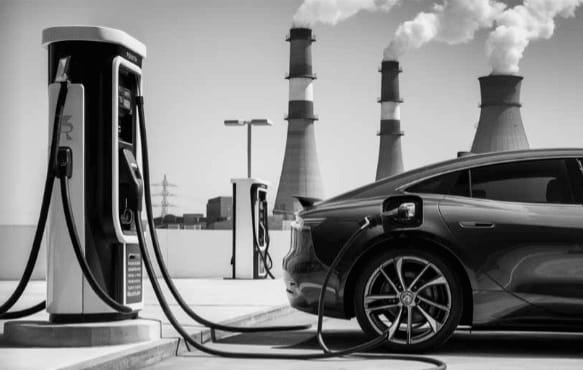
In regions where electricity is predominantly generated from non-renewable fossil fuels, the
environmental benefits of EVs are further diminished. In such contexts, the emissions are merely
shifted from the vehicle's tailpipe to the power plant. For instance, in countries heavily reliant on coal
for electricity, the overall carbon footprint of EVs can rival that of ICE vehicles (Michalek et al.,
2011).

Therefore, while EVs are a critical step towards reducing reliance on fossil fuels, they should not be
viewed as the ultimate solution for sustainable transportation. A comprehensive paradigm shift in
urban planning and transportation policy is essential. This shift must encompass the redesign of urban
spaces to reduce car dependency, the promotion of public transportation, and the development of
robust policies that support sustainable practices across all sectors.

Public transportation systems need significant investment and innovation to provide a viable
alternative to personal vehicle use. Cities that prioritize public transit, cycling, and pedestrian
infrastructure can significantly reduce their carbon footprint and improve the quality of urban life. For
example, Copenhagen’s extensive cycling infrastructure has led to higher rates of cycling and lower
carbon emissions (Gössling, 2013).

Furthermore, modern EV designs, such as the Tesla Cybertruck, raise safety concerns due to their
increased weight and power. Heavier vehicles not only consume more resources but also pose greater
risks in traffic accidents. A study by Anderson and Anderson (2010) on vehicle safety indicates that
the mass of a vehicle can significantly affect the severity of accidents, often putting other road users at
greater risk. Therefore, the focus of personal transportation should shift away from merely increasing
vehicle power and speed towards prioritizing safety and sustainability.

In conclusion, while EVs offer a promising short-term solution to reduce greenhouse gas emissions
from the transportation sector, they are not without significant environmental challenges. To achieve true sustainability, a paradigm shift in urban design and transportation policies is imperative. This
holistic approach should prioritize public transportation, reduce car dependency, and ensure that the
transition to EVs is supported by clean energy sources and sustainable practices. Only through such
comprehensive measures can we hope to address the climate crisis effectively and create a sustainable
future for all.