


April, 2026
2 min Read
Geopolitics Enters the Boardroom The Leaders Who Saw Risk Coming
 29 Apr 2026
The biggest business risks no longer come from markets alone. The smartest leaders saw geopolitics shifting early — and quietly rewired strategy before disruption hit
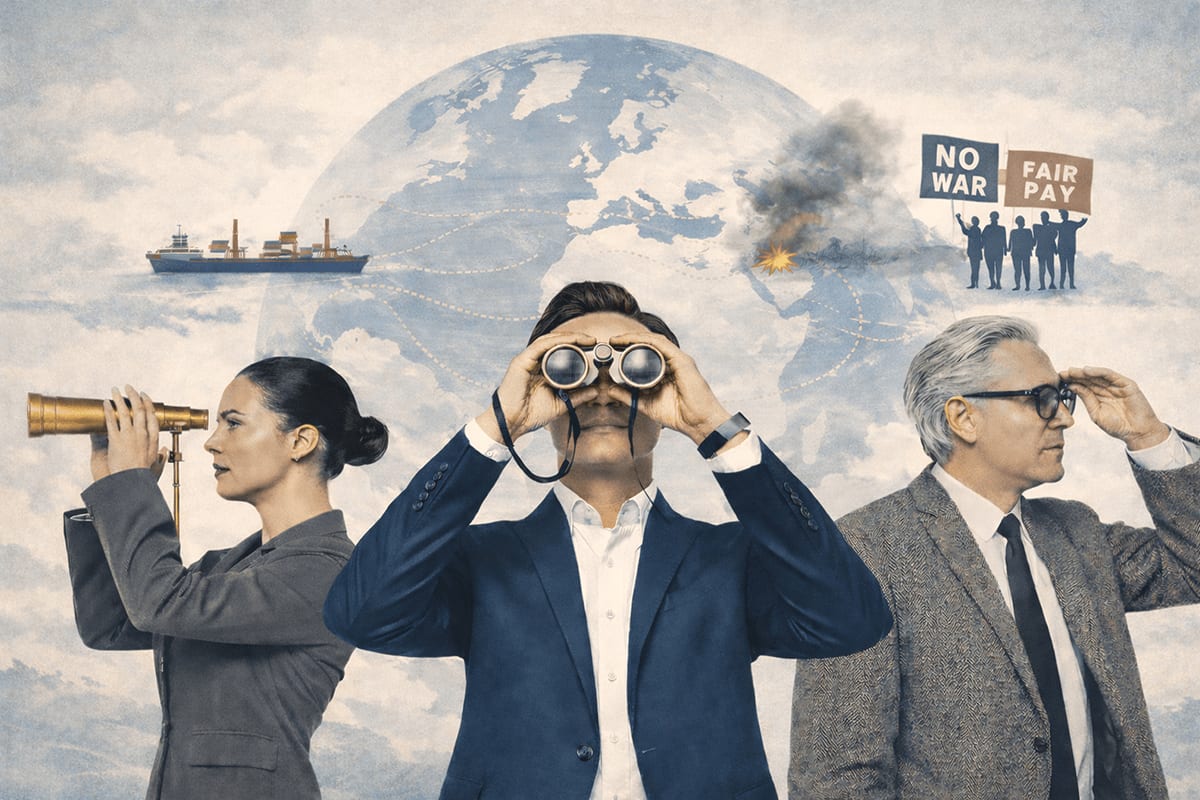
In the spring of 2016, Apple began quietly building iPhone assembly capacity in India. Analysts called it a market expansion play, a way to serve Indian consumers and sidestep import duties. Few read it as what it was: an early hedge against a risk that hadn’t yet materialised.
Two years later, the US-China trade war began. By 2020, Covid lockdowns had paralysed Apple’s Chinese production lines. By 2025, Tim Cook confirmed on an earnings call that the majority of iPhones sold in the US would have India as their country of origin. What looked like a market decision in 2016 was, in hindsight, a geopolitical one. That distinction is what separates leaders who saw it coming from those who didn’t.
Geopolitics as Someone Else’s Problem
For most of the post-Cold War era, the global business consensus rested on a comfortable assumption: that the world’s trading order was essentially stable, and geopolitics was a concern for governments, not boardrooms. CEOs optimised for efficiency. Supply chains were built around the cheapest inputs, not the most resilient ones.
That assumption has been dismantled, event by event. Russia’s invasion of Ukraine in February 2022 caught thousands of multinationals off guard, forcing many to exit markets and unravel supply chains at enormous cost. Trade interventions globally have surged twelve-fold since 2010, according to McKinsey research. Net foreign direct investment into China fell from $344 billion in 2021 to $42.7 billion in 2023. These are not aberrations. They are a new baseline.
The Pattern Among Those Who Got It Right
What distinguished companies that navigated these disruptions was not luck. It was a fundamentally different posture towards the world.
Apple’s supply chain shift is the clearest case study. Long before the tariff shock of 2018, the company had been building capacity in Vietnam for AirPods and accessories, and in India for iPhone assembly. The moves were incremental and conservatively described in earnings calls. But when geopolitical pressure arrived, Apple had contingency infrastructure in place rather than scrambling to build it under duress.
JPMorgan Chase CEO Jamie Dimon has been among the most direct voices on this from within finance. In his 2024 shareholder letter, he was unambiguous: “Our largest risk is geopolitical risk.” He described the global environment as the most perilous and complicated since the Second World War. He then followed words with structure. In May 2025, JPMorgan launched a formal Centre for Geopolitics, led by Derek Chollet, a former senior State Department official, with an advisory board including former US secretary of state Condoleezza Rice, former UK prime minister Tony Blair, and former chairman of the Joint Chiefs of Staff General Mark Milley. Citigroup moved in a parallel direction, bringing on Robert Lighthizer, former US trade representative, to help navigate the shifting trade environment.
Meta offers a less obvious but equally instructive example. The company established a vice-president of global affairs role, held for over a decade by former UK deputy prime minister Nick Clegg, well before geopolitical risk was fashionable in C-suite conversations. That function allowed Meta to navigate EU privacy regulation, US content moderation demands, and complex market-entry politics simultaneously. Building that capability early paid dividends across a decade of turbulence.
A New Competency, Not a
New Department
In October 2023, intelligence chiefs from the Five Eyes nations — Australia, Canada, New Zealand, the United Kingdom and the United States — gave a joint interview addressed not to governments but directly to western multinationals. Their message: “You may not be interested in geopolitics, but geopolitics is interested in you.”
The warning reflected something the most forward-looking leaders had already internalised: geopolitical literacy is no longer optional. It is a core operating competency, as fundamental as financial fluency or technological literacy. McKinsey and Russell Reynolds both report surging demand across Fortune 500 companies for executives recruited from military, intelligence and diplomatic backgrounds. The chief geopolitical officer is emerging as a C-suite role, following the arc of the chief information security officer in the 2000s and the chief sustainability officer in the 2010s — both once dismissed as unnecessary, both now indispensable.
The leaders who navigated geopolitical disruption best share one trait: they stopped treating political risk as an entry in a risk register and started treating it as an input to strategy. They diversified supply chains before they were forced to. They hired people who understood how states think, not just how markets move.
The lesson is not that every company needs to become a geopolitical intelligence agency. It is that every company operating across borders needs someone in the room with genuine authority, whose job is to ask the question that the market won’t: what happens if the world changes before our next earnings call?
That question has always mattered. The cost of not asking it has simply become undeniable.