


July, 2025
8min read
Healing in the Age of Headsets: How VR is Quietly Revolutionising Medicine
 30 Jul 2025
Virtual reality is quietly transforming healthcare — reshaping how doctors train, patients recover, and medical professionals build empathy in ways once thought impossible
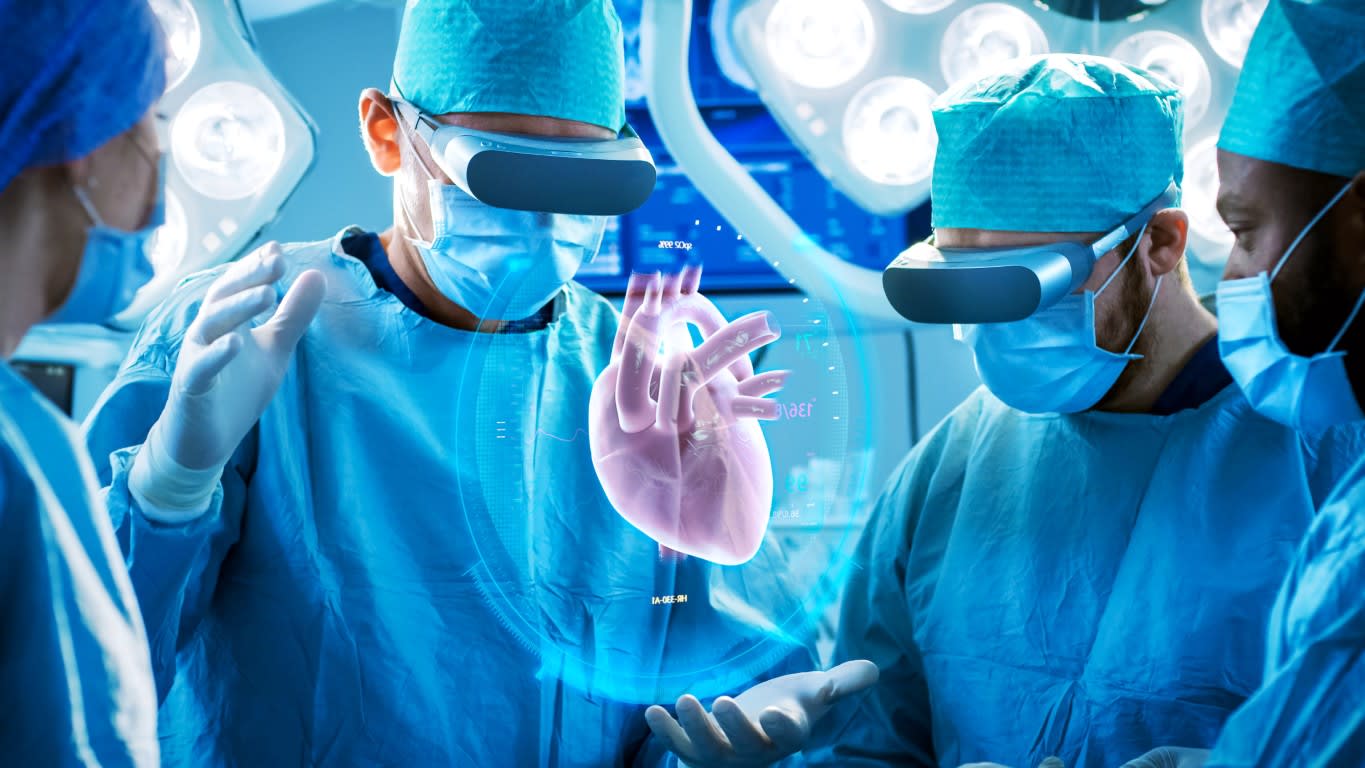
AI, blockchain, and Industry 4.0 are frequently discussed in conversations about digital transformation. However, virtual reality (VR) has subtly — and more significantly — transformed one of humanity’s most vital industries: healthcare. Once used solely for entertainment and gaming, VR now enables medical students to learn at an unprecedented level, doctors to practise surgeries, and patients to process trauma in a safe, controlled environment. It has become a bridge between medical theory and practice, pushing the boundaries of care, training, and healing.
Precision, Training, and Treatment
The most obvious application of VR is in surgical training. With platforms like Elucis by Realize Medical, high-risk procedures such as neurosurgery or cardiovascular operations can now be practised in lifelike, fully immersive simulations. These allow doctors to rehearse surgical techniques, examine patient-specific anatomy in three dimensions, and receive feedback — all without entering an operating theatre. This not only reduces procedural errors but also fosters a level of clinical confidence that textbooks alone cannot provide.
Beyond the operating table, VR is revolutionising physical rehabilitation. Elderly patients at risk of falls benefit from balance-enhancing virtual exercises, while stroke patients use gamified simulations to regain motor skills. The added capability of delivering these interventions remotely through telerehabilitation makes them more inclusive, particularly in post-pandemic healthcare models. This shift represents a profound change for many patients — from passive recovery to active, engaged healing.
Reimagining Mental Health and Empathy
VR’s impact on mental health is equally noteworthy. Patients with addiction, PTSD, phobias, or social anxiety are gradually exposed to triggering environments in controlled virtual settings. Whether it is a war veteran revisiting a battlefield simulation or someone with a fear of flying boarding a virtual aircraft, VR provides a safe space for confronting and resolving trauma. In cases where traditional treatments fall short — such as when patients struggle to articulate their emotions or visualise scenarios — exposure therapy has shown promising results.
Beyond individual therapy, VR is enhancing how we train future caregivers. Nursing students and clinical professionals can now experience patient interaction simulations, gaining insight into conditions like anxiety or dementia. This emotional immersion fosters empathy, preparing medical professionals to deliver more human-centred and compassionate care.
Educating Tomorrow’s Medical Professionals
Medical education, traditionally reliant on cadavers, live patients, or plastic models, is being redefined by VR. With apps like Simodont and Anatomy Builder VR, students can study anatomy in depth, practise dental procedures, and repeatedly simulate eye surgeries — safely and with precision. These tools are more than visual aids; they offer tactile, spatial, and interactive learning experiences that improve confidence, accuracy, and retention. As technology advances, VR-based medical education may become the norm, particularly for institutions without physical training facilities.
Virtual Reality Steps Up
The Covid-19 pandemic significantly accelerated VR adoption in healthcare. As schools moved online and hospitals restricted access, VR provided continuity — enabling remote training, virtual intensive care unit simulations, and mental health support. This period underscored VR’s adaptability and cemented its role in healthcare systems that demand resilience and scalability.
The future holds vast potential. Global investment in medical VR — covering hardware and computing power — is rising. However, challenges remain beyond cost, including data privacy, clinician adoption, and seamless integration with hospital systems. To unlock VR’s full potential, collaboration among technologists, educators, and healthcare professionals will be essential.
People-Centred Digital Revolution
What sets VR apart in discussions about emerging technologies is its uniquely human impact. While much of digital transformation prioritises automation and efficiency, VR enhances interaction, empathy, and care. It empowers healthcare workers to learn better, patients to heal more safely, and systems to adapt faster. In a field where precision and compassion must go hand in hand, Virtual Reality is not just a digital upgrade — it is a paradigm shift.