


December, 2025
3 mins read
How Stakeholder Capitalism Is Redefining Leadership
 31 Dec 2025
As climate risk, inequality and trust deficits grow, leadership is being redefined — moving decisively beyond shareholder primacy towards a broader, more resilient stakeholder model
n 2022, Patagonia did something almost unthinkable in the vocabulary of modern business: it gave the entire company away.
Not to private equity, not to a billionaire’s family trust, but to an entity created solely to protect the planet. “Earth is now our only
shareholder,” the brand declared. For many, it was a jolt — proof that the shareholder-first script that had guided capitalism for
decades was finally being questioned, not in white papers or conferences, but in practice.
For years, shareholder capitalism shaped global growth and ambition. But it also fuelled a world where quarterly numbers
eclipsed long-term responsibility. The relentless pursuit of profit often came at the expense of environmental stability, employee
well-being and public trust. As climate risks intensified and inequality widened, a generation of workers grew unwilling to tolerate
value-blind corporations. The cracks in the old model became impossible to ignore.
From Profit to Purpose
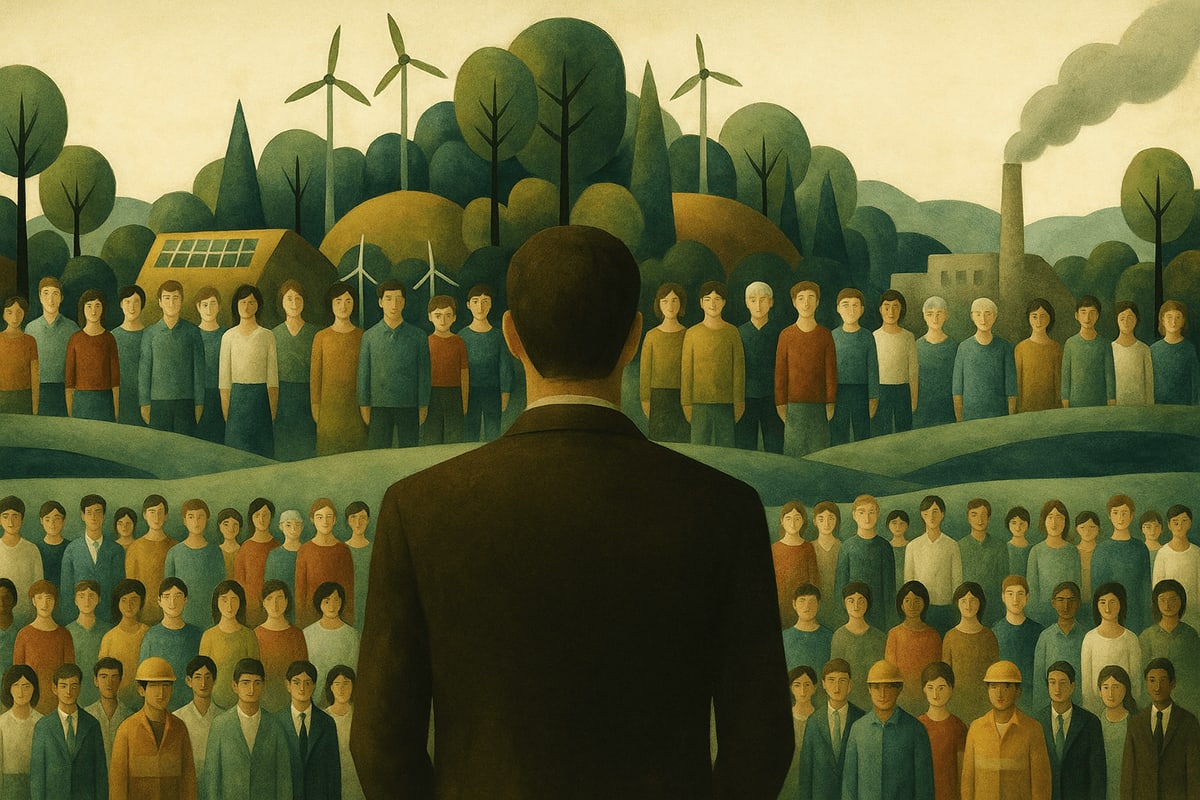
Enter stakeholder capitalism — the idea that a company’s duty extends beyond its investors to the people it employs, the
communities it touches and the planet it depends on. It is not a sentimental detour from capitalism, but an evolution: a
recognition that long-term value cannot be built on short-sighted choices.
Consider Unilever under Paul Polman. The company famously stopped giving quarterly earnings guidance so leaders could
focus on sustainable growth instead of appeasing markets every ninety days. Critics predicted chaos. Instead, brands under the
sustainable living portfolio grew almost 46 per cent faster in some years than the rest of the company. Purpose did not
undermine profit; it sharpened it.
Closer to home, Mahindra & Mahindra introduced an internal carbon price well before ESG regulations forced anyone to.
What looked like idealism became operational strategy — guiding investments, cutting inefficiencies and accelerating innovation.
A climate-conscious approach quietly became a competitive advantage.
When Values Drive Value
Governments, too, are rewriting capitalism’s rules. Denmark now requires boards to consider social and environmental
responsibility as part of their fiduciary duty — a literal legal expansion of what it means to “serve the company.” Meanwhile, the
world’s largest asset manager, BlackRock, demands that companies disclose climate risks, workforce policies and governance
standards. In other words, capital itself is insisting on conscience.
In Taiwan, TSMC — the semiconductor giant — illustrates how long-term, stakeholder-focused governance can become a
strategic asset. By prioritising local communities, talent development and transparent operations, it has grown into a national
cornerstone central to Taiwan’s economic and geopolitical stability.
These examples share a common thread: they reflect realism, not idealism. In a connected world, neglecting stakeholders
has become too costly. Consumers walk away from brands that appear unethical; Gen Z talent chooses employers aligned with
their values; regulators move quickly; and investors increasingly price ESG risks into valuations.
For today’s leaders, this shift is not a trend; it is a strategic imperative. Stakeholder capitalism strengthens risk management,
builds resilient supply chains, nurtures trust and anchors long-term profitability. It does not reject profit but roots it in
responsibility. It recognises that a company cannot thrive in a world that is burning, unequal or distrustful.
Leadership, Reimagined
But embracing this shift requires a different kind of leadership — one grounded in restraint, empathy and what might be called
moral imagination. It asks leaders to hold competing interests without collapsing into short-termism. It demands the courage to
take the long view when markets reward the opposite. And it requires the humility to accept that power is no longer measured by
control, but by impact.
As the world grows louder, faster and more uncertain, the future will not belong to companies that chase applause in every
quarter. It will belong to those who understand the quiet truth at the heart of this revolution: that capitalism, at its best, is not a
race for extraction but an exercise in stewardship.
Shareholder capitalism built the world we inherited; stakeholder capitalism will shape the one we leave behind.
This is not just a shift in governance. It is a rewriting of what it means to lead.
Stakeholder capitalism is not a sentimental detour from capitalism, but an evolution — recognising that long-term value cannot be built on short-sighted choices
What looked like idealism became operational strategy — guiding investments, cutting inefficiencies and accelerating innovation, as
climate-conscious thinking quietly turned into competitive advantage