


December 2024
6min read
Navigating the HR Futurescape: Enabling Hyper-personalization for Gen Z
 27 Dec 2023
Gen Z views jobs as immersive experiences, demanding hyper-personalised HR. Delve into the shift in workplace expectations, examining how emerging technologies create bespoke work niches aligned with individual identities
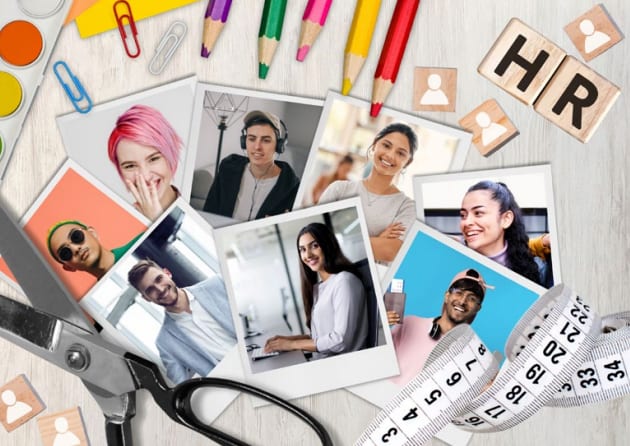
In a world increasingly driven by individuality and unique experiences, the future of HR is not just about personalization; it’s about hyper-personalization. For Gen Z, a generation accustomed to rapid successive bursts of stimulation, on-demand tailor- made and adaptive content, diverse and dynamic interest pursuits, customized interfaces, and real-time feedback, the one-size-fits-all approach to employee benefits is rapidly becoming obsolete. The future is best imagined with benefits tailored to each employee’s life stage, interests, and aspirations. Whether it’s bespoke learning opportunities, tailored mental health support, or even flex schedules based on an individual’s circadian rhythm – the goal is to curate experiences that truly resonate. Gen Z is by far the most conscious of the high-resolution of individual overlapping identities and attributes as well as of their fluidity. Technology, cognitive research, and empathy are key tools in overcoming the challenge of designing organizational structures for such a cognizant, self-aware, and metacognizing cohort of workers who have been polarizing enough to be simultaneously described as unprecedentedly volatile and unprecedentedly passionate hustlers. In reality, the crux of Gen Z’s work zeitgeist is freedom to define their own success metrics and the freedom to distribute their work across time as they desire. This shouldn’t be characterized as fickleness, recklessness, irresponsibility, or insolent defiance – Gen Z has a willingness to work, as sincere, passionate, and determined as any other generation – it’s just that they need more time and wish to have a greater say in deciding what work they want to do and how do they wish to do it.
The modern generation sees the job market as a liberal open market – a forum of extensive bargaining and free trade, teeming with terms and conditions, a flat marketplace with high customizability, high negotiability, and low to no power distance between buyers and sellers (recruiters and job-seekers respectively). While orthodox thought might chide and admonish Gen Z for its perceived exceptional negligence of values, as each older generation has done for the one next since the dawn of civilization, Gen Z has created an unprecedentedly vibrant culture of ethical responsibility, answerability, conduct scrutiny, critical vocalization, and public discourse marked by bold, unabashed argumentation, plurality of perspectives, and extensive deliberation and dialogue. Much of it manifests with digitalization – the presence of platforms and forums where millions from around the world can share a discourse with the optional security of anonymity. This generation has greatly broadened and deepened the concept of tacit consent, ranging from nigh-omnipresent clandestine daily app and website usage contracts that run hundreds of pages to calling out pernicious microaggressions and sensory overloads at workplaces and public spaces. It is precisely this far-enhanced understanding of the scope and significance of tacit consent that underlies much of Gen Z’s friction with conventional HR practices. The modern generation is sensitive and perceptive, seeing the structure and function of the world at a much higher resolution – every action constituting conformance to or violation of a virtual, implicit contract. This results in a far greater number of contracts – many of them fine, short-lived, and dynamic (frequently-updated), many of them imperceptible to Boomers and Gen Xers. Taking cognizance of such conventionally nonobvious contracts is indispensable to the design of inclusive and effective HR practices.
The thumb rule is that if Gen Z takes something to heart, which usually comes after a fair bit of exploration and introspection, they make the cause inseparable from their identity, investing in it with utmost passion and dedication. Unlike previous generations who mostly took work as it is, i.e., as a given, and carried it out with detached and unquestioning dedication within defined spatiotemporal limits, Gen Z individuals are seeking to not only choose but also define and adapt its niches of work on their own terms and preferences, rupturing old limits and bounds of work and life. While they expect workplaces to give them the comfort and amenities typically expected of homes and recreation, they are also more willing and welcoming of taking work to their home and recreation. In such trade-offs, what gets maximized on both sides is flexibility – a key success parameter for new-age work design. For Gen Z, work and workplaces coalesce with their niches of fulfillment.
This is where emerging technologies come into play. When needs, attention-spans, and agreements are so finely-resolved, tuned, and dynamic, real-time data collection and crunching suggests itself. The key is to create transparent, traceable, and subject- controllable microcosms of data around each employee with dual discretion of the employee and employer. A quest central to HR Management, across functions, is to reduce the time lag in responding to evolving employee needs. The pinnacle of responsiveness, both in terms of promptness and accuracy, is to track their thoughts – something that sounds fantastical but is increasingly becoming a reality thanks to advances in neuroscience and neuroengineering. Collecting neurological and physiological data, processing it using AI and Big Data Analytics, and responding to them with integrated neuro-managerial design, techniques like gamification, and tools like AR/VR would help establish robust, adaptive virtuous cycles of information funneling and feedback where employee mood and motivation can be tracked and there behavioural patterns predicted, enabling employers to strategically deploy and tweak relevant drivers to regulate, steer, or leverage the same. These mutually-coordinating technologies enable employers to ensure sustained employee motivation in short and long-term, provide direct strategically-relevant individual-specific incentives with pin- point accuracy, integrate incentivization in work design thus quasi-automating it, and align work optimization with individual employee fulfillment by leveraging key mood-performance drivers with precision.
By harnessing the power of data analytics, neurochemistry, virtual reality, gamification, and artificial intelligence, HR will shift from broad brushstrokes to fine, intricate details, painting a unique portrait and carving out a custom work-niche for each employee. Gen Z doesn’t just want a job; they want an experience – an innately fulfilling one. And HR’s role? It’s that of a personal guide analogous to that of a hospitality steward – To create that very unique memorable journey where every path feels like it’s paved just for them.