


February 2024
7min read
The Circular Economy: Redefining Product Life Cycles
 27 Feb 2024
"The Circular Economy: Redefining Product Life Cycles" explores the concept of the circular economy and its potential to minimize waste and promote sustainable practices. The article discusses how businesses can adopt circular economy principles by designing products for longevity, encouraging recycling, and minimizing environmental impact. It also highlights successful examples of companies that have implemented circular economy strategies. By redefining product life cycles and embracing circular economy principles, businesses can contribute to a more sustainable future while also reaping economic benefits.
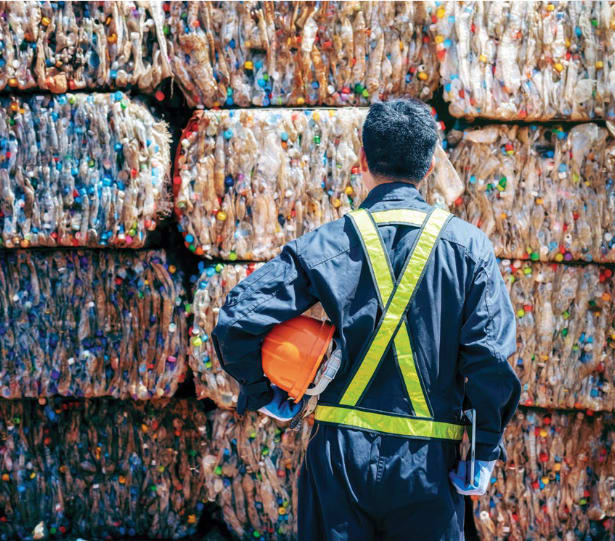
As a sustainable substitute for the conventional linear economy, the circular economy has drawn a lot of attention recently. The circular economy seeks to reduce waste, increase resource efficiency, and establish a regenerative economic structure by rethinking product life cycles. The circular economy’s potential to reduce waste and encourage sustainable practices is examined in this article. It talks about how companies might implement the circular economy ideas of long-lasting products, promoting recycling, and reducing their environmental impact. Moreover, it showcases prosperous instances of businesses that have adopted circular economy tactics.
The circular economy is a system that seeks to maximize value extraction from resources while minimizing waste and environmental effect, hence extending their useful life. By generating new jobs in the recycling, repair, and remanufacturing sectors, it also offers economic potential. Furthermore, it stimulates innovation by pushing companies to come up with fresh approaches to product design, production, and delivery. Its foundation is in three main ideas: minimizing waste and pollution, preserving materials and products, and restoring natural systems. Rethinking the creation and manufacturing processes of items is necessary to design out waste and pollution.
Using sustainable materials, minimizing the use of dangerous materials, and creating long-lasting, repairable products are some examples of this. Enterprises can reduce waste and environmental effects by taking into account a product’s complete life cycle, starting from its manufacture and ending at disposal. Maintaining resources and products in use is another essential component of the circular economy. By means of reuse, refurbishment, and remanufacturing, the circular economy seeks to prolong the life of items as opposed to the conventional linear model, which disposes of products after usage. Strategies including product leasing, take-back programs, and developing secondary markets for old goods might help achieve this. Preserving and restoring natural resources is the main goal of regenerating natural systems.
It entails implementing sustainable behaviours that reduce the extraction of resources, support renewable energy sources, and safeguard ecosystems. The circular economy seeks to strike a balance between environmental sustainability and economic growth by revitalizing natural systems. The conventional “take-make-dispose” linear product life cycle is changed into a closed-loop system in a circular economy. This entails encouraging reuse, recycling, and remanufacturing in addition to developing products with lifetime, durability, and repairability in mind. Companies can embrace the circular economy by creating long-lasting products. Using sturdy materials, making sure maintenance and repairs are simple, and taking the product’s whole life cycle—from manufacture to disposal—all fall under this category. In a circular economy, putting in place efficient methods for recycling and reuse is essential. Employing recyclable materials, offering product take-back programs, and working with recycling facilities to guarantee appropriate material recovery are all ways that businesses may promote recycling. The concepts of the circular economy also entail reducing the environmental impact of items over the course of their life cycles. This entails cutting back on energy use during production, streamlining logistics and transportation, and taking into account the usage of renewable resources.
Numerous businesses have effectively adopted the concepts of the circular economy and put tactics that reduce waste and advance sustainability into practice. Patagonia, an outdoor apparel brand, is a prime example of circular economy principles. By giving repair services and advice on how to prolong the life of their clothing, they encourage customers to fix and reuse their products. Patagonia ensures appropriate end-of-life management through recycling activities and incorporates recycled materials into their products. Leading global lighting company Philips has changed from selling lightbulbs to offering lighting as a service. Philips is able to collect and recycle materials at the end of the products life cycles by maintaining ownership of the items through the provision of lighting solutions as a service. This strategy promotes resource efficiency and lessens waste. The flooring company Interface has put in place a closed-loop recycling system known as ReEntry. Old carpet tiles are collected, the materials are separated, and then recycled into new tiles. This strategy minimizes the impact on the environment by reducing waste and the requirement for virgin materials. TerraCycle and other consumer products firms have partnered to create Loop, a circular shopping platform. Products are available for purchase in reusable packaging, which is subsequently gathered, cleaned, and refilled. This technique encourages a more sustainable consumption style and gets rid of trash from single-use packaging. The environmental problems caused by the linear economy have a workable remedy in the circular economy. Businesses may reduce waste, encourage resource efficiency, and contribute to a more sustainable future by reframing product life cycles and implementing the concepts of the circular economy. Businesses that have effectively used circular economy tactics include Patagonia, Philips, Interface, and Loop; these examples show the possibility of a regenerative economic system. Adopting the circular economy has several advantages, including improved brand reputation, economic prospects, and environmental benefits. It also encourages innovation. We are getting closer to a more robust and sustainable global economy as more companies use circular economy strategies.