


June 2026
2 min
The Dashboard Graveyard Built, Launched, Forgotten
 27 Jun 2026
Organisations build dashboards to unlock insights, yet many end up ignored. The real challenge isn’t data scarcity - it’s turning information into action.
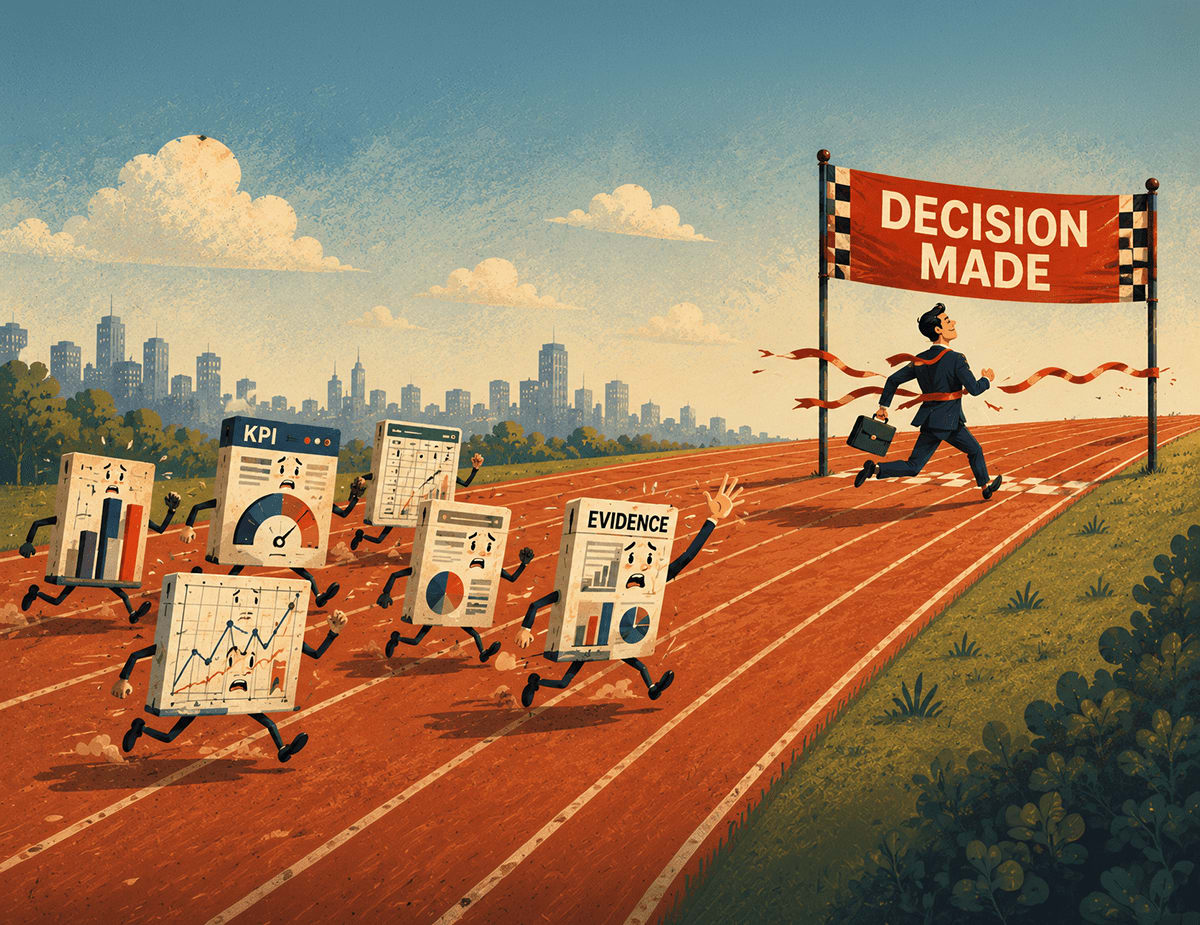
As someone who has worked in data analytics, one pattern I keep running into is the astounding number of dashboards that get built and never used. Recently, I stumbled upon a term for this - the “Dashboard Graveyard”: that growing collection of analytics deliverables that were requested, built, launched, and subsequently abandoned, collecting digital dust.
We live in a world where data is compared to oil. Organisations are surrounded by it, and it’s considered incredibly valuable - but that same abundance becomes a curse when you’re overwhelmed by data and don’t know what to do with it. Dashboards are usually the first response to that problem. So what happens when those dashboards go unused?
The Cost of Neglect
First, there’s the cost of the time and effort that went into building them - organisations either hire external consultants or use the time and resources of their internal staff for this, which is not cheap. Second, there’s the storage cost. Whether it’s on-premise or in the cloud, unused dashboards are still occupying a real chunk of your infrastructure. And finally, if we are not able to derive effective outputs, decisions remain intuition-driven - that is, your business data continues to be a mystery.
According to Gartner’s research, 65 per cent of organisations still use data selectively to justify decisions they’ve already made, rather than letting data truly drive decision-making.
This is the real problem - and it’s not a lack of data, tools, or talent. It’s a mismatch in mindset. There is no hindsight or future planning. Many Indian organisations use software purely as a cost-control mechanism. For example, if you’re building a dashboard on SAP Lumira - a platform that has itself been flagged for discontinuation - you’re building it for namesake, not for longevity. (Source: SAP Product Availability Matrix, sap.com)
When Data Becomes Noise
Then there’s the developer perspective. Too many dashboards are packed with an unusually high number of data points - so many that the end user simply feels disconnected. They don’t know what to read or what insights to take away. A dashboard can - and often should - be simple.
Leading organisations approach this very differently. For instance, companies like Amazon don’t rely on dashboards as passive reporting tools. Instead, they embed data into structured processes like the Weekly Business Review, where metrics are directly tied to actions and accountability. Similarly, Ford’s turnaround under Alan Mulally showed how data becomes powerful only when it drives transparency and decision-making, not when it sits in reports.
From Data to Decision
And before any of that, the most important question: do you even need a dashboard? Does it solve a short-term problem or a long-term one? That answer should shape everything. Static dashboards are no longer the norm in the industry. Live data and real-time monitoring drive the BI world, but the quality of the underlying data remains critical regardless of the format.
The goal should be what Colin Bryar, former Amazon VP and co-author of Working Backwards, describes: a balance of proactive and reactive management. As he put it: “If your data isn’t changing how people act daily, you’re just paying for expensive hindsight.”
Your conference room doesn’t need more reports or nods of approval. It needs a system where data isn’t just presented - it’s acted on. Time to build the machine.