


August 2026
4 mins read
The India Premium Why India Is So Hard to Price
 31 Aug 2026
India’s investment story is becoming larger than GDP, earnings and valuations. Its most valuable advantages may be the ones conventional models cannot easily measure.
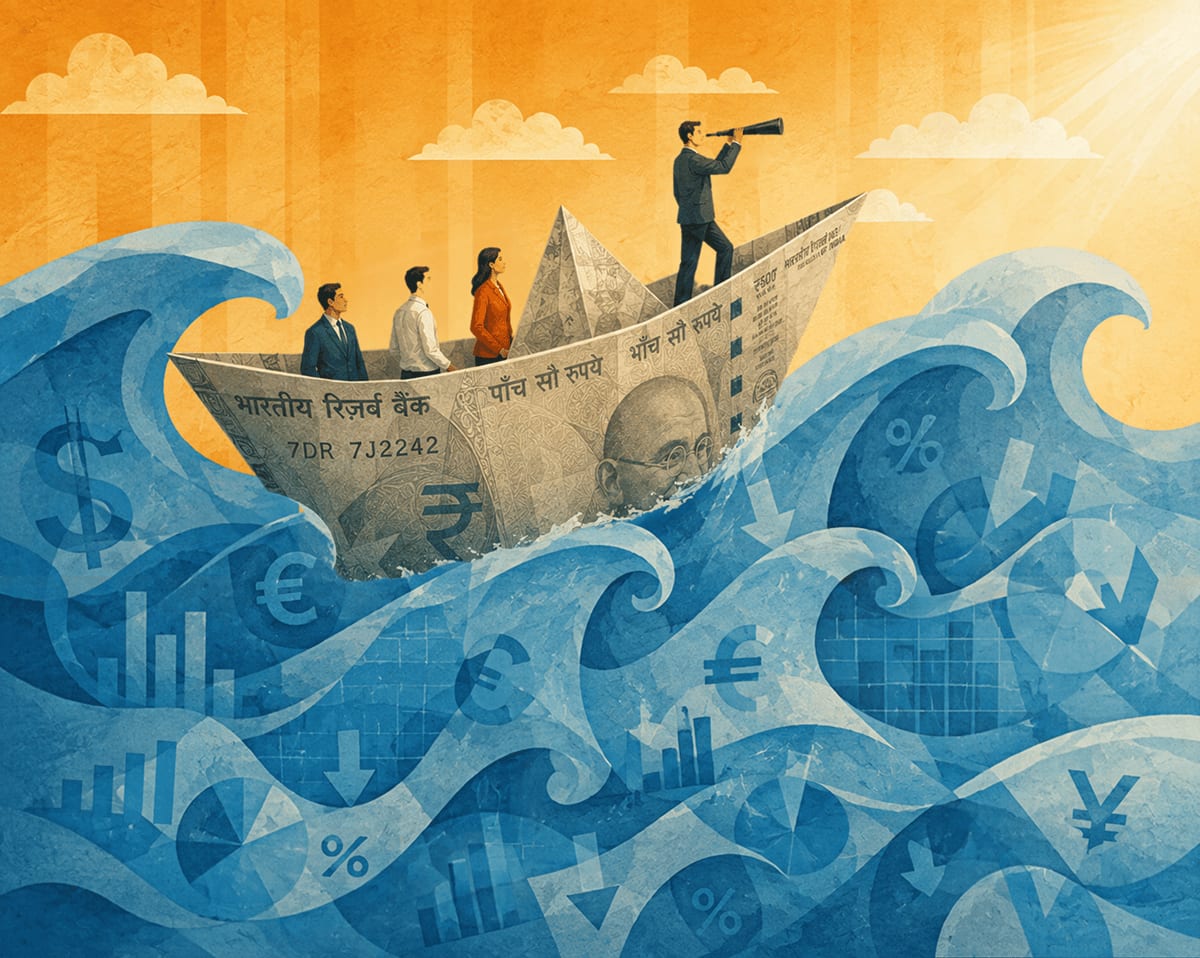
For decades, investors looked at India through familiar lenses: GDP growth, demographics, inflation and corporate earnings. Those metrics still matter, but they no longer tell the whole story. The biggest opportunity in India today is not simply its market size. It is the country’s ability to evolve while the rest of the world is grappling with geopolitical uncertainty, fragmented supply chains and shifting economic priorities.
The challenge is that traditional valuation frameworks struggle to capture this transition. India is no longer competing only on low-cost labour or a large consumer base. It is increasingly positioning itself as a trusted economic partner. As companies rethink their dependence on single-country supply chains, India has emerged as an important destination for manufacturing, digital services and capability centres. This shift is not driven by one policy announcement or one industry. It is the result of multiple structural changes happening simultaneously.
One of the most interesting aspects of India’s rise is that many of its advantages reinforce each other. Digital public infrastructure has made financial inclusion more accessible. A growing startup ecosystem is solving local problems at scale. Public investment in roads, railways, logistics and manufacturing aims to improve productivity over the long term. At the same time, a young workforce and expanding consumer market continue to attract global businesses.
The Value Beyond Growth
Yet none of these developments can be valued in isolation. How do you assign a value to an ecosystem where policy reforms, technology adoption, entrepreneurship and demographic trends are all moving in the same direction? Markets often reward visible outcomes such as quarterly profits or revenue growth. They are less comfortable pricing institutional improvements that may take years to translate into financial performance.
This creates an interesting paradox. Investors frequently ask whether India is expensive. The better question may be whether existing valuation models are equipped to measure India’s long-term strategic importance.
The Geopolitical Premium
The answer becomes even more complicated when geopolitics enters the conversation. Across industries, companies are increasingly balancing efficiency with resilience. Diversifying manufacturing footprints, building regional supply chains and reducing concentration risks have become boardroom priorities. India stands to benefit from these shifts, but the value of being a reliable partner in an uncertain world cannot easily be captured in a discounted cash flow model or a price-to-earnings multiple.
The same applies to corporate strategy. Many multinational companies are no longer viewing India only as a sales market. Increasingly, India is becoming a location for research, engineering, product development and global capability centres. Decisions like these create long-term strategic advantages, but their financial impact unfolds gradually. By the time the numbers clearly reflect these benefits, the opportunity may already have been recognised by the market.
The Complexity Advantage
There is another dimension that often receives less attention. India’s diversity makes it difficult to apply simple narratives. Consumer behaviour differs across regions. Income levels vary widely. Regulatory priorities continue to evolve. Businesses that succeed in one state may require an entirely different strategy elsewhere. This complexity makes India harder to understand, but it also creates opportunities for companies willing to invest patiently and adapt locally.
Perhaps that is why opinions on India remain sharply divided. Some believe expectations have already run ahead of reality. Others argue that the country’s transformation is still in its early stages. Both views have merit because India does not fit neatly into conventional investment categories.
The real opportunity may not lie in predicting next quarter’s earnings or next year’s market returns. It lies in recognising that India’s value increasingly extends beyond financial metrics. It represents strategic resilience, institutional evolution, technological innovation and long-term relevance in a changing global economy. Not every opportunity can be measured with precision. Some must be understood through the direction of change rather than the speed of immediate results.
India may be one of those opportunities. And that is precisely why it remains so difficult to price.
The biggest opportunity in India today is not simply its market size. It is the country’s ability to evolve while the rest of the world is grappling with uncertainty
The value of being a reliable partner in an uncertain world cannot easily be captured in a discounted cash flow model or a price-to-earnings multiple