


September, 2025
2min read
The Irrational Resigner — Why We Stay in Bad Jobs
 27 Sep 2025
Logic says quit. But here you are, powering through another soul-sucking Monday. Turns out, irrationality might be your most dependable coworker.
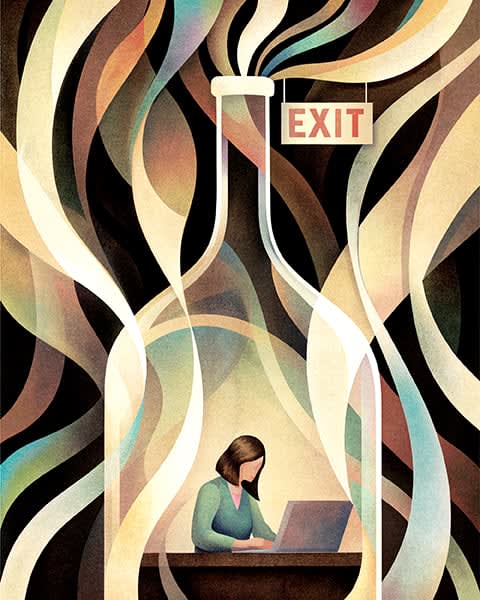
There’s a certain masochistic poetry to it: sitting at your desk, mentally crafting your resignation letter for the 187th time, only to hit snooze on your own liberation. Again. Economists, HR gurus, and that one annoyingly pragmatic friend all chant the same mantra: be rational. If your job is draining the life out of you, the obvious solution is to leave. Yet here you are, still attending “mandatory fun” Zoom calls with dead eyes and a muted mic. Why? The irrational resigner — those of us who know, deep down, that we should leave… and don’t.
Emotions vs Economics
First, let’s clarify one thing: this isn’t laziness or lack of ambition. It’s something much knottier. Behavioural finance and workplace psychology tell us that humans are, at their core, hot messes when it comes to making clean, logical decisions. The “rational actor” model — the idea that we weigh costs and benefits like little pocket calculators — crumbles spectacularly in real life. Instead, we get sunk-cost fallacy, loss aversion, and good old-fashioned fear.
Take the sunk-cost fallacy: the emotional sinkhole into which dreams and dignity quietly disappear. You’ve invested years at a company, endured impossible deadlines, and possibly cried in a bathroom stall or two. Walking away feels like admitting all that effort was for nothing. So, you stay, padding your CV with increasingly meaningless milestones (“Successfully navigated Q2 turbulence” — that is, didn’t scream when Dave from accounting cc’d the CEO by mistake).
Then there’s loss aversion. Research tells us losses sting roughly twice as much as gains feel good. Translation: the fear of losing a steady pay cheque, even from a job that’s killing you softly, often outweighs the giddy prospect of freedom. The devil you know, as they say, wears business casual.
We can also blame a little something called status quo bias. Our brains are wired for inertia, and change — even positive change — registers as risk.
Throw in social pressures (because nothing says “fun weekend” like explaining your career pivot to sceptical relatives), and it’s no wonder we stick around longer than we should.
The Hope That Keeps Us
But here’s the quiet kicker: sometimes, irrationality is its own form of self- preservation. Bad jobs aren’t just jobs — they’re tangled up with identity, survival, and, frankly, hope. Maybe you’re holding out for a promised promotion. Maybe your job is terrible, but your colleagues are your makeshift family. Or maybe — most human of all — you’re simply not ready yet. And that’s okay.
The truth is, we romanticise the clean break, the dramatic exit, the viral “take this job and shove it” moment. But in reality, leaving is messy, expensive, and complicated. While often branded as a weakness, staying can sometimes be a quiet act of endurance. Of course, there’s a fine line between endurance and self- sabotage, but let’s not pretend that line is always apparent.
So, the next time you feel stuck, cut yourself some slack. The “rational” choice is just one part of the story.
Humans are gloriously irrational creatures, and sometimes, that irrationality is doing the best it can with the messy business of being alive.
However, maybe keep drafting that resignation letter. You know, for practice.