


May, 2026
2 min Read
THE MORAL COMPASS of Leadership
 29 May 2026
Hard numbers often collide with human realities. In those moments, emotional intelligence guides leaders to ethical decisions that balance business sense with empathy, fairness and human understanding
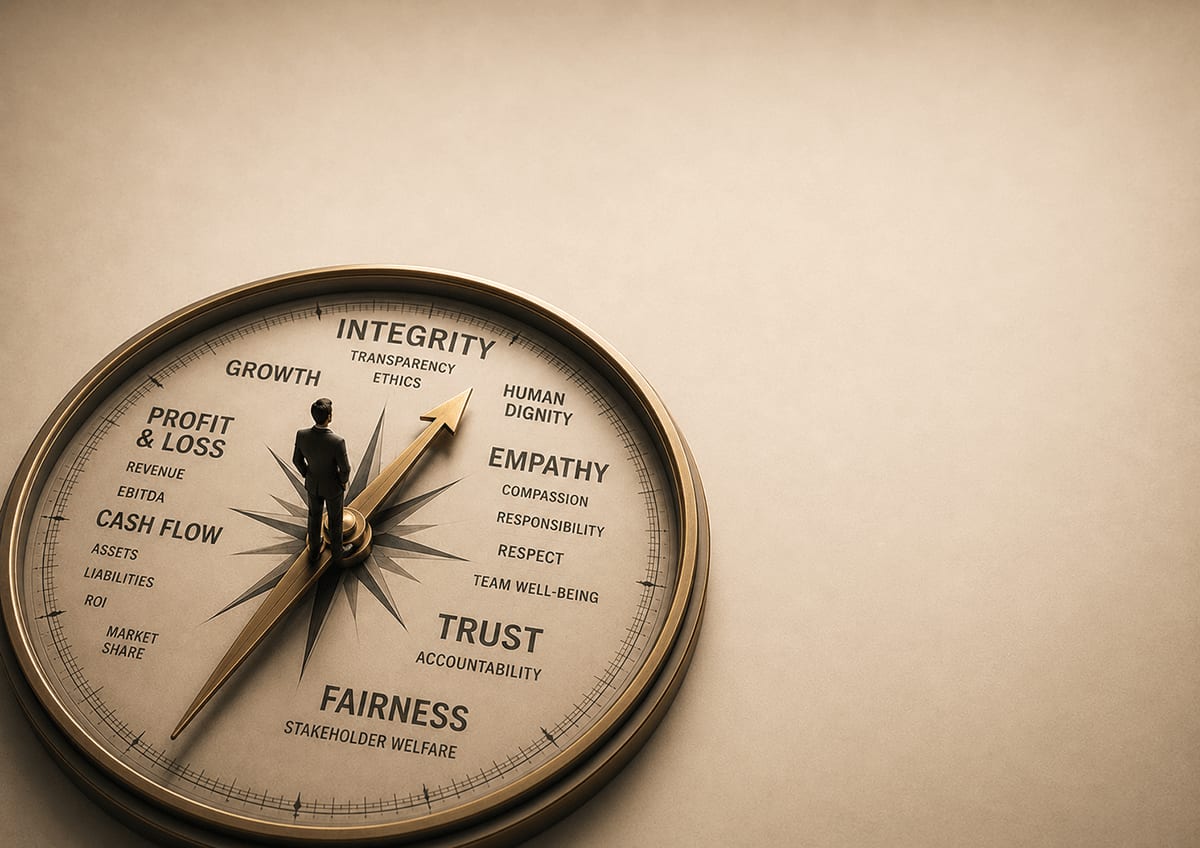
Picture this: a CEO sits in a boardroom, staring at numbers that tell a harsh story. The company needs to cut costs to stay afloat, and the board is pushing for immediate layoffs. In such a situation, what separates a good leader from a great one is how they handle this moment: not just crunching numbers, but understanding the human impact and making decisions that reflect both business sense and moral values.
This is where emotional intelligence becomes crucial. In today’s business world, leaders need to make decisions that consider people’s feelings, build trust and create environments where everyone can thrive. Here, emotional intelligence is the key. It plays a pivotal role, acting like a moral compass, helping leaders navigate tough situations while staying true to their values.
Understanding Emotional Intelligence
Emotional intelligence, or EI, is the ability to recognise and manage your own emotions while understanding how others feel. It includes self-awareness, self-regulation, empathy, motivation and social skills. These components help leaders make better decisions by considering both facts and feelings.
Research shows that emotionally intelligent leaders are more successful than those who rely only on technical skills. They create stronger teams, handle conflicts better and inspire people to do their best work.
How EI Shapes Ethical Decisions
Self-awareness prevents bias: Leaders with high EI recognise their own biases and emotional triggers, helping them make more objective decisions. For example, if a leader knows they favour certain team members, they can consciously work to treat everyone fairly.
Self-regulation ensures thoughtful responses: Great leaders do not make decisions when angry or stressed. EI helps them stay calm under pressure and think through options carefully, preventing rash decisions that could harm the organisation.
Empathy considers human impact: Leaders with high empathy do not just think about profits; they consider how choices affect employees, customers and communities. For instance, when making tough decisions like layoffs, they might explore alternatives such as executive pay cuts, retraining programmes or phased reductions that give people time to find new jobs.
Building Trust and Managing Pressure
Trust is the foundation of ethical leadership. When leaders show genuine care and make transparent decisions, they build strong and lasting relationships. Emotionally intelligent leaders create psychological safety: environments where people feel comfortable expressing thoughts without fear.
These leaders also manage stress in healthy ways, maintaining ethical standards even in difficult times. They do not take frustrations out on teams or make desperate decisions that compromise values.
Real-World Impact
Consider Howard Schultz of Starbucks, who consistently put employees first by offering healthcare benefits to part-time workers. During the Covid-19 pandemic, Airbnb CEO Brian Chesky was widely praised for handling layoffs with unusual transparency and compassion, offering generous severance, healthcare support, and career assistance to affected employees. Likewise, Ratan Tata was widely respected for humane leadership and prioritising trust and ethics during crises, including support for employees and victims after the 26/11 attacks at the Taj Hotel. These examples show how emotional intelligence guides ethical decision-making.
Organisations with ethical leaders experience lower turnover, higher productivity and better financial performance. They attract top talent and build customer relationships based on trust that can last for generations.
Leading with Humanity
Emotional intelligence is not just a nice-to-have skill; it is essential for ethical leadership. It helps leaders understand themselves and others, make thoughtful decisions under pressure and build organisations based on trust and respect.
True leadership is about bringing your full humanity to difficult situations and choosing what is right, even when it is hard. When leaders combine understanding people with strong ethical principles, they create the kind of leadership that our world desperately needs.