


July 2024
7min read
The Overreliance on AI: Boosting Efficiency at the Expense of Human Skills
 27 Jul 2024
This article has discussed the threats involved in over-reliance on AI, arguing that, while AI increases efficiency and convenience, it should not replace important human skills such as cognitive, social, communication, and practical abilities. It indicates that a balanced approach is necessary that takes in AI as augmentation for the strengthening of human skills, and some measures have been offered to guarantee that AI contributes to skill development without these efforts becoming counterproductive.
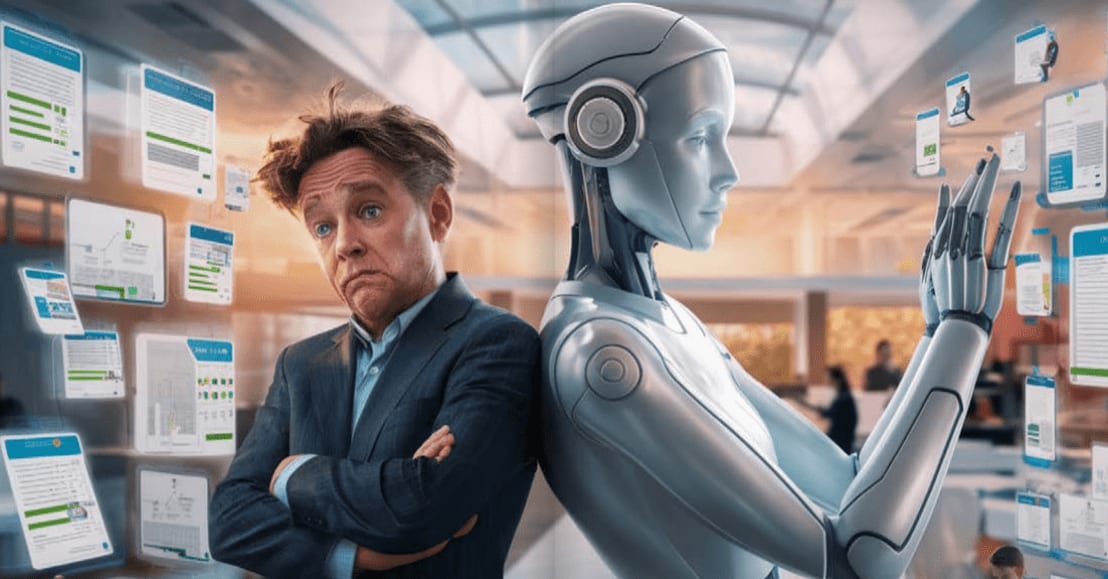
Artificial Intelligence (AI) has brought tremendous changes to many aspects of our lives, and that cannot be undermined since it has introduced new levels of efficiency and convenience. There is, however, an increasing fear of the overreliance on AI and its implications for replacing fundamental human skills. While AI can help be a powerful assistant, it should not replace basic human skills, such as cognitive, social, communication, or practical skills, that are crucial for development and interaction.
Cognitive Skills: The Essence of Human Intelligence
One of the major risks of overreliance on AI is the erosion of cognitive skills. Cognitive skills, such as memory, attention, and problem-solving, are key learning skills needed in personal development. Studies have shown that the heavy use of digital technologies may lead to damage to cognitive ability. For example, too much reliance on digital appliances for storing and looking up information can really lower our ability to memorize and work with information at an effective pace. This phenomenon, usually referred to as “digital dementia” underscores the fact that we need to have and use our cognitive skills independently of AI.
Social Skills: The Foundation of Human Interaction
Social skills encompass empathy, cooperation, and effective communication for interaction within society. AI tools have exhibited varying effects on social interactions, especially within learning environments. For instance, AI systems such as Chat GPT and Claude AI, while enhancing learning outcomes, at times spark more anxiety and reduce creative learning from taking place. Overreliance on AI tools within social contexts diminishes face-to-face interactions and limits interpersonal skills.
Communication Skills: The Effective Exchange Pillar Good communication, personal and professional, is key to personal success. AI in communication tools can improve productivity through automated responses and managing communications. However, over-reliance on the same tools might deny one the development of some of the fine communication skills, such as active listening, emotional intelligence, and persuasive speaking. Research indicates that spending too much time on screens and engaging in digital communication may have short-term impacts, possibly reducing the attention span and the ability of an individual to engage in meaningful conversations. It is important to strike a balance where AI aids communication but does not replace the human element.
Practical Skills: The Foundation of Everyday Life Practical skills cover a spectrum of abilities required for both mundane and highly specialized activities in daily life. Although AI applications in smart homes and workplaces can greatly facilitate the performance of these, overreliance on such AI may allow our abilities in this regard to atrophy. For example, there is evidence that the use of GPS technology is associated with reduced spatial memory, a type of memory for location that depends on the hippocampus, which suggests it is important to continue to exercise our navigational skills. Practical skills constitute a crucial part of self-sufficiency and resilience and should be developed alongside any AI automation.
Balancing Between AI Assistance and Human Skill Development
While AI undoubtedly offers many benefits, it is important to use it as a tool to enhance human capabilities rather than to replace them. Following are a couple of strategies to maintain this balance:
1. Educational Integration: Integrate AI in education to supplement learning but not to replace the traditional teaching techniques. Let the students critically engage with the output of AI to build on their cognitive and analytical skills.
2. Promote Human Interaction: Design AI systems that facilitate, rather than replace, human interactions. For example, AI can be used to support group projects and discussions, enhancing collaboration and social learning.
3. Cognitive Engagement: Ensure that AI systems provide explanations that are intuitive, so users are encouraged to critically engage with the information, rather than passively consuming it.
4. Skill Development Programs: Integrate programs that develop practical skills with AI training. This way, people will be skillful in both manual and automated processes.
5. Ethical and Responsible AI Use: Promote the development and use of such AI systems that align with ethical standards and promote human well-being. This includes designing AI that supports rather than undermines human skills.
Conclusion: AI should really help us be more effective and improve our quality of life. But we must never forget that AI should act as an assistant, not a substitution, for our cognitive, social, communicative, and practical skills. If a balanced approach to the integration of AI is taken, its benefits can be reaped in combination with the preservation and enhancement of fundamental human skills.