


December, 2025
3 mins read
THE QUARTER VS THE VISION A CXO’s Balancing Act
 31 Dec 2025
Quarterly pressures can overshadow long-term ambition. Here’s why today’s CXOs must balance investor impatience with the vision, innovation and discipline needed to build companies that last.
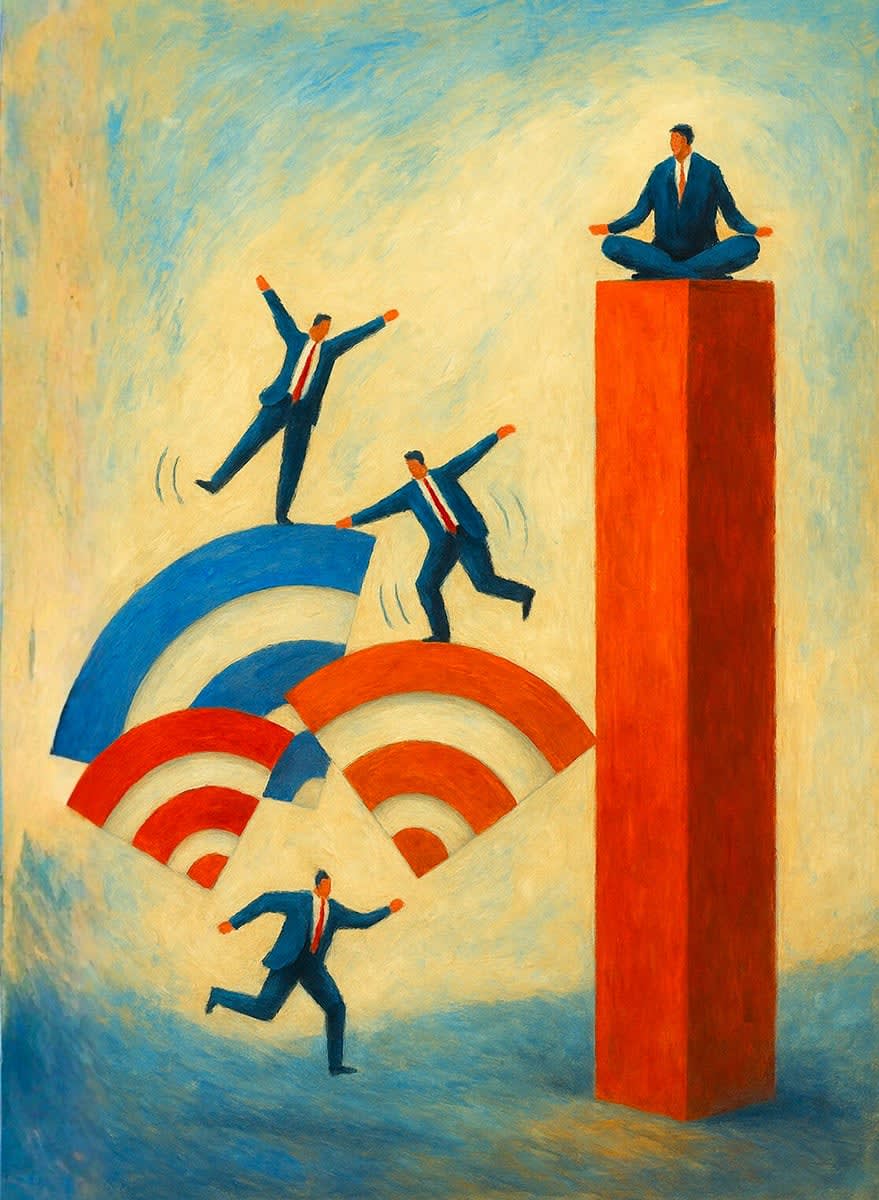
CXO’s performance is evaluated every quarter. This trend has become increasingly visible as stock prices move in accordance
with every small news item, and in that context, a company’s quarterly results are significant events. When every third person
has become a financial market analyst proclaiming verdicts on an organisation’s performance, it becomes difficult to focus on
long-term vision.
CXOs must live with this modern reality and find a reasonable balance between quarterly share price fluctuations and the
company’s long-term goals. Shareholders today often lack patience. The world has become very dynamic, with a plethora of
investment opportunities available to investors, ranging from crypto to commodities and from platinum to gold.
The Cost of Investor Impatience
Investors are reluctant to give a CEO a long rope and may plan to exit at the first sign of trouble. CEOs are held responsible for
decreases in their organisation’s market capitalisation, which is why the shelf life of CEOs is getting shorter. Unless a CXO has
the full confidence of the board and investors, they will be reluctant to invest in the company’s long-term strategy.
There are some organisations, like Microsoft, Alphabet, Amazon and Apple, that have retained their CEOs for more than 10
years. The CEOs of these companies have the confidence, flexibility and strength to invest in long-term product roadmaps,
research and development, innovation and new revenue streams.
This was not always the case. Apple itself once fired the legendary Steve Jobs because the board considered him too bold
and adventurous in his product innovations. Needless to say, Apple later went to the brink of bankruptcy and eventually asked
Steve Jobs to return and run the company.
Why Innovation Needs Time
How can a technology company shy away from product innovation and R&D? It must devise a plan to invest in new products, cutting-
edge technology research, and its employees’ skills. Milking a cash cow, as highlighted in a 2×2 matrix, may not always help. This
strategy failed at Apple when its then CEO, John Sculley, convinced the board to focus on Apple II as a cash cow to make huge amounts
of money. This short-term vision enhanced Sculley’s immediate performance but harmed Apple in the long run.
CXOs should focus on short-term performance while keeping an eye on the long-term vision. Many Fortune 500 companies are
“built to last”. They do not pander to short-term gimmicks or indulge in knee-jerk reactions every time they hit an iceberg. They have
very clear and categorical mission and vision statements, coined at the outset, and they expect every employee to adhere to them.
Undoubtedly, the CXOs of these companies place ample focus on the long-term vision while strengthening day-to-day operations to
achieve short-term goals.
Built to Last, Not to React
Short-term performance can be measured by a few parameters such as top line (revenue), bottom line (net profit) and RoCE (return on
capital employed). However, the long-term vision has numerous parameters. Some used to measure long-term performance could be
R&D, innovation, employee welfare and training, pay parity, diversity, climate focus, customer empowerment, robust supply chains,
trust and goodwill.
Several parameters mentioned here are intangible, but they are essential for realising a company’s long-term growth and
sustainability.