


September 2026
4 mins read
The Solar Opportunity No One Is Pricing
 18 Oct 2026
Solar power is usually priced as cheap electricity. But for India, its bigger value may be what it protects the country from: oil shocks, geopolitical turmoil and energy dependence.
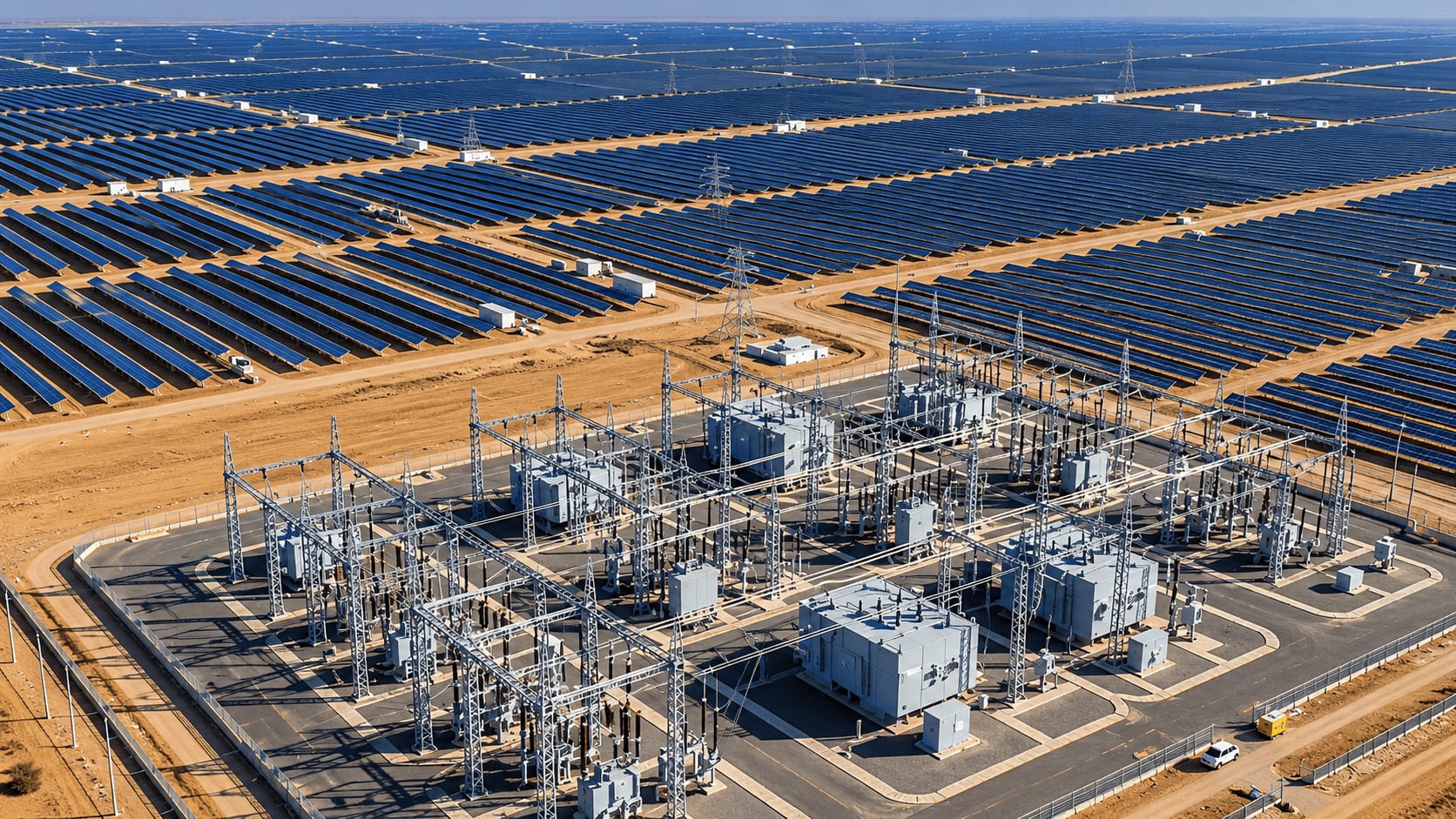
As of June 30, 2026, total solar energy installations in India reached 162 GW, making India the third-largest market for solar energy. The journey to this capacity is a case study for the world: capacity increased from under 3 GW in 2014 to current levels, adding about 159 GW. In monetary terms, 1 MW of solar capacity costs 3 crore1, and adding 159,000 MW has resulted in 4.77 lakh crore of private-sector investment flowing into the economy.
This happened because the right policies were sequenced at the right time, complemented by strong institutions such as the Solar Energy Corporation of India (SECI), which reduced risk for the private sector.
The Solar Surge
Currently, solar energy is in the exponential stage of growth. The initial 50,000 MW of solar additions took 12 years, while the latest 50,000 MW was added in just 14 months. Looking forward, NITI Aayog’s analysis suggests that solar installations could reach 5,500 GW by 2070, which in monetary terms represents a `165 lakh crore opportunity2.
But the real opportunity for solar energy is not limited to monetary value. It lies in energy security and food security, both of which are being disrupted by the West Asia crisis. Several analyses have placed between $1 trillion and $2 trillion of global output at risk, as 75 per cent of the world lives in fossil-fuel-importing nations. And it does not stop at fuel. The crisis has impacted close to a third of the world’s traded fertiliser, as well as the gas from which nitrogen fertiliser is made.
The answer to this crisis is diversification along with speed. And solar is the solution to both. A nuclear plant takes eight to 10 years; a gas plant, three to five. A utility-scale solar plant can be delivered in six to 24 months, and a rooftop system in weeks. In a world where the price of a barrel can double in six weeks, the ability to add domestic capacity within a single year is not merely an environmental attribute. It is a strategic one.
The Unpriced Insurance
When a distribution company signs a solar power purchase agreement (PPA) at `2.50 a unit, it books a generation cost. What it does not book is that this particular unit cannot be repriced by a blockade, a sanction or a closed shipping lane. When Brent moved from $69 a barrel to a peak near $138 a barrel within a few weeks this year, every imported-fuel-linked unit in the system repriced. Every solar unit did not.
That difference was an insurance payout, collected by whoever had built early. Nobody issued an invoice for it, and no one booked it as revenue.
Look at it the way a finance classroom would. A 25-year solar PPA fixes fuel costs at zero for 25 years on the day it is commissioned. Call it what it actually is — a purchased option on 25 years of price stability, written against a commodity whose volatility is set by geopolitics rather than geology. Capital markets price such optionality every day. Energy procurement, almost everywhere, does not.
We evaluate solar on levelised cost, that is, rupees per unit of generation from solar against coal. This captures the electricity and quietly discards the insurance.
Pricing Certainty
For India, every domestically generated unit is a small claim against that figure, and against the current-account pressure and imported inflation that follow it. None of it appears anywhere in the `165 lakh crore.
Here is the part worth carrying away. In any market, the mispriced asset is the opportunity, and an asset is mispriced precisely when a real source of value goes unmeasured. Solar’s risk-reduction value is unmeasured almost everywhere: not in tariffs, not in the cost of capital, not in how sovereign-risk models treat import dependence.
Whoever prices it first is doing two things at once. One is good climate policy. The other is arbitrage on a structural gap in how the world values certainty.
That, and not the 5,500 GW, is India’s opportunity nobody yet knows how to price.
When Brent moved from $69 to a peak near $138 a barrel, every imported-fuel-linked unit repriced. Solar did not. That difference was an insurance payout
A 25-year solar PPA fixes fuel costs at zero for 25 years… a purchased option on 25 years of price stability