


March, 2026
2 min Read
The Uneven Promise of Growth Budget 2026 Through a Social Lens
 31 Mar 2026
The Union Budget 2026-27 projects faster growth and inclusion, yet a closer reading of its allocations reveals uneven social priorities and lingering gaps in welfare spending
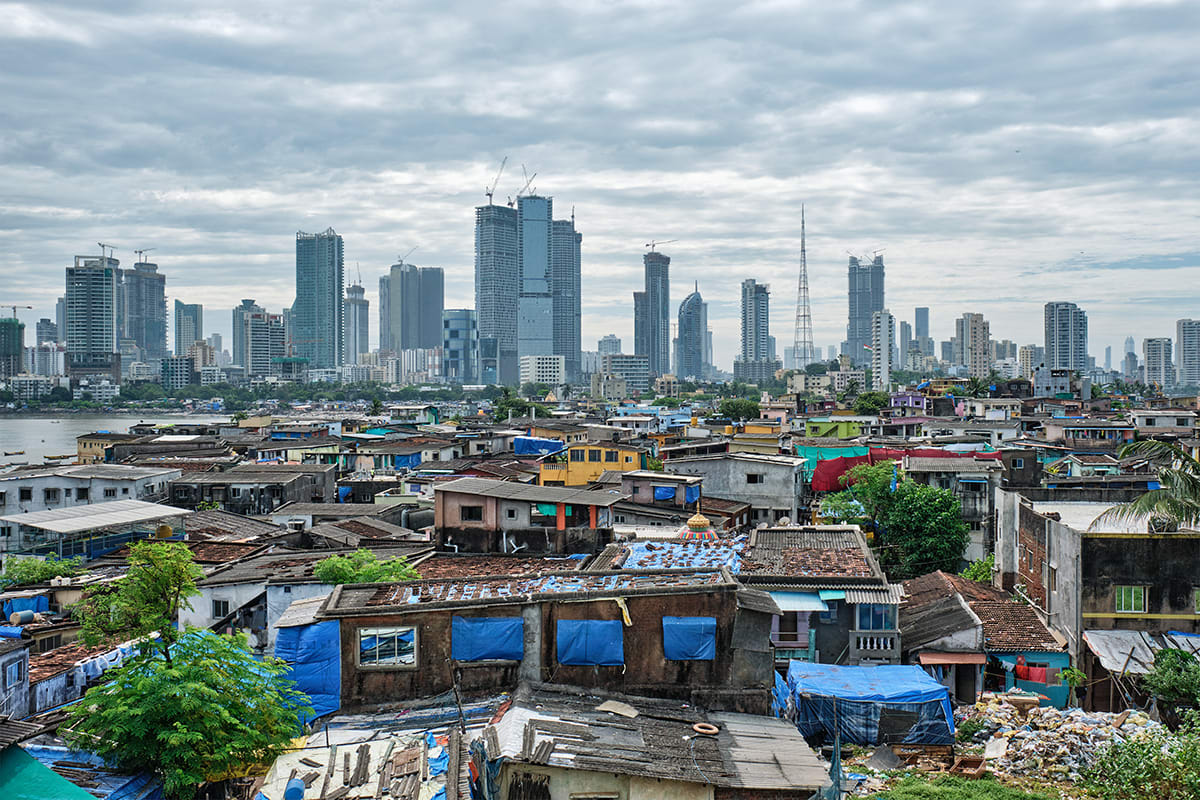
With the onset of the new year comes the anticipation of what’s new, what’s changed and what’s recalibrated in the Budget that will shape the nation’s economic direction and developmental trajectory for the year ahead. This year’s Union Budget 2026-27 focuses on accelerating growth while uplifting the vulnerable. Yet, a deeper look at its allocations reveals a complex picture of priorities, gaps, and contested social outcomes. While some social sectors have received increased funds, core areas of welfare remain underfunded or marginalised. This raises the question: Who really benefits from the Budget’s growth narrative?”
Understanding Social Spending in Budget 2026–27
Health and education
Signalling an intent to prioritise human development, the government has increased outlays for social sectors — education, health and social justice — by around 12.7 per cent compared with last year. The Budget has crossed the `1 lakh crore mark in healthcare spending, with funds allocated to PMJAY (Pradhan Mantri Jan Arogya Yojana), the National Health Mission and allied health professions. Similarly, education funding rose, with planned initiatives for schools, universities and vocational centres indicating a focus on youth skill development.
However, the share of these sectors in total expenditure remains modest. As a share of GDP, they fall short of the country’s aspirational targets — 2.5 per cent of GDP for health and 6 per cent for education — highlighting how we lag behind our long-standing policy commitments in these sectors.
Gender and social welfare
The government acknowledges that human capital formation is integral to sustainable growth. The expanded Gender Budget Statement signals a stronger institutional recognition of women as economic agents rather than passive beneficiaries. The statement rose to 9.37 per cent of total spending, reflecting a visible effort towards inclusiveness and gender-responsive planning. An allocation of `5 lakh crore has been made for women’s and girls’ welfare, with programmes for multi-skilled caregiver training and expanded social protections covering maternal health, nutrition, skill development, safety mechanisms and livelihood generation.
However, experts caution that increased numbers do not automatically translate into impact unless backed by stringent monitoring. Moreover, much of gender budgeting continues to be embedded within larger, gender-neutral schemes, raising concerns about whether funds are truly targeted or simply reclassified. Social protection frameworks for informal workers, migrant labourers, and vulnerable rural households, though present, still lack the scale and consistency required amid the country’s widening inequality. The budget does demonstrate policy intent and incremental progress, yet its transformative potential remains contingent on structural depth and delivery efficiency.
Jobs and rural support
Despite persistent rural distress and ongoing livelihood challenges, allocations for agriculture and rural development have largely stagnated or even declined as a proportion of total government expenditure. At the same time, rural employment and livelihood schemes have received a modest increase, signalling a renewed emphasis on labour-intensive support and job creation. This reaffirms the government’s focus on employment creation, but the overall investment in social safety nets has not kept pace with growing demand, especially in the informal economy.
Cuts and Underfunding in Critical Social Sectors
Despite headline increases, several core public welfare sectors have been marginalised. Social advocacy groups describe this pattern as a “welfare retreat,” arguing that broad economic and capital-intensive priorities are increasingly taking precedence over direct investments in public welfare.
The relative stagnation of core social sector spending risks weakening safety nets for vulnerable populations. Such an imbalance could deepen existing inequalities and limit the inclusive potential of headline growth figures.
Whose Growth Is It?
The Budget attempts a balancing act, signalling inclusivity while prioritising broad economic growth. Yet, an audit reveals uneven prioritisation. From a social lens, the emphasis on infrastructure and capital investments may stimulate macro-level growth. But the benefits may not trickle down equally across socio-economic groups.
Lower-income households see limited improvement due to welfare programmes lacking sufficient funding. At the same time, rural and tribal communities risk further marginalisation as scheme allocations and protection programmes remain constrained. Gender gains are promising but demand robust ground implementation to realise outcomes. Regional and demographic disparities could widen without corrective fiscal measures.
What the budget indicates is that social sector spending has risen but remains insufficient relative to India’s needs and policy goals. Key welfare programmes still face neglect in allocation share or underuse of existing allocations. Ultimately, the narrative of growth for all holds potential, but achieving equitable social outcomes depends on execution, monitoring, and stronger prioritisation of welfare spending in future budgets. Without deeper investments in human development and stronger accountability frameworks, inclusive growth risks remaining aspirational rather than actual.
For growth to be broad-based, fiscal policy must move beyond aggregate expansion and place the lived realities of vulnerable communities at its core. Sustainable development demands not only higher allocations but sharper targeting, stronger accountability, and measurable social outcomes. The coming years will reveal whether this budget signals a decisive shift toward inclusive progress or remains an unfinished social agenda.