


November, 2025
3 mins read
The Unwritten Code: What We All Play By but Never Question
 29 Nov 2025
Workplaces run on more than policies — they run on invisible rules. It’s time we questioned why “being seen” still matters more than getting things done
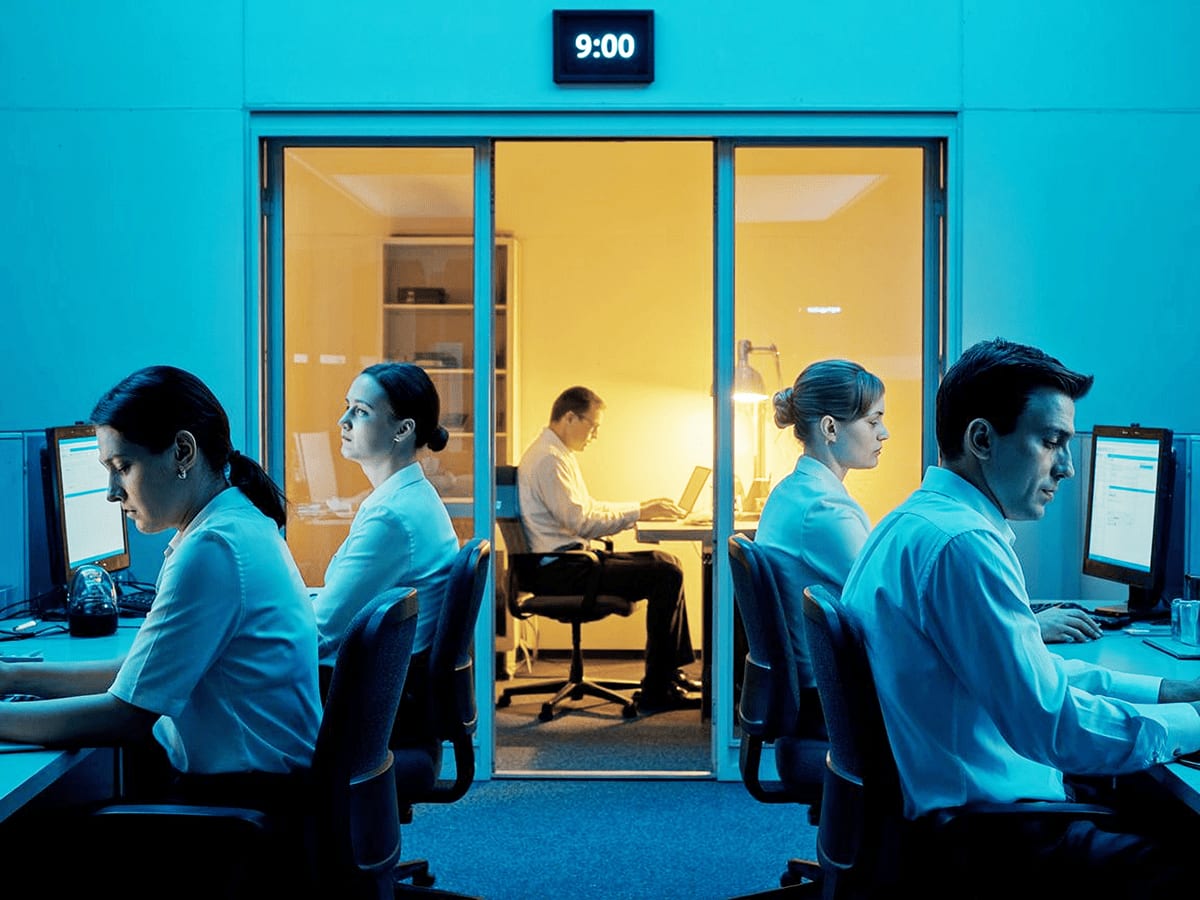
A couple of months into my first job, something strange happened to me. I had completed all the work I had been given for the day — met deadlines, sent reports, even assisted a co-worker in reviewing their report. Satisfied with myself, I closed my laptop at 5:45 pm and stood up to head home. Heads turned. A co-worker asked with a grin, “Half day today?”
I smiled obligingly, but inside, I locked up. I had not done anything wrong. I had done my job. But I had violated something — an unwritten rule I was unaware of: you leave when the clock indicates so, not when your work is complete.
Every office has these unspoken codes. They do not show up in orientation presentations or HR newsletters. But they inform our everyday actions. One of the most prevalent? Presenteeism, not performance, is how productivity is measured.
Seen, Not Heard
I have seen this invisible rule play out in many forms. People staying late even when their work is done, just to match the boss’s schedule. Meetings being scheduled at 6:30 pm, not out of urgency, but to signal dedication. A team member once told me they slowed down their own tasks because finishing early only led to more work — or more suspicion.
This culture silently informs us that appearing seen is more valuable than being efficient. And ironically, it penalises the very thing businesses say they care about: efficiency. If you are quick, concentrated, and dependable, you may find yourself with some spare time. But instead of using that time to recharge, reskill, or just go home, you are supposed to sit tight — just to look busy.
I used to have a colleague who was very sharp. She could finish a complicated report in half the time it took everyone else. Yet she never left at 7:30 pm. One evening, I asked her why. She shrugged and replied, “I do not want people to think I do not care.” That struck me — in an optics-based system, even top performers must go along.
These unwritten rules do not only impact schedules; they influence culture. Individuals begin doing work, rather than working. They send emails late at night to send signals of engagement. They load their days with pointless meetings or redo work so that they meet the time expectations of those around them. Gradually, the work environment becomes less concerned with outcomes and more so with rituals.
The Roots of Rituals
Where does this originate from?
Part of it is legacy. In the old days, work was just about being there and being visible — particularly in jobs where production was difficult to quantify. Part of it is control. Since we cannot measure effort, we attempt to track time. And part of it is just fear — fear of appearing less dedicated, less serious, or replaceable.
But work is evolving. Remote software, flexible schedules, and results-driven assessment are becoming the norm. During the pandemic, teams witnessed that individuals could create value without occupying the same location for nine hours. We were compelled to shatter old routines — and somehow, the world did not implode.
Rewriting the Rules
Nevertheless, invisible norms are tenacious. They stick around, even when you do not want them to.
It is not easy to break them. It takes leadership maturity to prefer performance to performance theatre. And it takes a culture of trust — where we have faith that people will perform their best without having to be constantly monitored.
But it is worth it. In teams where results are more important than time, individuals feel valued. They work with intention. They create, rather than just survive.
Nowadays, I still find myself checking the clock from time to time. But I remind myself: true productivity is not about time invested — it is about value delivered.
Let us start speaking out against the invisible rules. And better still, let us rewrite them.
It takes leadership maturity to prefer performance to performance theatre — and the faith that people will do their best without constant monitoring