


January, 2026
3 mins read
Will We Shape the Algorithm? Or Will it Shape Us?
 31 Dec 2025
AI is changing work at speed; the real test for leaders is whether they can redesign talent, skills and culture quickly enough to ensure AI augments people rather than replaces them.
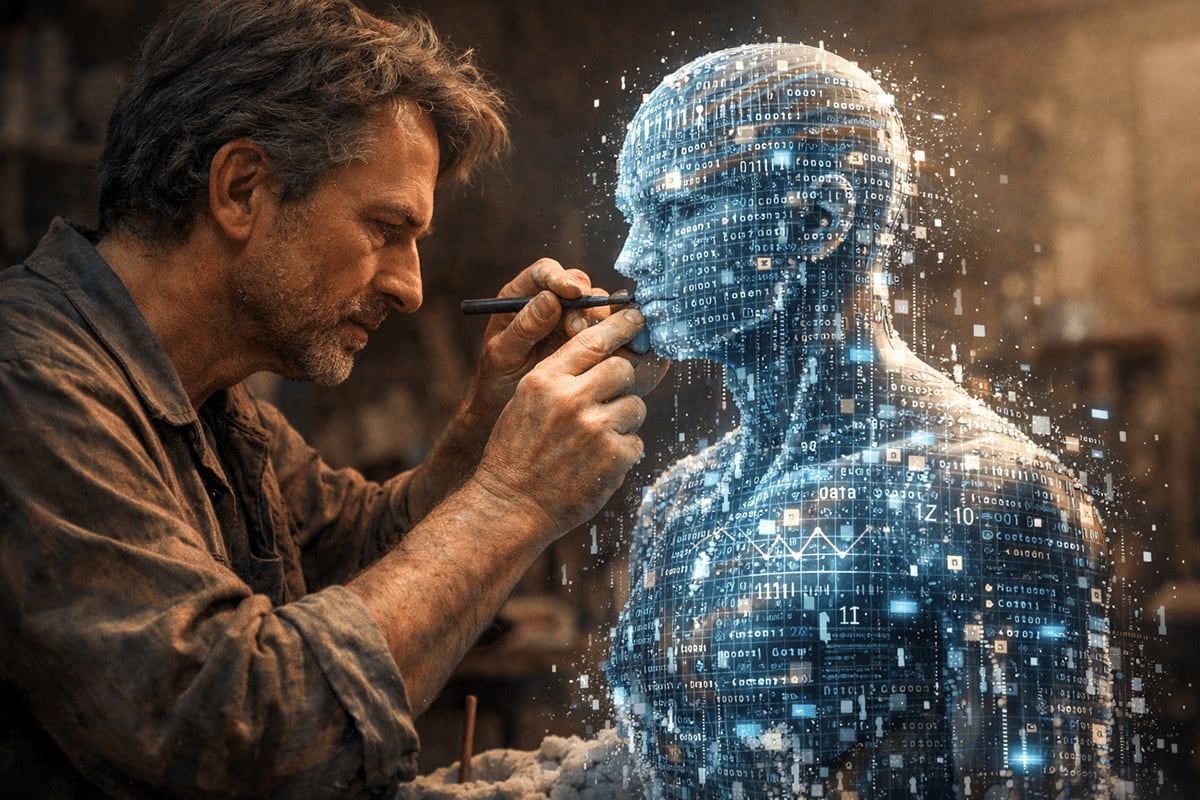
Artificial intelligence (AI) and automation are no longer science fiction; they are a reality in our lives and are steadily reshaping the way we live and work. At this juncture, organisational leaders are faced with a critical question: how can we reimagine talent strategy to thrive in this transformation?
The World Economic Forum estimated that automation will displace 85 million jobs by 2025, but also create 97 million new roles — a potential opportunity for crafting roles that utilise unique human capabilities which no AI can match. The main question to consider is whether leaders will be able to redesign work fast enough to keep humans gainfully employed.
Work Reimagined: Humans and Machines in Partnership
Competing with AI and robots can seem like a Hollywood nightmare; thankfully, the reality is not about domination but collaboration. It is time to reimagine teams where humans and machines work side by side, not in a servant-master relationship, but as collaborators, each complementing the other’s strengths to boost innovation and solve complex problems.
Some pioneering organisations are already exploring this partnership. For instance, Accenture’s SynOps platform uses AI to automate routine operations, allowing employees to focus on higher-value activities. Unilever uses an AI-based recruitment process to evaluate a candidate’s potential objectively beyond their CV.
The crystal ball predicts that the future of work will be a symphony of human ingenuity and machine intelligence. This is an excellent opportunity for HR leaders to orchestrate this collaboration and create a productive environment where both humans and AI can thrive.
Rethinking Skills and Learning
In this fast-changing job and skills landscape, reskilling and upskilling are essential for career longevity. Research by the McKinsey Global Institute shows that companies that invest in AI fare better than their peers only when they also invest in reskilling their workforce. Many organisations are already acting on this insight. IBM’s Watson Career Coach uses AI for personalised skill-gap analysis and learning paths, while Siemens leverages its Global Learning Campus and “MyLearningWorld” platform to upskill employees in AI, data analytics and advanced manufacturing.
In the era of AI, the traditional, one-size-fits-all training programme will no longer be effective. HR leaders will be required to curate dynamic learning experiences that enable employees to guide their own growth.
Strategic Talent Management
AI-powered solutions are being adopted across HR functions to manage the employee lifecycle: talent acquisition, training and development, performance management and employee engagement. However, AI implementation alone is not enough; it must be bolstered by redesigning roles, workflows and processes to unlock AI’s full potential. Many companies face issues with algorithmic bias, data privacy and resistance to automation. To address this readiness gap, organisations must connect their AI use with ethical, transparent and inclusive HR practices.
Leading with Empathy in the Age of Algorithms
AI has brought about not just technical disruptions but emotional challenges arising from employment uncertainty, and fatigue from constant upskilling and reskilling. There is a real possibility of employee burnout, mental turmoil and “quiet cracking.” AI can read data but not feel or understand the complex nuances of human emotions. For HR, this translates into leading with empathy, creating environments that nurture employee wellbeing, and building trust, transparency and ethical processes.
Empathy is a core human trait and cannot be outsourced to machines. Balancing human values with machine prowess can not only attract and retain the best talent but build emotionally intelligent and resilient businesses that can thrive in the age of automation.
Building Fair, Human-Centred Automation
Unfettered use of automation raises ethical questions: the possibility of increasing the gap between high-skill and low-skill workers and widening income inequality. Therefore, ethical AI usage must be a core part of talent strategy. Making decisions transparently, providing fair and accessible reskilling options, and intentionally including diverse datasets to avoid algorithmic bias can help mitigate some of the impact.
It is imperative to engage diverse stakeholders, such as trade unions, policymakers and businesses, to create ethical, forward-looking policies around the use of AI to ensure a holistic balance between automation and human rights.
Augmenting, Not Replacing Humanity
Recent news of large-scale workforce reductions at companies such as TCS and Amazon reminds us that AI implementation is not without its challenges. Navigating the automated future of work will require both technological foresight and human sensitivity.
The aim for the future workplace is not man versus machine, but man with machine. The future belongs to organisations that view technology as a tool to uplift humanity, creating work that is more innovative, inclusive and meaningful. HR stands at the frontline of this transformation — the opportunity is immense, but so is the responsibility. The real question is: will we shape the algorithm, or will the algorithm shape us?