


Mumbai CHAPTER
Leader Success at the Intersection of Talent, Leadership, and Strategy
 November 21, 2025
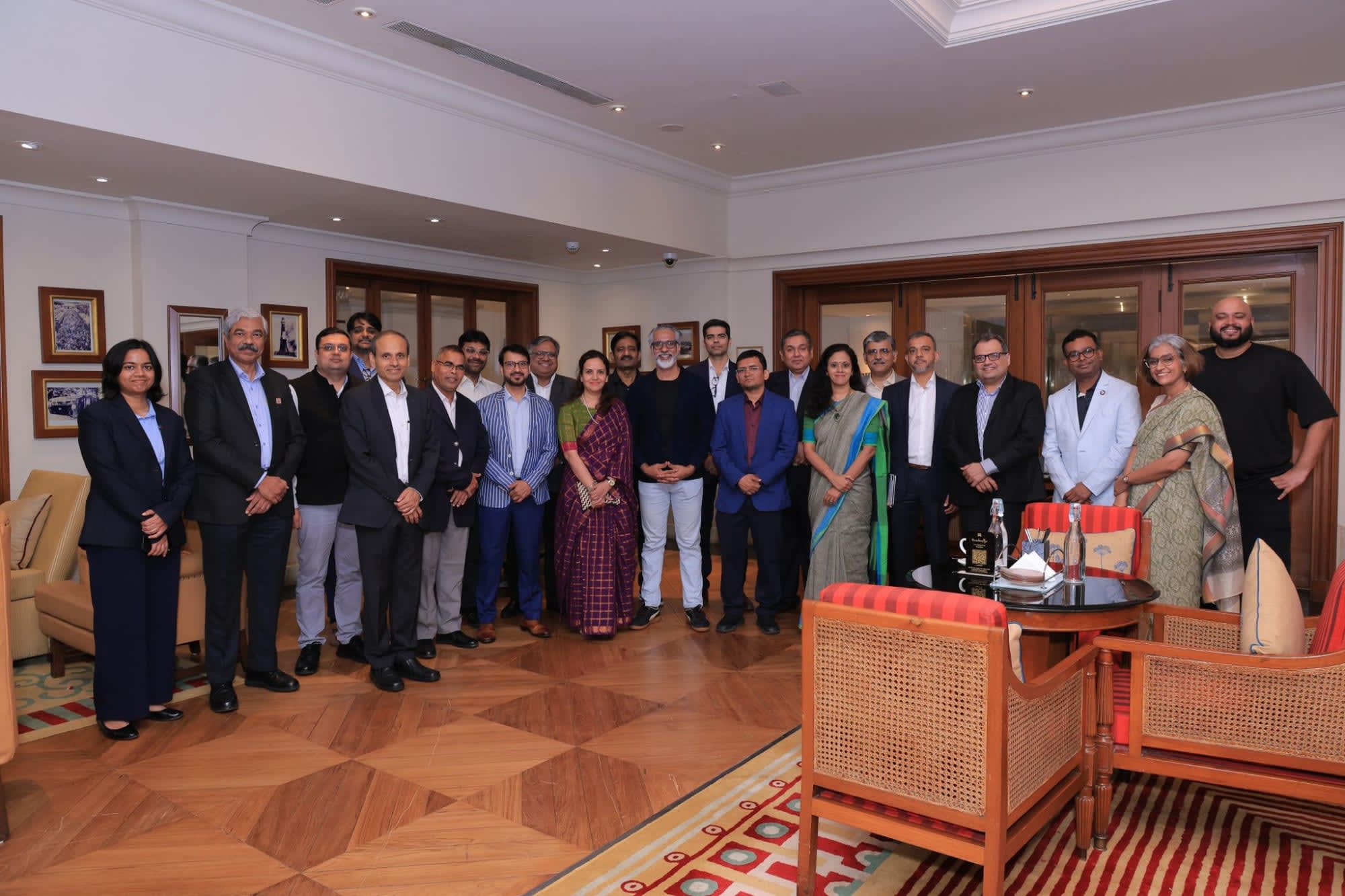
The Mumbai roundtable convened senior leaders to explore what success looks like when talent strategy, leadership capability, and organizational design converge. Hosted in partnership with CEO Lounge and XLRI Jamshedpur, the evening focused on bridging academic insight with the realities leaders face today, where traditional models often fall short and unique skill sets are no longer optional.
Core questions we explored
-
What does leader success actually mean in environments demanding constant reinvention?
-
How do organisations balance talent acquisition with talent transformation?
-
Are leadership development programs keeping pace with the skills gap?
-
Where does organisational strategy enable—or constrain—individual leadership impact?
Insights that stood out
-
Talent, leadership, and strategy aren’t separate functions—they’re interdependent. When one moves without the others, friction compounds quickly.
-
Leaders emphasized the growing need for “translator” capabilities: bridging tech, operations, people, and commercial realities in real time.
-
Several participants noted that relevance is the new credential—B-school frameworks matter only when adapted to sector-specific pressures and velocity.
-
The group discussed how organisational design often lags talent ambition, creating mismatches between what leaders are hired to do and what systems allow them to accomplish.
-
Experimentation mindset emerged as a recurring theme: testing small, learning fast, and iterating before scaling—not just in products, but in org structures and talent models.
Practices leaders are adopting
-
Map the intersection: quarterly reviews that assess talent gaps, leadership capacity, and strategy execution as one system—not three siloed agendas.
-
Pilot translator roles: experiment with positions that intentionally span functions (e.g., tech + commercial, ops + people) to build connective tissue.
-
Co-design learning: involve line leaders in curriculum decisions with business schools to keep content grounded in current challenges.
-
Run “strategy stress tests”: ask whether current org design can actually deliver on stated strategy, and surface misalignments early.
-
Normalize experimentation: allocate budget and time for small-scale tests in talent models, leadership structures, and ways of working.
Attendees
Amuleek Singh Bijral, Mountain Trail Foods Private Limited
Anil Joshi, Unicorn India Ventures
Bhavana Bindra, The Lubrizol Corporation
Bishwajeet S., Volkswagen
Indriyajit Sethi, Tata Group
Kaustav Banerjee, Alkem MedTech Pvt Ltd
Krishna Chaitanya Padarthi, Kusumgar
Manish Jain, Mirae Assets
Loly Vadassery, Datamatics Business Solutions Ltd.
Parag Satpute, Greaves Cotton Ltd.
Rishi Aurora. IBM
Sangram Chavan, Tata Play
Shiv Kumar, L’Oréal
Shivali Chakravarthi, Marsh McLennan
Subrat Panda , Motilal Oswal IB
Sudipta Ghosh, PwC
Uday Sanghani, BDO
Uday N., Suzlon Group
Vaibhav Jha, RSEPL
Dr. Vilas Zode, HPCL